Thursday of the Second Week in Lent

Today’s readings

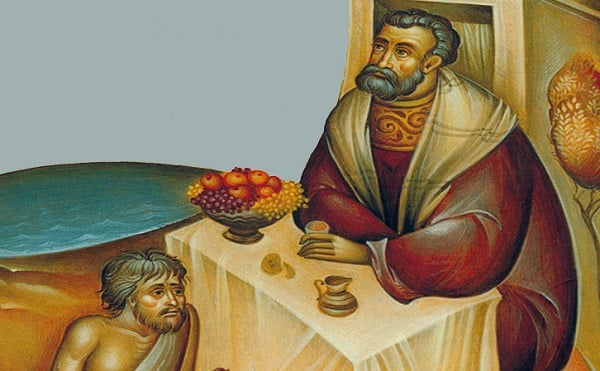
You know, I don’t think the great sin of the rich man was the sin of neglecting poor Lazarus. Sure, that was certainly bad, but his greatest sin, I think, was that he trusted in himself instead of in God. That’s the deadly sin of pride, and the Fathers of the Church often tell us of the devastating effects of it. So the rich man thought he had everything he needed in life, and he trusted in himself and in his own means to get it. But he never had a relationship with God; he didn’t see that as something he needed. Would that he had heeded the prophecy of Jeremiah from today’s first reading. You don’t see him praying in the story or even giving thanks to God for his riches. All you see him doing is enjoying what he has amassed, to the neglect of the poor.

So later on in the story, in death, he wants the good things God will provide for those who trust in him; people like Lazarus for example. Lazarus has suffered much, and as the Old Testament Prophets proclaim, God is especially close to the poor and needy, so now he is exalted. But the rich man isn’t exalted at all. He has already made his choice, and unfortunately now, trusting in himself doesn’t really help him.

So the loud warning this morning is that we are all too often the rich man and not so often Lazarus. We have a lot of stuff, we are blessed on earth more than most of the people in the world today. But sadly that often puts us at odds with the things of heaven. We can’t reach out for those when we’re holding on to the passing things of this world. We can’t take the hand of Jesus when we’re grasping tightly the stuff life in this culture gives us.

That’s why fasting is so important during Lent, as well as almsgiving: both bid us let go of passing things so that we can have, like Lazarus, things eternal. Both bid us trust in God, not in ourselves and other human beings. Jeremiah says it plainly today: “Cursed is the man who trusts in human beings, who seeks his strength in flesh, whose heart turns away from the LORD.” But, conversely, “Blessed is the man who trusts in the LORD, whose hope is the LORD.”

So the question is, in whom do we trust? In ourselves? In other people? Or in God? “Blessed are they,” the Psalmist says today, “who hope in the Lord.”

#almsgiving #Fasting

Latest Friday Reflection: "Lenten Ramblings"
https://www.frbill.org/new-page-2 #Lent #Prayer #Fasting #Almsgiving

Friday after Ash Wednesday

Today’s readings

Sometimes people say they aren’t giving up something for Lent, they’re just going to try to do “something positive.” I think that’s a little permissively vague, to be honest. I usually tell people it doesn’t just have to be one or the other. In fact, the Church teaches that it shouldn’t just be one or the other. Today’s Liturgy of the Word makes it clear that it very definitely should be both.

Fasting is important because it helps us to see how blessed we are. It is important because it helps us to realize that there is nothing that we hunger for that God can’t provide. Fasting teaches us, once again, that God is God and we are not. This is important for all of us independent-minded modern-day Americans. We like to be in charge, in control, and the fact is that whatever control we do have is an illusion. God is in control of all things, even when it seems like we are in chaos. Fasting teaches us that we can do without the things we’ve given up, and that God can provide for us in much richer ways. So, as I preached on Wednesday, we have to give up something meaningful, perhaps harmful attitudes, or treating the people in our lives badly. Fasting is absolutely essential to having an inspiring, life-changing Lent, and I absolutely think that people should give things up for Lent.

But giving something up for Lent does not excuse us from the obligation to love our neighbor. This falls under the general heading of almsgiving, and along with fasting and prayer, it is one of the traditional ways of preparing our hearts for Easter during Lent. We might be more mindful of the poor, contributing to a food pantry or a homeless shelter or relief organization. But perhaps more meaningfully, we might reach out by serving in some capacity, like volunteering at a food pantry, or helping out at a shelter. We also might give the people closest to us in our lives a larger portion of the love that has been God’s gift to us, in some tangible way. Today’s first reading reminds us that fasting to put on a big show is a sham. Fasting to bring ourselves closer to God includes the obligation of almsgiving and prayer. Together, these three facets of discipleship make us stronger Christians and give us a greater share of the grace that is promised to the sons and daughters of God.

#almsgiving #Fasting #Prayer
Fun fact about Luang Prabang, Laos. Known for its morning Alms Giving ceremony, hundreds of monks collect food offerings from locals and visitors. #CulturalTradition #AlmsGiving #roamfit Image Credit:@laresidence_phouvao on instagram

Pope Leo’s Dilexi Te Favors Social Action Over Spiritual Mission

This epistle provides a critical analysis of Pope Leo XIV's latest Apostolic Exhortation, Dilexi Te ("I Have Loved You"), which encourages the faithful to express charity through action and focuses heavily on love for the poor and social justice. The critique argues that the document exhibits a significant imbalance, prioritizing material and social concerns over the Church's primary mission of spiritual sanctification, including worship, repentance, and the sacraments.

https://epistles.online/2025/10/10/pope_leo_dilexi_te_emphasizes_social_action_not_church_spiritual_mission/

Quote of the day, 21 September: St. Titus Brandsma

Without poverty, a religious is a Pharisee, a gentleman of ease pretending to be a poor man. It is like someone who wants only the finer things of life disguising himself in the clothing of the poor. When religious are overly attached to unnecessary possessions or are always looking for luxuries, then we appear ridiculous before the Lord who received our vows.

Whenever someone comes seeking alms, give whatever you can. Giving alms is our way of life. It is the alms we receive that provide for our needs, and with our own alms, we must provide for those in need.  Whatever we give to the poor we give to God.

Saint Titus Brandsma

Chapter VI, Seeking God

Arribas O.Carm., M 2021, The Price of Truth: Titus Brandsma, Carmelite, Carmelite Media, Darien, Illinois.

Featured image: The United States nonprofit organization Feed My Starving Children visited Nicaragua in March 2011. To date, the Ortega regime has revoked the non-profit status of over 5000 non-governmental, non-profit organizations, including those funded by the Catholic Church who partnered with Feed My Starving Children. Since 2018, Catholic schools and universities have been seized, diocesan bank accounts have been frozen, religious congregations have been expelled, and their property confiscated. Yet the poor who relied on their assistance remain in Nicaragua. Image credit: Feed My Starving Children / Flickr (Some rights reserved).

#almsgiving #attachment #needy #poverty #religiousLife #StTitusBrandsma

Five Paths of Repentance by Saint John Chrysostom

This epistles outlines Saint John Chrysostom’s five paths of repentance, emphasizing it as a profound internal transformation rather than a mere outward act. The text highlights that repentan…

EPISTLES
Latest podcast now online: Disordered Affections
www.frbill.org/frbillpodcast/2025/3/26/fbp-970-disorder-affections #DisorderedAffections #Sin #Lust #Pride #Prayer #Fasting #Almsgiving
Lent is a time for reflection and growth through charity. By fasting, we save money, which can be used for almsgiving. Consider supporting a local food pantry, which helps those in need. A small donation can make a big difference. Share your blessings and spread love. #Lent #Charity #Almsgiving #FoodPantry https://young-catholics.com/973/help-a-food-pantry/
Support Your Local Food Pantry in 2025: Inspiring Ways to Make a Difference

You might be saving money this Lent by fasting from something. When you are at the store, spend that money on some extra cans of food. Then take the food to your local food pantry.

Young Catholics
Almsgiving is a key practice during Lent, alongside prayer and fasting, emphasizing giving to those in need. Jesus taught us to love and help others, especially the poor. By giving alms, we grow closer to God, focusing less on ourselves and more on others. The Bible and Catholic Church highlight its importance as an act of love and justice. Almsgiving makes us aware of others' needs and brings joy. #Almsgiving #Lent #Charity #Faith #Catholic https://young-catholics.com/958/research-a-charity-to-support/
Research and Select a Charity to Support: Tips for 2025

Almsgiving is an important part of Lent. Often we will save money by fasting from something and give the money to charity. So spend some time researching charities and decide which one to support.

Young Catholics