 Journal of Plant Ecology
Fandong Meng et al. analyzed spring #Phenology on the Qinghai-Tibetan Plateau, and applied #BoostedRegressionTrees to evaluate the contributions of abiotic and biotic factors to spring phenology.
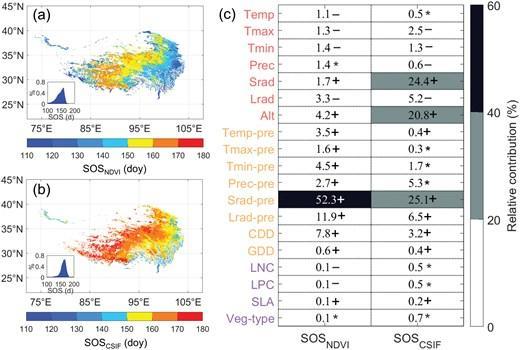
Fandong Meng et al. analyzed spring #Phenology on the Qinghai-Tibetan Plateau, and applied #BoostedRegressionTrees to evaluate the contributions of abiotic and biotic factors to spring phenology.
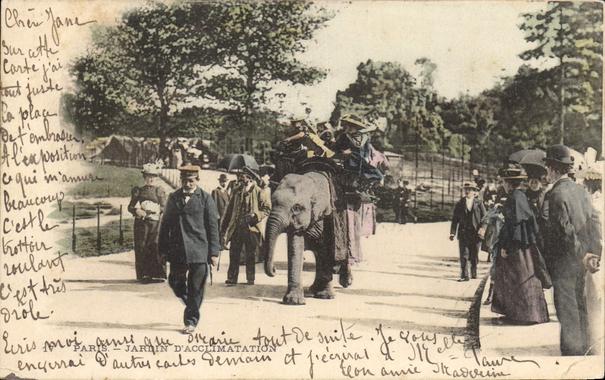
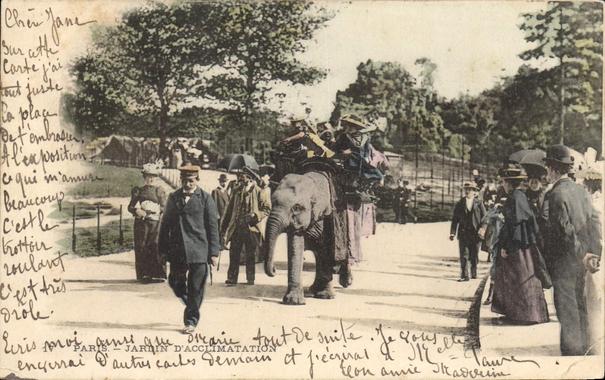
VINTAGE POSTCARD Paris Garden of acclimation Elephant
https://www.cpaphil.com/en/categories/elephants-3/pages/1
#Paris #Garden #Acclimation #Elephant #VintagePostcard #History #Heritage #VintageArt #Memory #Illustration
#HistoricalPostcard #ZooArt #ArtisticDesign #CulturalHeritage
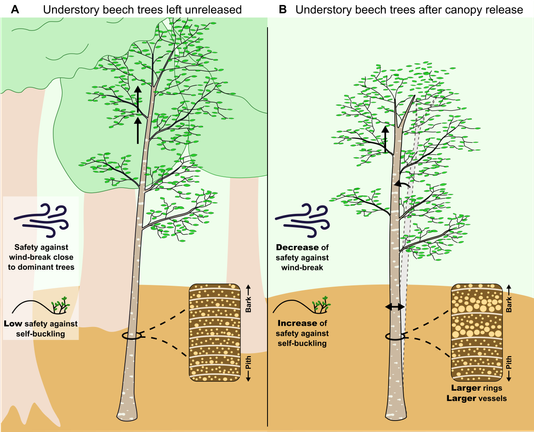
The dynamics of responses to #canopy opening in beech #trees 🌳
* W/o the protection from dominant trees, beech trees are more prone to wind-breaking 💨 🍃
* Decrease of axial growth, increase of radial growth, straighter stems :
👉 Increase of biomechanical safety through growth modification, w/o changes of #wood mechanical properties 🪵
* Increase of specific hydraulic conductivity 💧
Graphical abstract of Estelle Noyer’s PhD thesis 📜
Thriving in heat: Lessons from the colourful resilience of upside-down jellyfish 🪼
Maitri Manjunath covers work from #SciStrader & team investigating the heat stress responses of jellyfish collected from two distinct sites in the Florida Keys, USA.
Check out the preLight! ⬇️ 👀
#preprint #biology #jellyfish #ecology #physiology #zoology #acclimation #tolerance

'#Acclimation strategies of the green alga #Chlorella vulgaris to different #light regimes revealed by #physiological and comparative #proteomic analyses'
https://doi.org/10.1093/jxb/erad170
#AbioticStress #carotenoids #microalgae #photosynthesis #proteomics
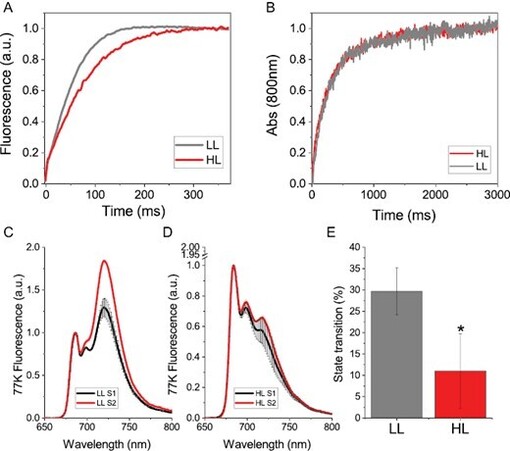

Acclimation to different irradiances was investigated in the fast-growing green alga Chlorella vulgaris, focusing on photosynthetic and mitochondrial activities
Reading Time: 3 minutesTable of Contents
Years ago, when working in an air conditioned office I came up with the theory that air conditioning, rather than helping us, during heatwaves, actually has the opposite effect. I came to this idea when I stepped out of my air conditioned office into a warm summer's day wearing a fleece, and maybe even a sweater. It seemed absurd at the time, because around me people were walking in t-shirts and shorts and I was dressed for winter.
I was reminded of this concept today when people spoke about how important air conditioning is, for making heatwaves bearable. I think the opposite is true. Air conditioning tricks our body into thinking we're in the middle of winter when we're in the middle of summer. Indoors we're dressed for the cold, and outside we get a thermal shock and find it unbearable.
Life Pre-Air Conditioning
Before I worked in air conditioning I would get hot, and I would need to drink, and wear a hat, but I would cope quite happily in all heats. After working in air conditioning for a year or two I noticed that my tolerance for heat was declining. My theory was that air conditioning trains your body to prefer a controlled temperature range. If it's cooler you're okay, but if it is warm you fry. I hated to think that I had lost my ability to cope with the heat. Over the last four summers I have lived in 29°c or more in my apartment so I feel the cold, but not the heat. My body has adapted.
I worked as a luggage handler during the 2003 heatwave without suffering at all.
Dependent on Machines
The problem with a lot of people is that they have forgotten that being drenched in sweat is normal. People are so used to be in a suit and tie for work, that they require air conditioning, not because the body can't cope with hot weather, but because suits and ties cook their wearers. Air conditioning is great for machines, and business men, but awful for human beings in normal clothing. People forget that in summer you get warm, and sweat, and drink water, and wear loose fitting clothes, and open windows.
One of my pet hates of air conditioning in warm weather is that a breeze, on a warm day cools the human body naturally. Water, as it evaporates cools us, and we can even shiver, because cooling that way is so effective. When you're in an air conditioned office with no air flow you suffer more than in an office with open windows, and a carton of ice tea, or a bottle of water. Drafts are excellent for cooling.
An Open Window and an Open Door
A few years ago I was working in a stuffy office that doubled as a TV studio and it would get warm. If I opened the window no air flowed, and I got the radiant heat from the tarmac outside. I then tried opening the door and that's when I got a cooling draft. As soon as the window was open the temperature dropped, or at least, my natural body's cooling mechanism came into play.
What I Dislike about Air Conditioning
What I dislike about air conditioning is that it requires closed windows. You're insulated from the world in a way that is unpleasant. It cools you so much that you feel cold, rather than comfortable. It requires you to wear extra layers in the middle of summer. The other thing I dislike is that air conditioning exhausts hot air. It has to heat ambient air to a much higher temperature, in order to provide a cooling effect. This seems paradoxical. Air conditioning heats and cools at the same time, but you are on the cool side, and you're heating the air outside.
The final problem with air conditioning is that it requires huge amounts of power. It wastes as much, or sometimes more than cooling. Do we really want to burn more fossil fuel, and add to the carbon dioxide in the air to cool ourselves? By cooling ourselves we are cooking ourselves. It's absurd. Air conditioning is part of the problem. Open windows do the same thing, with a much lower environmental cost.
And Finally
The only place where I want air conditioning is cars. I spent a few summers driving down motorways every weekend in a car with broken air conditioning and that's when I began to call the car "The oven". Cars do become ovens when they have sat in the sun all day long. The problem, on motorways is that you can't open the windows. You have to choose between 'cooking' with the windows closed, or being exhausted by the noise made by open windows at 120 kilometres per hour.
#acclimation #air-conditioning #heat
https://blog.main-vision.com/air-conditioning-and-heat-tolerance/
 Cpaphil
 Cpaphil
 Cpaphil
 Morgane Gillard
 preLights
 Journal of Experimental Botany
 richard
 arthurgessler
 Opgenoorth Lab - Plant Ecology