OpenAI Developers (@OpenAIDevs)

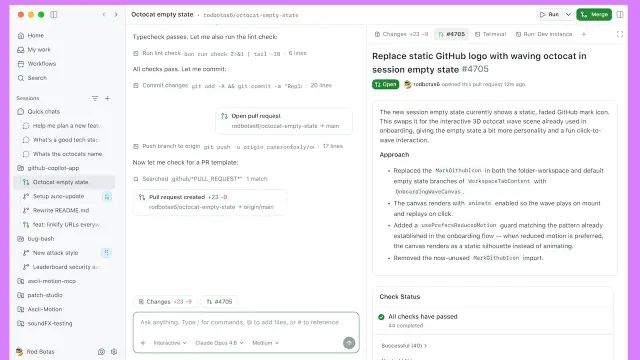
Codex 앱에서 GitHub 플러그인이 추가되어 이슈 검토, 피드백 반영, 변경사항 커밋, 오픈 풀 리퀘스트까지 지원한다. AI 코딩 도구가 실제 개발 워크플로우와 더 깊게 통합되는 업데이트다.

https://x.com/OpenAIDevs/status/2039118568252707144

#codex #github #plugin #developertools #aicoding

OpenAI Developers (@OpenAIDevs) on X

Review issues Address feedback Commit changes Open pull requests @GitHub plugin in the Codex app.

X (formerly Twitter)

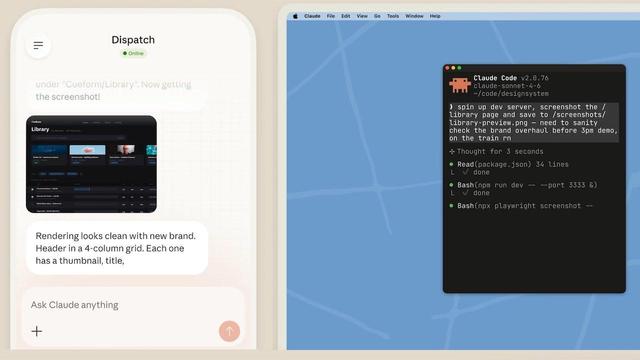
The plumbing behind Claude Code

https://programming.dev/post/48072889

Artificial Analysis (@ArtificialAnlys)

KwaiKAT가 비추론형 코딩 모델 KAT-Coder-Pro V2를 공개했다. Artificial Analysis Intelligence Index에서 44점을 기록해 전 버전 V1 대비 8점 향상되었으며, @KwaiAICoder의 주력 독점 코딩 모델이 업데이트됐다.

https://x.com/ArtificialAnlys/status/2038898573937635359

#aicoding #llm #modelrelease #proprietarymodel #artificialanalysis

Artificial Analysis (@ArtificialAnlys) on X

KwaiKAT has released KAT-Coder-Pro V2, a non-reasoning model that scores 44 on the Artificial Analysis Intelligence Index, an 8 point improvement from KAT-Coder-Pro V1 @KwaiAICoder has updated their flagship proprietary coding model with the release of KAT-Coder-Pro V2.

X (formerly Twitter)

Ein spannendes Paper zum Thema #AICoding. Die Autorin beschreibt darin wie AI neben der bekannten Technical auch einen Einfluss auf die Cognitive und Intent Debt hat.

Ich fand das sehr spannend. Sie schreibt, dass bei Technical Debt KI eine große Hilfe sein kann, beispielsweise bei Refactorings. Gleichzeitig kann KI-generierter Code aber auch ein großes Risiko im Bezug auf das Verständnis darstellen. Ich musste beim Lesen oft nicken.

https://arxiv.org/abs/2603.22106

From Technical Debt to Cognitive and Intent Debt: Rethinking Software Health in the Age of AI

Over time, the shared understanding that makes a software system safe to change quietly erodes. This gradual loss of understanding across a team increases cognitive debt, while the loss of captured rationale leads to intent debt. These may become more important, than technical debt in AI-assisted software development. This article proposes a triple debt model to reason about software health. It is built around three interacting debt types: technical debt in code, cognitive debt in people, and intent debt in externalized knowledge. Cognitive debt concerns what people understand; intent debt concerns what is explicitly captured for both people and machines to use in the future.

arXiv.org
Free AI Coding Skills for Rails — Opinionated Patterns That Work - Julian Rubisch

Free rules and conventions that teach your AI coding agent how to write Rails the right way. 37signals patterns, Phlex components, app scaffolding — install in your terminal, no signup required.