Air Pollution from Palm Oil: A Human Rights Issue

Forest-fire haze drifting from Indonesia to neighbouring countries every dry season has eluded efforts to curb it.

Land clearing by burning is prohibited in Indonesia and Malaysia. However, penalising foreign companies for palm oil and timber deforestation has been hampered by cronyism and corruption.

Under-explored legal avenues may provide new solutions to the decades-old problem. 

Everybody in the world deserves to breath in #cleanair. #Palmoil air #pollution is a global problem. Domestic and international laws could combat it together and provide solutions. #TheAirWeShare Story via @360info_global #Boycottpalmoil @palmoildetect https://palmoildetectives.com/2024/03/03/air-pollution-from-palm-oil-deforestation-is-a-human-rights-issue-affecting-everyone-in-s-e-asia/

Share to BlueSky Share to Twitter

Penalising foreign companies for #palmoil and #timber #deforestation in #Indonesia and #Malaysia has been hampered by #cronyism and #corruption at the highest levels of government. Story: @360info_global #TheAirWeShare #Boycottpalmoil #Boycott4Wildlife https://palmoildetectives.com/2024/03/03/air-pollution-from-palm-oil-deforestation-is-a-human-rights-issue-affecting-everyone-in-s-e-asia/

Share to BlueSky Share to Twitter

Written by Cecep Aminudin, a PhD candidate in environmental law at Padjadjaran University, Indonesia. Originally published as ‘Laying down the law on air pollution’ by 360info.org and republished under Creative Commons License.

Forest and land fires in Indonesia have attracted global attention since the great fires in 1982–83 and 1997–98. Large haze events occurred again in 20072012 and 2015, causing international alarm and cross-border pollution throughout Southeast Asia. Smoke from these sorts of fires is the biggest source of air pollution in Indonesia after transportation and energy emissions.

Companies – mostly oil-palm producers – have used fire as a tool to clear forests and peatland areas for agriculture, even though Indonesia and Malaysia are well aware of the need to strictly enforce bans on the practice. 

  • Indonesian and Malaysian laws since the 1997 haze event have not prevented local burning.
  • And penalising foreign companies for their actions in Indonesia and Malaysia has been hampered by cronyism and corruption, lack of awareness and education, weaknesses in the institutional framework and lack of political will.
  • Also, the penalties are too low to deter further pollution.
  • In recent years Indonesia’s environment ministry has brought more land- and forest-fire cases to court. Civil laws holding businesses accountable for the fires they cause have had some effect, according to a ministry report.

The ministry filed 21 cases between January 2015 and September 2020, and of these 10 were successful and 11 are still pending. Businesses have been ordered to pay compensation and restoration costs totalling almost US$1.38 billion.

These outcomes are related to the application of the precautionary principle in decision-making by Indonesian civil courts, as is common in environmental cases that involve scientific evidence.

According to this principle, lack of full scientific certainty shall not be used to make a decision regarding environmental protectionIndonesian courts applied the precautionary principle in the determining liable party and judging evidence even when there was scientific uncertainty.

Providing sufficient evidence in forest- and land-fire cases is often very difficult

Scientific evidence in the form of studies and expert opinion plays a crucial role in proving illegal fires have occurred, who started them, and how much environmental damage and loss they have caused.

Laboratory test reports can also be used as evidence in civil environmental-justice cases. Entirely at the judge’s discretion, these reports can be treated as expert testimony. Their relevance, which includes validity and reliability, and support from other expert testimonies, is a critical point in a judge’s decision to admit them as compelling legal evidence.

External regulation could complement and support the legal framework in each Southeast Asian country to ensure the activities of transnational companies meet environmental standards and the Association of Southeast Asian Nations (ASEAN) notion of cooperation.

Holding palm oil companies to account for air pollution under international law

A legitimate legislative framework could impose and enforce international environmental standards recognised under human rights obligations. In this way, palm oil plantation companies could be held accountable under international law for the pollution they cause elsewhere.

The victims of transboundary pollution and other environmental destruction are the people whose health will suffer, either in the short or the long term. Many countries have also suffered economic loss from direct damage and loss of economic activity. 

Holding polluters accountable will not just uphold domestic laws but also demonstrate political willingness to recognise air pollution as a human rights issue.

Cecep Aminudin is a PhD candidate in environmental law at Padjadjaran University, Bandung, Indonesia. He is the Chairman of ECOTAS, a research institute on sustainability. Apart from pursuing his doctoral degree, Aminudin conducts research, delivers training and consults on environmental law. He declares no conflict of interest in relation to this article and does not receive special funds in any form.

Originally published under Creative Commons by 360info™.

Written by Cecep Aminudin, a PhD candidate in environmental law at Padjadjaran University, Indonesia. Originally published as ‘Laying down the law on air pollution’ by 360info.org and republished under Creative Commons License.

ENDS

A 2019 World Health Organisation (WHO) report into the palm oil industry finds extensive greenwashing of human rights abuses, deforestation, air pollution and human health impacts

Read report

Big brands using “sustainable” RSPO palm oil yet still causing deforestation (there are many others)

Nestlé

Nestlé is destroying rainforests, releasing mega-tonnes of carbon into the atmosphere, and killing hundreds of endangered species. Once these animals are gone – they are gone for good. See Nestlé’s full list of…

Read more

by Palm Oil DetectivesFebruary 9, 2021March 2, 2025

Colgate-Palmolive

Despite global retail giant Colgate-Palmolive forming a coalition with other brands in 2020, virtue-signalling that they will stop all deforestation, they continue to do this – destroying rainforest and releasing mega-tonnes of carbon…

Read more

by Palm Oil DetectivesFebruary 9, 2021March 2, 2025

Mondelēz

Mondelez destroys rainforests, sending animals extinct and release mega-tonnes of carbon into air for so-called “sustainable” palm oil. Boycott them!

Read more

by Palm Oil DetectivesFebruary 9, 2021October 15, 2025

Unilever

In 2020, global retail giant Unilever unveiled a deforestation-free supply chain promise. By 2023 they would be deforestation free. This has been and gone and they are still causing deforestation. This brand has…

Read more

by Palm Oil DetectivesFebruary 9, 2021March 2, 2025

Danone

Savvy consumers have been pressuring French Dairy multinational Danone for decades to cease using deforestation palm oil. Yet they actually haven’t stopped this. From their website: ‘Danone is committed to eliminating deforestation from…

Read more

by Palm Oil DetectivesMarch 6, 2021March 2, 2025

PepsiCo

Despite decades of promises to end deforestation for palm oil PepsiCo (owner of crisp brands Frito-Lay, Cheetos and Doritos along with hundreds of other snack food brands) have continued sourcing palm oil that…

Read more

by Palm Oil DetectivesJune 9, 2022March 2, 2025

Procter & Gamble

Despite decades of promises to end deforestation for palm oil Procter & Gamble or (P&G as they are also known) have continued sourcing palm oil that causes ecocide, indigenous landgrabbing, and the habitat…

Read more

by Palm Oil DetectivesJune 3, 2022March 2, 2025

Kelloggs/Kellanova

In late 2023, Kelloggs became Kellanova for their US arm. Savvy consumers have been pressuring Kelloggs for decades to cease using deforestation palm oil. Yet they actually haven’t stopped this. From their website:…

Read more

by Palm Oil DetectivesFebruary 9, 2021March 2, 2025

Johnson & Johnson

Global mega-brand Johnson & Johnson have issued a position statement on palm oil in 2020. ‘At Johnson & Johnson, we are committed to doing our part to address the unsustainable rate of global…

Read more

by Palm Oil DetectivesFebruary 9, 2021July 13, 2025

PZ Cussons

PZ Cussons is a British-owned global retail giant. They own well-known supermarket brands in personal care, cleaning, household goods and toiletries categories, such as Imperial Leather, Morning Fresh, Carex, Radiant laundry powder and…

Read more

by Palm Oil DetectivesMarch 10, 2021March 2, 2025

Take Action in Five Ways

1. Join the #Boycott4Wildlife on social media and subscribe to stay in the loop: Share posts from this website to your own network on Twitter, Mastadon, Instagram, Facebook and Youtube using the hashtags #Boycottpalmoil #Boycott4Wildlife.

✓ Subscribed

2. Contribute stories: Academics, conservationists, scientists, indigenous rights advocates and animal rights advocates working to expose the corruption of the palm oil industry or to save animals can contribute stories to the website.

Wildlife Artist Juanchi Pérez

Read more

Mel Lumby: Dedicated Devotee to Borneo’s Living Beings

Read more

Anthropologist and Author Dr Sophie Chao

Read more

Health Physician Dr Evan Allen

Read more

The World’s Most Loved Cup: A Social, Ethical & Environmental History of Coffee by Aviary Doert

Read more

How do we stop the world’s ecosystems from going into a death spiral? A #SteadyState Economy

Read more

3. Supermarket sleuthing: Next time you’re in the supermarket, take photos of products containing palm oil. Share these to social media along with the hashtags to call out the greenwashing and ecocide of the brands who use palm oil. You can also take photos of palm oil free products and congratulate brands when they go palm oil free.

https://twitter.com/CuriousApe4/status/1526136783557529600?s=20

https://twitter.com/PhillDixon1/status/1749010345555788144?s=20

https://twitter.com/mugabe139/status/1678027567977078784?s=20

4. Take to the streets: Get in touch with Palm Oil Detectives to find out more.

5. Donate: Make a one-off or monthly donation to Palm Oil Detectives as a way of saying thank you and to help pay for ongoing running costs of the website and social media campaigns. Donate here

Pledge your support

#360infoOrg #airPollution #BoycottPalmOil #Boycott4wildlife #BoycottPalmOil #carbonemissions #cleanair #corruption #cronyism #deforestation #fire #fossilFuels #fossilfuel #fossilfuels #greenwashing #humanHealth #Indonesia #Malaysia #PalmOil #palmOilDeforestation #palmoil #pollution #SouthEastAsia #TheAirWeShare #timber

Oligarchs weaken Indonesia’s fight against corruption

The system is failing. #Indonesia’s own parliament, backed by big business interests, has succeeded in weakening the very system set up to fight corruption. Resist the corruption! #FightGreenwashing #Boycottpalmoil 🌴🩸⛔️ #Boycott4Wildlife

#Indonesia’s 🇮🇩 efforts to fight government #corruption 🤑👿are being thwarted by big #palmoil #timber and #mining businesses. Story: @360info_global Resist the corruption! #Boycottpalmoil 🌴🩸⛔️ #Boycott4Wildlife @palmoildetect https://palmoildetectives.com/2023/03/15/oligarchs-weaken-indonesias-fight-against-corruption/

Share to BlueSky Share to Twitter

‘Oligarchs weaken Indonesia’s fight against corruption’, written by Charles Simabura and Haykal, Universitas Andalas. Originally published on December 1, 2022 by 360info and republished here under Creative Commons licence. Read original article.

Indonesia’s efforts to fight government corruption are being corrupted from within parliament and backed by big business.

At the beginning of the 2000s, Indonesian voters said enough to corruption in politics. The Reform Order (1999) was designed to fight corruption. Then, in 2004, Indonesians elected President Yudhoyono largely on his promises to fight graft and corruption.

People demanded reform. Tools were put in place to attack the corruption endemic in public life that was holding back development.

But the system is failing. Indonesia’s own parliament, backed by big business interests, has succeeded in weakening the very system set up to fight corruption.

The tentacles of the oligarchs have wrapped themselves around the executive arm of government, where several cabinet members have considerable business interests. Indeed, 55 percent of Indonesia’s parliament members have significant business holdings.

“People demanded reform. Tools were put in place to attack the corruption that had become endemic in public life and was holding back development. But the system is failing. Indonesia’s own parliament, backed by big business interests, has succeeded in weakening the very system set up to fight corruption.” ~ Charles Simabura and Haykal, Andalas University, Indonesia.

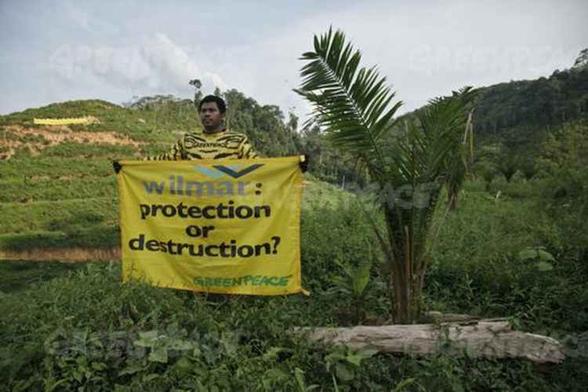
[Image] Wilmar responsible for palm oil deforestation despite supposedly using “sustainable” palm oil.

The marriage between penguasa (the ruler) and pengusaha (business people) is getting stronger in Indonesia’s politics

The Reform Order resulted in the creation of institutions that were expected to be able to free Indonesia from corruption.  The Corruption Eradication Commission (KPK) had powers to investigate corruption. The Constitutional Court acted as the guardian of the constitution. The Judicial Commission was intended to ensure proper behaviour from judges. And the Ombudsman served as the ‘policeman’ of state officials. 

But these institutions have failed to meet expectations.  The fervour to fight graft that was there 20 years ago has faded.  There has even been a revenge attack by corruptors backed by the oligarchs. A 2020 survey by Transparency International Indonesia showed he Indonesian Corruption Perception Index fell from 40 to 37. 

In addition, the People’s Representative body was considered the most corrupt institution in Indonesia. The numbers show why. Between 2004 and 2020, 274 members of local and national parliament were arrested.  Many MPs consider corruption eradication as a threat. 

Sumatran elephants: Surrounded by palm oil and nobody knows how many are left alive! #Boycottpalmoil #Boycott4Wildlife Find out more

The efforts to undo Indonesia’s anti-corruption framework began with efforts to review the Corruption Eradication Commission Law to the Constitutional Court, where, according to data, more than 20 requests for review have been submitted. At the end of President Yudhoyono’s first term, the parliament succeeded in pushing for a revision of the law. As a result, the Corruption Eradication Commission was weakened and was listed as an institution that the public no longer trusted.

It has since become a toothless tiger. The weakening of the anti-corruption body began with its leadership. There are also questions about the recruitment of commissioners  whose commitment to eradicating corruption is problematic.

Other commissioners  have repeatedly violated the code of ethics, One chose to resign to avoid being fired. Legislation suspected of being corrupt was successfully passed because it did not receive supervision from the Corruption Eradication Commission.

“The way to stop the erosion of Indonesia’s anti-corruption efforts must come from the top. But president Joko Widodo doesn’t seem to be taking any serious steps. People will remember his legacy as ignoring the Reform Order, unless he takes radical moves before leaving office in 2024.”  

There is a pattern of laws being drafted in secret and hastily passed which do not serve the interests of the public. The Anti-corruption body Law, the Mining Law, the Omnibus Law, and the Constitutional Court Law are all examples. The result is demonstrations. Any judicial review is usually rejected by the same people who passed the laws in the first place.

Parliament’s efforts to gain control over anti-corruption institutions have become increasingly evident, especially in the process of recruiting the members of those institutions. MPs replaced one constitutional judge because he was seen to be in conflict with the parliament’s agenda after he helped cancel the promulgation of the Omnibus Law.

The way to stop the erosion of Indonesia’s anti-corruption efforts must come from the top. But president Joko Widodo doesn’t seem to be taking any serious steps. People will remember his legacy as ignoring the Reform Order, unless he takes radical moves before leaving office in 2024. 

‘Oligarchs weaken Indonesia’s fight against corruption’, written by Charles Simabura and Haykal, Universitas Andalas. Originally published on December 1, 2022 by 360info and republished here under Creative Commons licence. Read original article.

ENDS

Read more about RSPO greenwashing

Lying Fake labels Indigenous Land-grabbing Human rights abuses Deforestation Human health hazards

Big brands using “sustainable” RSPO palm oil yet still causing deforestation (there are many others)

Nestlé

Nestlé is destroying rainforests, releasing mega-tonnes of carbon into the atmosphere, and killing hundreds of endangered species. Once these animals are gone – they are gone for good. See Nestlé’s full list of…

Read more

by Palm Oil DetectivesFebruary 9, 2021March 2, 2025

Colgate-Palmolive

Despite global retail giant Colgate-Palmolive forming a coalition with other brands in 2020, virtue-signalling that they will stop all deforestation, they continue to do this – destroying rainforest and releasing mega-tonnes of carbon…

Read more

by Palm Oil DetectivesFebruary 9, 2021March 2, 2025

Mondelēz

Despite the virtue-signalling of the palm oil certification body the RSPO, Mondelez’s so-called “sustainable” palm oil is linked to 37.000ha of palm oil deforestation since 2016 (Source: Chain Reaction Research). Mondelez destroys rainforests,…

Read more

by Palm Oil DetectivesFebruary 9, 2021March 2, 2025

Unilever

In 2020, global retail giant Unilever unveiled a deforestation-free supply chain promise. By 2023 they would be deforestation free. This has been and gone and they are still causing deforestation. This brand has…

Read more

by Palm Oil DetectivesFebruary 9, 2021March 2, 2025

Danone

Savvy consumers have been pressuring French Dairy multinational Danone for decades to cease using deforestation palm oil. Yet they actually haven’t stopped this. From their website: ‘Danone is committed to eliminating deforestation from…

Read more

by Palm Oil DetectivesMarch 6, 2021March 2, 2025

PepsiCo

Despite decades of promises to end deforestation for palm oil PepsiCo (owner of crisp brands Frito-Lay, Cheetos and Doritos along with hundreds of other snack food brands) have continued sourcing palm oil that…

Read more

by Palm Oil DetectivesJune 9, 2022March 2, 2025

Procter & Gamble

Despite decades of promises to end deforestation for palm oil Procter & Gamble or (P&G as they are also known) have continued sourcing palm oil that causes ecocide, indigenous landgrabbing, and the habitat…

Read more

by Palm Oil DetectivesJune 3, 2022March 2, 2025

Kelloggs/Kellanova

In late 2023, Kelloggs became Kellanova for their US arm. Savvy consumers have been pressuring Kelloggs for decades to cease using deforestation palm oil. Yet they actually haven’t stopped this. From their website:…

Read more

by Palm Oil DetectivesFebruary 9, 2021March 2, 2025

Johnson & Johnson

Global mega-brand Johnson & Johnson have issued a position statement on palm oil in 2020. ‘At Johnson & Johnson, we are committed to doing our part to address the unsustainable rate of global…

Read more

by Palm Oil DetectivesFebruary 9, 2021March 2, 2025

PZ Cussons

PZ Cussons is a British-owned global retail giant. They own well-known supermarket brands in personal care, cleaning, household goods and toiletries categories, such as Imperial Leather, Morning Fresh, Carex, Radiant laundry powder and…

Read more

by Palm Oil DetectivesMarch 10, 2021March 2, 2025

Take Action in Five Ways

1. Join the #Boycott4Wildlife on social media and subscribe to stay in the loop: Share posts from this website to your own network on Twitter, Mastadon, Instagram, Facebook and Youtube using the hashtags #Boycottpalmoil #Boycott4Wildlife.

Enter your email address

Sign Up

Join 1,392 other subscribers

2. Contribute stories: Academics, conservationists, scientists, indigenous rights advocates and animal rights advocates working to expose the corruption of the palm oil industry or to save animals can contribute stories to the website.

Wildlife Artist Juanchi Pérez

Read more

Mel Lumby: Dedicated Devotee to Borneo’s Living Beings

Read more

Anthropologist and Author Dr Sophie Chao

Read more

Health Physician Dr Evan Allen

Read more

The World’s Most Loved Cup: A Social, Ethical & Environmental History of Coffee by Aviary Doert

Read more

How do we stop the world’s ecosystems from going into a death spiral? A #SteadyState Economy

Read more

3. Supermarket sleuthing: Next time you’re in the supermarket, take photos of products containing palm oil. Share these to social media along with the hashtags to call out the greenwashing and ecocide of the brands who use palm oil. You can also take photos of palm oil free products and congratulate brands when they go palm oil free.

https://twitter.com/CuriousApe4/status/1526136783557529600?s=20

https://twitter.com/PhillDixon1/status/1749010345555788144?s=20

https://twitter.com/mugabe139/status/1678027567977078784?s=20

4. Take to the streets: Get in touch with Palm Oil Detectives to find out more.

5. Donate: Make a one-off or monthly donation to Palm Oil Detectives as a way of saying thank you and to help pay for ongoing running costs of the website and social media campaigns. Donate here

Pledge your support

#360infoOrg #BoycottPalmOil #Boycott4wildlife #BoycottPalmOil #corruption #deforestation #Fightgreenwashing #greenwashing #HumanRights #indigenousRights #Indonesia #landRights #landgrabbing #mining #misinformation #palmOilDeforestation #palmoil #RSPO #RSPOGreenwashing #timber