Piali Sengupta

312 Followers
208 Following
111 Posts
Brandeis Bio/Neuro. We study multiple aspects of sensory biology. Mostly in worms. Lab appears to be powered by vast quantities of junk food. Opinions mine.
@WorldImagining
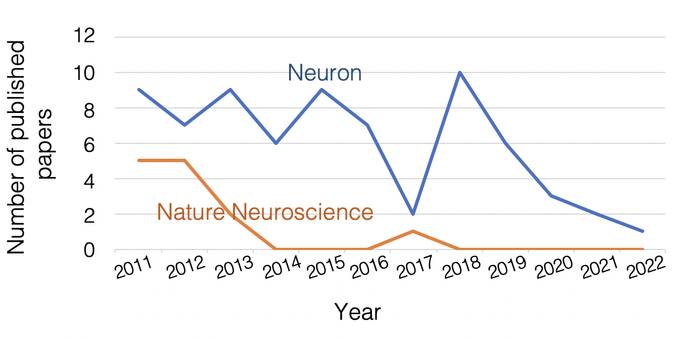
Nature publishes more worm papers. I looked only at Nature Neuroscience
For my #worm #neuroscience friends:
Was suspecting this trend so went looking for numbers. Searched for #research #papers (both short and long) with 'elegans' in abstract. Caveats - no idea what the denominator is of course, and no guarantee of accuracy.
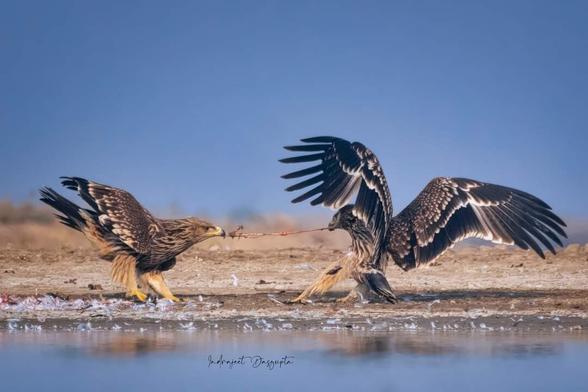
Two gorgeous pics from my very talented photographer bro-in-law Indrajeet Dasgupta. A lesser flamingo and a tug-of-war between two Eastern imperial eagles. At the Great Rann of Kutch salt marshes in Gujarat, India.
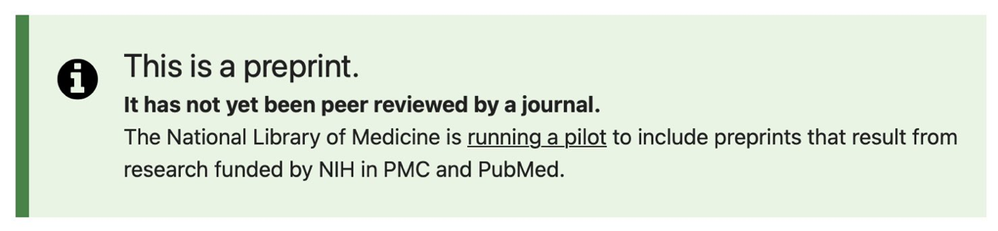
NIH Preprint Pilot! “Will make preprints resulting from research funded by NIH available via PubMed Central and, by extension, PubMed” https://www.ncbi.nlm.nih.gov/pmc/about/nihpreprints/
NIH Preprint Pilot

PubMed Central (PMC)

RT @npariente
🎂@PLOSBiology is 20!!🎂

A lot has changed in 20 years, but still a lot still to be done

PLOS Biology at 20: ain't no mountain high enough
https://plos.io/3RitvfI

Have a read and let me know what you think! https://twitter.com/PLOSBiology/status/1620389780642217984

PLOS Biology at 20: Ain’t no mountain high enough

As PLOS Biology enters its third decade, we reflect on our mission, what has changed, what remains to be done and our wishes for the future.

Many thanks also to co-authors –Zihao Zhuang, great ex-undergrad Matt Bernstein, Jamie Stonemetz, Tyler Hill, Yanxun Yu, and collaborator John Calarco. Comments welcome and happy reading!
THE END

These findings raise many fascinating questions. How are all these different stimulus features encoded at the level of gene expression in this one neuron pair?

Many of these genes are AFD-specific but controlled by broadly expressed #activity-dependent programs. How do the activity-regulated and cell identity programs interact to drive these gene batteries? What do all these genes DO? And more. 8/n

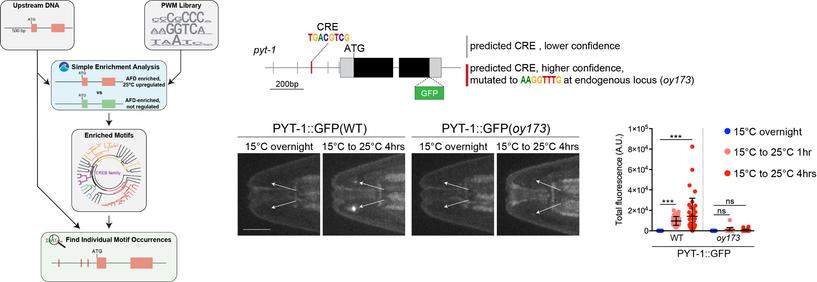
Also cool - a pyt-1 allele with just one upstream CREB site mutated has same plasticity defects as pyt-1 null.

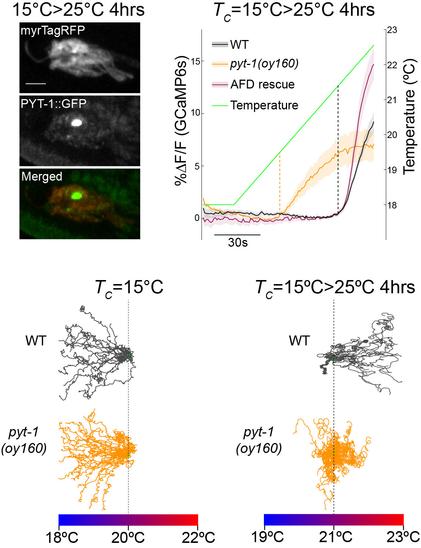
This means that the large magnitude temperature upshift works via CREB to directly upregulate pyt-1 so that AFD is able to change its response properties and drive behavioral plasticity specifically under these conditions. (See 3rd post in 🧵 ). 7/n

PYT-1 (named for its conserved PY motifs), is particularly cool. TM protein. Sits only at the AFD sensory endings. Responds transcriptionally only to a large magnitude temperature upshift. And, its function is required ONLY during this upshift to drive response and behavioral plasticity. 6/n

The gene #regulatory program is complex as expected, and is in part mediated by the usual suspects – calcium channels, CaMK and direct and indirect regulation by the #CREB transcription factor.

But does this differential regulation mean anything for AFD functions in response to specific temperature experiences? Yes!

Levels of the DAC-1 TF read out absolute warm growth temperature & this TF regulates the warm temperature-driven decision to enter the dauer stage. 5/n