233 Followers
39 Following
21 Posts
Visualizing information through photography.

De bloedmaan stijgt op boven het voormalig Ooglijdersgasthuis #Utrecht. De lichtpuntjes links: het spoor van Saturnus 🪐.

De volgende volledige maansverduistering boven NL is op 31 dec. 2028 - ongetwijfeld onder minder gunstige omstandigheden, al was het vanwege de temperatuur.

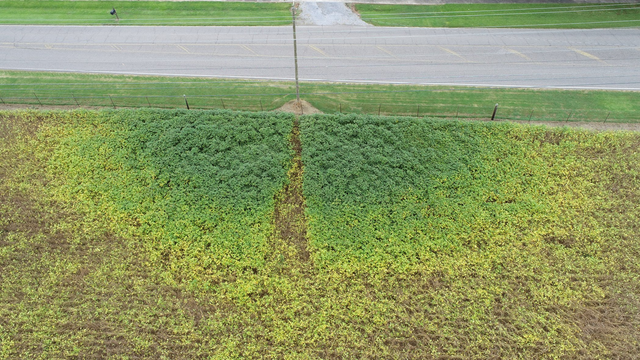
This is my favorite photo for demonstrating the impact of #LightPollution on physiology. The image was taken by shows a soybean field illuminated by a badly directed streetlight.

What's happening here is that soybeans are supposed to grow leaves in the early part of summer, and as nights get longer, they should make #soybeans and turn brown. In the green area, the plants don't understand what time of year it is, and it's therefore a complete loss for the farmer.

The reason I love the photo so much is because you can see the shadow of the light mast on the field.

The photo was taken by Dwaine Eddie McGriff & Ben Tankersley, and originally posted to Xitter (the post no longer exists).

The problem could be entirely solved by using a streetlight with strong backlight shielding (i.e. shining the light only on the roadway).

(4/17)
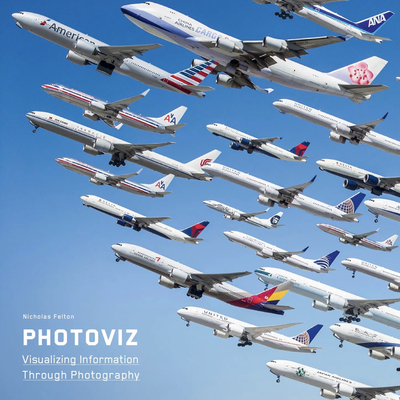
Ryan Imperio earned the top prize of Astronomy Photographer of the Year 2024 for his composite image “Distorted Shadows of the Moon's Surface Created by an Annular Eclipse”. This effect is created known as ‘Baily’s beads’, a phenomenon that occurs when bright shafts of sunlight peek through the Moon's uneven surface.

https://www.rmg.co.uk/stories/topics/beads-sunlight-photographing-annular-solar-eclipse-astronomy-photographer-year #photoviz

Beads of sunlight: photographing an annular solar eclipse

Ryan Imperio's spellbinding image of our Sun earned him the top prize in Astronomy Photographer of the Year 2024

Geoff Lowe decompresses the action at the 2024 Paris Olympics through his rich composite photos of the world's best athletes in motion.

https://www.instagram.com/geofflowe

Login • Instagram

Welcome back to Instagram. Sign in to check out what your friends, family & interests have been capturing & sharing around the world.

The #night #sky in 2023.

This shocking #photography was obtained from #Montana (#USA) over 17 minutes. It reveals the crazy number of #satellites orbiting the #Earth. Most of them are #StarLink (from #SpaceX / #Musk) and aim at providing internet to some remote places.

StarLink is not the only project for space-based #internet: there are also #Kuiper (#Amazon), #oneWeb, #Iris2 (@EU_Commission), etc... which will send even more satellites into #space

#Astronomy

Credits: Matt C. Jackson

How the Race Was Won. An amazing, info-dense composite photograph of a men's 110-meter hurdles semi-final — you can see and analyze the entire race, just from this one image. https://kottke.org/23/09/how-the-race-was-won
How the Race Was Won

What an amazing, info-dense composite photograph taken by Casey Sims of the semi-finals of the men’s 110-meter hurdles at

kottke.org

This exploration of phone camera EXIF data is really well done, especially because it goes beyond the standard camera parameters, so you get speed of travel, faces in the image, etc. Great stuff, I need to try that with my own pictures.

https://hturan.com/writing/exploring-exif

Exploring EXIF – Harley Turan

Exploratory interfaces for navigating photos

Harley Turan
A piece of software called Trainbot can watch a piece of train track, detect passing trains, and then stitch together panoramic images of the full-length trains. https://kottke.org/23/05/train-panoramas
Train Panoramas

The robots are coming for trainspotters. A piece of software called Trainbot can watch a piece of train track, detect passing tr

kottke.org
the average LAPD cop, based on thousands of headshots acquired by @stoplapdspying for https://watchthewatchers.net/
Watch The Watchers

A copwatch tool that publishes public records about LAPD

Der Spiegel - Time Compression by Alison Skowronnek visualizes 70 years of the German news weekly Der Spiegel. Each image merges slices from each of the 520 covers published per decade. Strips are added from left to right, allowing one to read a progression of temporal patterns over time. One can observe the prevalence of covers with portraits in the 1950s–60s, while in the period from 1960–1970 there was a clear shift from black and white to color.

https://alsino.io/spiegel-time-compression/

alsino skowronnek - studio for studio for data, design & painting

studio for data design & painting

alsino skowronnek