1 Followers
0 Following
57 Posts
Always Something To Say
Bloghttps://mytwocents.press/

The fault in our system: Why The George Stinney Jr. story is still important

Table of Contents

  • Introduction: The Fault in the System
    • The Systemic Failure of 1944
  • The Architecture of a Loophole
    • The 13th Amendment and the “Except” Clause
  • 81 Days: The Velocity of Injustice
    • Isolation, Confession, and the Ten-Minute Verdict
  • The Silent Suspect: When Justice is a Shield
    • The Burke Family and the Protected Elite
  • The Physical Impossibility
    • Engineering and the Laws of Physics vs. State Narrative
  • The Pattern: Beyond Alcolu
    • The Ghosts of Alexander McClay Williams, Joe Persons, and James Arcene
  • The Filter of Justice: Calibrating the Outcome
    • Over-Policing, Differential Processing, and the “Crime Rate” Myth
  • The Economic Engineering of Poverty: Wealth Theft
    • The Removal of the Breadwinner and Generational Economic Erasure
  • The “Why” of the Present
    • Modern Parallels and the Continuity of Disparity
  • A Note on “The Green Mile”
    • Magical Realism vs. Historical Reality
  • Conclusion: Closing the Loophole

Introduction: The fault in the system

When I first told my wife and my son about the subject of my next article, they cringed. I don’t blame them. As an engineer who spends my days developing solutions that ensure the reliability and integrity of the systems my clients depend on, my life is dedicated to solutions that are sound. But the story of George Stinney Jr. is a systems failure so profound, so gut-wrenching, that the natural human instinct is to look away.

I struggled with the “why” myself. Why revisit a tragedy from 1944? Why drag a 14-year-old boy back into the light only to watch him sit on a Bible to fit into an electric chair? The answer lies in the foundation of our country. If we do not understand the “Stinney Era,” we cannot understand the modern carceral state. We are not just looking at a sad story; we are looking at the blueprint of mass incarceration—the “teeth” that gave the Jim Crow era its bite.

The Architecture of a Loophole

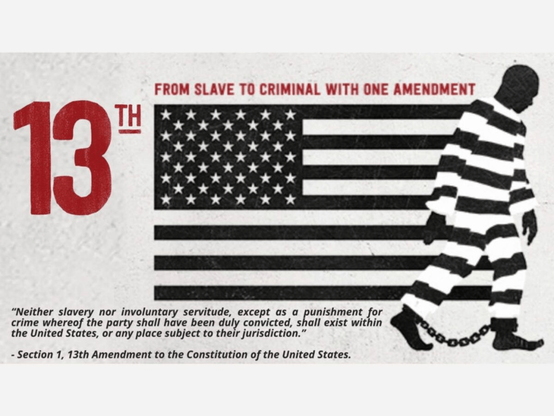
To understand why George Stinney was executed in 81 days, we have to go back further than 1944. We have to look at the 13th Amendment. While we celebrate it for “ending” slavery, it contained a structural flaw that was exploited by design:

“Neither slavery nor involuntary servitude, except as a punishment for crime whereof the party shall have been duly convicted, shall exist within the United States…”

That “except” clause is the most expensive word in American history. It created a legal bypass. If the state could label a Black person a “criminal,” it could legally return them to a state of servitude. Following the Civil War, Southern states engineered “Black Codes”—laws that criminalized everything from “vagrancy” to “loud talking.” This wasn’t about public safety; it was about labor and social control. The convict leasing system that followed was a direct evolution of the plantation, and by the mid-20th century, this system had evolved into the machinery of state-sanctioned terror that caught George Stinney in its gears.

81 Days: The Velocity of Injustice

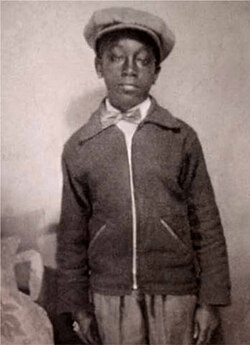
In March 1944, in the segregated mill town of Alcolu, South Carolina, two young white girls—Betty June Binnicker and Mary Emma Thames—were found dead in a ditch. The town wanted blood. George Stinney Jr., a 95-pound Black boy who had been seen near the girls earlier that day, was the easiest target.

The “system” functioned with terrifying efficiency:

  • Isolation: George was interrogated alone. His parents were forced to flee town under threat of violence, leaving their child in the hands of a mob-controlled state.
  • The “Confession”: The police claimed he confessed. No written record of this confession exists. There were no witnesses to the statement.
  • The Trial: The trial lasted barely two hours. George’s court-appointed lawyer, a tax commissioner with no trial experience, called zero witnesses and performed no cross-examination.
  • The Jury: An all-white jury took less than ten minutes to find him guilty. They did not recommend mercy.

On June 16, 1944, George Stinney Jr. became the youngest person executed in 20th-century America. He was so small that the adult-sized electrodes wouldn’t fit his head. They used a Bible—the very book used to swear in the “justice” that was killing him—as a booster seat. When the current hit, the oversized mask fell off, exposing his terrified, weeping face to the witnesses.

The Silent Suspect: When Justice is a Shield

If George Stinney Jr. did not kill those two girls, then who did? For seventy years, the state of South Carolina acted as if the question were settled. But in the decades following the execution, a much more sinister reality began to emerge from the shadows of Alcolu.

The leading theory, supported by local testimony and research presented during the 2014 exoneration hearing, points toward George Burke Jr. He was the son of a prominent white businessman who owned the lumber mill where George’s father worked. More chillingly, Burke’s father was the foreman of the jury that sent George Stinney to the electric chair.

The community had whispered for years about a deathbed confession from the Burke family, but in 1944, those whispers were a death sentence. In the social hierarchy of a segregated mill town, a member of the Burke family was untouchable. The “system” didn’t just need a culprit; it needed a diversion. By sacrificing a 14-year-old Black boy, the state provided the white community with “closure” while ensuring the powerful remained protected. This is the ultimate callousness: the law wasn’t used to find the truth; it was used as a shield for the privileged and a shroud for the innocent.

The Physical Impossibility

We must also look at the physics—the cold, hard data that the 1944 court ignored. The girls were killed with a fourteen-inch railroad spike, suffering massive skull fractures. Forensic experts in 2014 testified that it would have been physically impossible for a 95-pound child to wield such a weapon with the force required to kill two people while also managing to overpower them both.

George had an alibi—his sister, Amie, was with him grazing the family cow when the girls passed by—but in a system designed to exploit the “punishment clause” of the 13th Amendment, an alibi is just noise. The “duly convicted” label was the goal, and the state achieved it by ignoring the laws of physics and the screams of a child.

The Pattern: Beyond Alcolu

George was a centerpiece, but he was not an anomaly. As I researched this, I found the ghosts of other children whose names have been scrubbed from the collective memory:

  • Alexander McClay Williams (1931): At 16, he was the youngest person executed in Pennsylvania history. His “confession” was coerced, and the state suppressed evidence of a bloody handprint that didn’t match his. It took until 2022 for his conviction to be vacated.
  • Joe Persons (1915): A boy in Georgia, estimated to be 12 or 13, who was so small that officials debated adding weights to his feet so the hanging would “work.”
  • James Arcene (1885): A Cherokee youth executed for a crime committed when he was just 10 years old.

In each of these cases, the 13th Amendment’s “duly convicted” clause was the shield. By providing the thin veneer of a trial, the state could legally commit what was essentially a lynching.

The Filter of Justice: Calibrating the Outcome

When we discuss mass incarceration, a common counter-argument often arises: “Don’t Black people simply commit more crime?” I know that if you calibrate a sensor to only look for anomalies in one specific area, your data will be skewed. To understand the disparity, we must look past the “output” and analyze the “filter” of the legal machine.

1. The Frequency of Interaction Fallacy

The argument that Black people “commit more crime” often confuses crime rates with arrest rates. A 2023 UCLA study using smartphone data from 10,000 officers across 23 cities found that police spend significantly more time in Black neighborhoods, even when those neighborhoods have the same crime rates and income levels as white neighborhoods.

The result is simple math: if you put 100 police officers in one neighborhood and two in another, you will “discover” more crime in the first one—even if the actual behavior is identical. This creates a “feedback loop” where higher arrest records are used to justify even more policing, artificially inflating the statistical profile of a community.

2. Drug Use vs. Drug Arrests

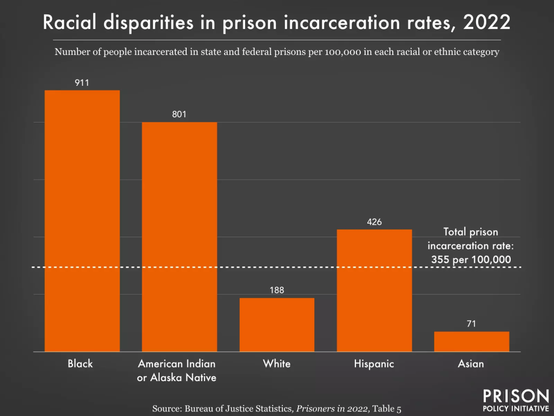
This is the “smoking gun” of systemic bias. For decades, federal surveys from the CDC and the NAACP have shown that Black and white Americans use and sell drugs at almost identical rates. However, despite similar usage, Black Americans are nearly 4 times more likely to be arrested for marijuana possession and 6 times more likely to be incarcerated for drug charges overall. It’s not about who is committing the crime; it’s about who the system is looking for.

3. The “Differential Processing” of Justice

Even when the crime and the criminal history are identical, the system treats the bodies differently:

  • Bail: Black defendants are 21% more likely to be denied bail, which forces them to stay in jail while awaiting trial—leading to lost jobs, lost homes, and a higher likelihood of eventually taking a “guilty plea” just to go home.
  • Plea Bargaining: Prosecutors are more likely to offer plea deals that include prison time to Black defendants, while white defendants are more likely to be offered “diversion programs” or probation.
  • Sentencing Length: According to 2026 data reports, Black men receive sentences that are 19.1% longer than white men for the exact same crimes.

4. Wrongful Convictions: The Margin of Error

If the system were truly objective, the rate of “mistakes” would be equal. It isn’t. Black people make up 13% of the population but over 50% of the exonerated population. Innocent Black people are 7 times more likely to be wrongfully convicted of murder and 12 times more likely to be wrongfully convicted of drug crimes than white people.

George Stinney Jr. is the historical proof of this. The system didn’t care about the truth; it cared about “closure” that fit the racial hierarchy. When someone says, “they commit more crime,” they are looking at the output of a machine and assuming it is a neutral scale. But as an engineer, I see a filter. It filters out white crime through warnings and diversions, and it filters in Black crime through over-policing and structural bias.

The Economic Engineering of Poverty: Wealth Theft

If you want to understand why a large percentage of the Black community remains trapped in poverty today, you need to look no further than the “teeth” of mass incarceration. It was never just about free labor for a season; it was about the permanent maintenance of a lower class.

When the state arrested George Stinney Jr., they didn’t just take a child; they destroyed a household. Within hours of his arrest, his father was fired from the local lumber mill. The family was given mere hours to vacate their company-owned housing and flee the town. They left behind their possessions, their community, and their stability.

Mass incarceration acts as a surgical strike against the Black family unit. By removing men—and in George’s case, the future men of the community—the system achieves several objectives:

  • Destruction of the Household Anchor: Historically, when a man was incarcerated or executed, the family lost its primary earner. According to the American Journal of Sociology, paternal incarceration is one of the single greatest predictors of a family falling below the poverty line.
  • The “Marriageable Men” Gap: By disproportionately removing Black men from the community, the state created a demographic vacuum. This forced single mothers into a cycle of “survival labor,” where the ability to save, invest, or purchase property became a mathematical impossibility.
  • Educational Depletion: A 2014 study by the National Academy of Sciences found that the children of incarcerated parents are significantly less likely to graduate from college, creating a “secondary sentence” that spans generations.

The Numbers Behind the Theft

The statistics are staggering:

  • The Wealth Gap: Today, the median white household holds roughly eight times the wealth of the median Black household. This is not a failure of work ethic; it is a result of a century of wealth-stripping policies.
  • Lifetime Loss: The Brennan Center for Justice estimated that formerly incarcerated people lose an average of $500,000 in lifetime earnings. When you multiply that by the millions of Black men swept up in the “War on Drugs,” you are looking at trillions of dollars in wealth that never entered the Black community.
  • Voter Disenfranchisement: In many states, a felony conviction (the “duly convicted” status of the 13th Amendment) leads to the loss of voting rights. This removes the community’s ability to vote for the very policies—school funding and housing—that build wealth.

Mass incarceration is not a “side effect” of poverty; it is the architect of it. It ensures that the Black community remains in a state of “perpetual catch-up.” Every time a generation begins to build equity, a new wave of “tough on crime” legislation resets the clock.

The “Why” of the Present

People ask me why this matters now. It matters because the “punishment clause” is still in the Constitution. The transition from the Jim Crow executions of the 40s to the mass incarceration boom of the 80s and 90s is a straight line.

I know that systems don’t fix themselves. When we look at the racial disparities in our modern prison system, we are seeing the same logic that executed George Stinney. We are seeing a system that prioritizes “closure” and “control” over “integrity.”

When the Stinney family was run out of town, they lost their property, their stability, and their history. This is how the wealth gap was engineered. Mass incarceration isn’t just about the person in the cell; it is about the “Generational Theft” of Black potential. We care about George Stinney because his execution was a warning shot: The law does not belong to you.

A Note on “The Green Mile”

By the way, as I dug into this, I noticed how many people believe that Stephen King’s The Green Mile is based on George Stinney. While King has never confirmed this, the parallels are undeniable: the two girls, the rural South, the wrongful execution.

But there is a dangerous difference. In the movie, John Coffey is a “Magical Negro”—a gentle giant with supernatural powers. In reality, George Stinney had no magic. He was just a scared 14-year-old child who wanted to go home. By turning these tragedies into “magical fables,” we risk softening the edges of the reality. We don’t need magic to explain George’s innocence; we just need to look at the physics of a 90-pound boy and the corruption of a system that didn’t care to measure the weight of the evidence.

Conclusion: Closing the Loophole

In 2014, seventy years after he was killed, Judge Carmen Mullen vacated George Stinney’s conviction. She cited “fundamental, constitutional violations of due process.” It was a victory, but a hollow one. You cannot return 70 years of life to a boy who was burned to death by his own government.

We revisit this story because the “crack” in the foundation is still there. As long as the 13th Amendment allows for slavery-by-another-name, and as long as our system views Black children as “superpredators” rather than children, George Stinney is not a ghost of the past. He is a mirror of the present.

If a system is designed to protect some by sacrificing others, it has no integrity. It is a bridge waiting to collapse. We owe it to George—and to the children whose names we don’t yet know—to stop patching the cracks and start questioning the blueprint. Until the “except as punishment” loophole is closed and the law is applied without the filter of power and race, we aren’t living in a state of justice. We are just living in a very long, very crowded Green Mile.

Glossary of Terms

  • 13th Amendment (Punishment Clause): The section of the US Constitution that abolished slavery except as punishment for a crime, creating a legal loophole for involuntary servitude.
  • Black Codes: Laws passed by Southern states after the Civil War to restrict the freedom of Black Americans and compel them to work in a labor economy based on low wages or debt.
  • Convict Leasing: A system in which state penitentiaries leased incarcerated people to private companies (e.g., coal mines, railroads) for labor.
  • Differential Processing: The phenomenon where individuals of different races are treated differently by the criminal justice system even when the alleged crimes are identical.
  • Doli Incapax: A legal doctrine (often ignored in the Jim Crow era) suggesting that children below a certain age are incapable of forming the intent to commit a crime.
  • Generational Wealth Theft: The systemic removal of assets, property, and earning potential from a specific community over time, preventing the accumulation of intergenerational wealth.
  • Jim Crow Era: The period (late 19th century to mid-20th century) characterized by state and local laws that enforced racial segregation in the United States.
  • Vacated Conviction: A legal ruling that voids a previous conviction, treating it as if it never happened due to errors or violations of rights (as seen in Stinney’s 2014 case).

Bibliography & References

Legal & Historical Documents

  • U.S. Const. amend. XIII. (1865). The 13th Amendment of the United States Constitution.
  • State of South Carolina v. George Stinney, Jr. (1944). Trial Transcript and Court Records (Archived).
  • Mullen, C. (2014). Order Vacating Judgment in the Case of State v. George Stinney, Jr. Circuit Court of South Carolina.

Academic Research & Books

  • Alexander, M. (2010). The New Jim Crow: Mass Incarceration in the Age of Colorblindness. The New Press.
  • Blackmon, D. A. (2008). Slavery by Another Name: The Re-Enslavement of Black Americans from the Civil War to World War II. Doubleday.
  • National Academy of Sciences. (2014). The Growth of Incarceration in the United States: Exploring Causes and Consequences. National Academies Press.
  • The Sentencing Project. (2023). The Color of Justice: Racial and Ethnic Disparity in State Prisons. ### Articles & Data Reports
  • Brennan Center for Justice. (2022). Conviction, Imprisonment, and Lost Earnings: How the Criminal Justice System Deepens Inequality.
  • UCLA Department of Sociology. (2023). Police Activity Analysis: Surveillance and Deployment in Urban Environments.
  • U.S. Sentencing Commission. (2024-2026). Report to the Congress: Federal Sentencing Statistics and Fentanyl Trafficking Trends.
  • Urban Institute. (2026). Racial Disparities in Charging and Plea Bargaining: A Longitudinal Study.
#13thamendment #Africanamericanculture #Americanculture #Americanhistory #Americansociety #Blogging #Civilrights #Dailyprompt #Georgestinneyjr #History #Massincarceration #Politics #Society #BlackHistory #History #HumanRights #news #politics

The Architecture of Denial: From the UN Floor to the Front Porch

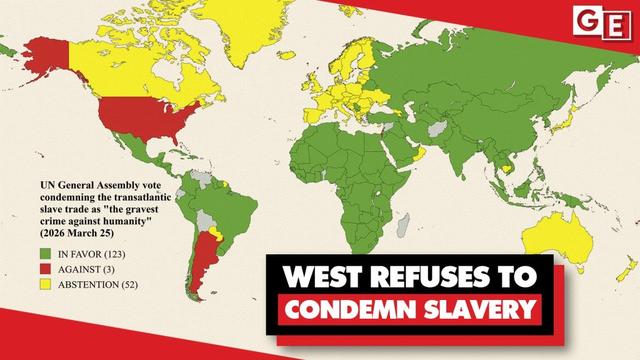
Picture taken from geopoliticaleconomy.com

Table of Contents

  • Introduction: The Long Shadow of the Ledger
  • The High Hall: A Vote Against History (The 2026 UN Resolution)
  • The Front Porch: The Law of the Customer (The 2015 Lowe’s Incident)
  • The Normalization of the Absurd: Why Color is a “Valid” Preference
  • The Economic Instinct: Liability over Liberty
  • The “Colorblind” Gaslight: A Rebuttal to the Critics
  • Conclusion: A Call to Action—Citizen or Customer?
  • Glossary of Terms
  • Bibliography & Source Notes
  • Introduction: The Long Shadow of the Ledger

    Every week, I sit down to write this column, and every week, I receive a handful of messages from readers telling me that I am “prolonging racism” by continuing to talk about it. They suggest that if I simply stopped pointing out the fire, the house would somehow stop burning. They ask for “colorblindness,” as if ignoring the paint on the walls changes the structural integrity of the foundation.

    But this week, a vote at the United Nations forced us to look at the foundation. It revealed a global, clinical logic that I call the Legality of Inhumanity—the idea that if a horror was once sanctioned by the state, it is exempt from moral accountability today. To see how this high-level diplomacy translates to our own streets, we don’t have to look back centuries. We only have to look back a decade. By juxtaposing a 2026 global resolution with a 2015 incident at a Lowe’s in Virginia, we see that the architecture of denial isn’t just a historical relic; it is the operating system of our modern world.

    The High Hall: A Vote Against History

    On March 25, 2026, the United Nations General Assembly Hall erupted in applause. In a historic 123-3 vote, the body adopted a resolution declaring the transatlantic slave trade and racialized chattel slavery as the “gravest crime against humanity.” For the first time at this level, the world formally acknowledged that the “chattelization” of human beings was the definitive break in world history that birthed our modern racial capitalist system.

    Yet, as the applause faded, the tally on the screen told a different story. The United States, alongside Israel and Argentina, cast a “No” vote. The defense offered by Deputy U.S. Ambassador Dan Negrea was a masterclass in clinical denial. He stated that the U.S. “does not recognize a legal right to reparations for historical wrongs that were not illegal under international law at the time they occurred.”

    This is the Legality of Inhumanity. It suggests that if the state signs a paper saying your life is a line item, then your suffering is legally invisible. It implies that justice is not an inherent human right, but a gift that the state can choose to withhold based on the fine print of a centuries-old ledger.

    The Front Porch: The Law of the Customer

    To understand how this logic manifests in our neighborhoods, we look to August 2015. Marcus Bradley, an 11-year veteran delivery driver for Lowe’s in Danville, Virginia, was pulled from his route. A customer had called and explicitly requested that no Black person step onto her property.

    The manager didn’t see the request as a moral emergency. He didn’t defend the dignity of his veteran employee. He called Bradley and told him to turn the truck around. When the customer was later asked about her demand, she hid behind the same shield the U.S. Ambassador used this week: “The Right.” She told reporters, “I got a right to have whatever I want and that’s it.”

    In her mind, her “right” as a consumer—her personal “law” of the marketplace—superseded Marcus Bradley’s humanity. The Ambassador uses International Law to protect the national treasury; the customer uses “Customer Rights” to protect her prejudice. They are speaking the same dialect of denial.

    The Normalization of the Absurd

    There is a deeper psychological rot here that we must address. If that customer had called and said, “I don’t want a driver who is over six feet tall,” or “I don’t want a driver with blue eyes,” the manager would have seen the ridiculousness of the request. He would have recognized it as a bizarre, irrational whim that no business could—or should—honor.

    But when she said she didn’t want a Black person, the manager didn’t find it “ridiculous.” He might not have agreed with her, but on some subconscious level, he understood her. In his mind, her racism was a “valid” preference that needed to be managed to save a sale.

    This is the core of the problem: In America, discriminating because of color is still not seen as egregious as other forms of absurdity. It is accepted as “just the way of things.” This is why the U.S. cannot bring itself to call slavery a “grave” crime, and why 52 nations (including the UK and much of the EU) chose to abstain from the vote. To them, the global hierarchy that puts Black lives at the bottom is so normalized that they view an attempt to label it a “crime” as a radical inconvenience rather than a moral necessity.

    The Economic Instinct: Liability over Liberty

    The U.S. government isn’t afraid of a history lesson; they are afraid of an invoice. The UN resolution explicitly links the “crime against humanity” label to reparatory justice. By refusing the label, the U.S. is practicing Liability Management. They are acting as defense attorneys for a bank account built on 400 years of stolen labor.

    The Lowe’s manager acted on the same survivalist instinct: “Keep the sale.” In a capitalist system, the fear of a lost sale outweighs the obligation to protect an employee’s soul. The institution calculated that the easiest way to balance the books was to erase the Black man from the equation. This is the Economics of Exclusion. It treats Black humanity as an “operating cost” that must be minimized to ensure the comfort of the “paying” population.

    The “Colorblind” Gaslight

    To the readers who tell me I am “prolonging racism”: look at the tally. Look at the Virginia driveway.

    I am not the one who made the UN vote about race; the U.S. government did when they decided that the “legal” rights of 18th-century enslavers were more important than the “human” rights of 21st-century descendants. I am not the one who made the delivery about race; the customer did when she looked at a veteran employee and saw only a color she wanted to exclude.

    You ask me to be “colorblind,” but you are asking me to be blind to the very ledger the world is using to calculate my worth. When you tell me to “move on,” you are asking me to accept a status quo where “Legality” is a shield for “Inhumanity.”

    We don’t prolong a fire by pointing at the smoke. We prolong it by pretending the house isn’t burning while the inhabitants are still trapped inside.

    A Call to Action: Citizen or Customer?

    We have reached a point where we must decide what kind of society we actually want to be. Are we a nation of Customers, where our only “right” is the right to have what we want, regardless of who is crushed in the process? Or are we a nation of Citizens, where our primary obligation is to uphold the inherent dignity of every person?

    Here is my challenge to you this week:

  • Audit the “Rights” you claim. The next time you say “I have a right to…” ask yourself if that right requires the erasure or exclusion of someone else’s humanity.
  • Reject the “Liability” Defense. Stop accepting “it’s too expensive” as an excuse for avoiding justice. Justice is never a “cost”—it is an investment in our collective survival.
  • Support the Record. Don’t look away. Read the history that the U.S. government tried to vote into non-existence this week. Acknowledge that the “Decade of Reparations” (2026-2036) isn’t about a handout; it’s about a settlement for a debt that has been accruing interest for four centuries.
  • I will keep writing. I will keep pointing at the fire. Not because I want to see the house burn, but because I believe we are still capable of building something better—if only we have the courage to admit that the foundation is currently on fire.

    Glossary of Terms

    • Chattel Slavery: A specific form of enslavement where the enslaved person is legally considered the personal property (chattel) of the owner and can be bought, sold, and inherited.
    • Crimes Against Humanity: Widespread or systematic attacks directed against any civilian population, with knowledge of the attack. As of March 2026, the UN explicitly includes the transatlantic slave trade in this definition.
    • Economics of Exclusion: A system where discriminatory practices are maintained or ignored because they are perceived to be more “profitable” or “efficient” than the alternative of justice.
    • Legality of Inhumanity: The rhetorical and legal defense that an atrocity cannot be punished or repaired if it was considered “legal” under the laws of the perpetrators at the time it occurred.
    • Liability Management: In a political context, the strategy of avoiding specific language or legal admissions (like “crime”) to prevent future financial obligations, such as reparations.
    • Reparatory Justice: A process that seeks to rectify the systemic harms of the past through a combination of financial restitution, institutional reform, and formal apologies.

    Bibliography & Source Notes

    Primary Sources

    • United Nations General Assembly. (2026, March 25). Resolution on the Transatlantic Slave Trade as a Grave Crime Against Humanity. UN Press Office.
    • Negrea, D. (2026). Statement by the Deputy U.S. Ambassador to the United Nations regarding Agenda Item 118: Follow-up to the Durban Declaration. U.S. Mission to the United Nations.
    • African Union. (2026). Declaration of the Decade of Reparations (2026-2036). AU Assembly of Heads of State.

    News Records & Case Studies

    • The Washington Post. (2015, August 12). “Lowe’s driver says he was pulled from delivery after customer’s ‘no black drivers’ request.”
    • ABC News / WSET-TV. (2015, August 10). Interview with Marcus Bradley: Discrimination in Danville, VA.
    • The New York Times. (2026, March 26). “U.S. Joins Minority in Voting Against U.N. Slavery Resolution.”

    Theoretical Framework

    • Robinson, C. (1983). Black Marxism: The Making of the Black Radical Tradition. (Used for the concept of “Racial Capitalism”).
    #Blogging #Chattelslavery #Dailyprompt #History #Politics #Society #UNgeneralassemblly #UNresolution #BlackHistory #History #news #politics #slavery

    The Right to Be Seen: Why Mental Health Crisis Response is a Human Rights Issue

    Table of Contents

  • The Human Right to Consideration
  • The Film That Forced Us to Look
  • The Breach: The Reality of Kenneth Chamberlain Sr.
  • The Legal Aftermath: A System Protecting Itself
  • Daniel’s Law
  • A Pattern of Dehumanization
  • Why Care Must Replace Control
  • The Video Evidence: A Mirror We Cannot Ignore
  • Call to Action
  • Glossary of Terms
  • Bibliography & Further Reading
  • The Human Right to Consideration

    We often talk about “rights” in a political sense—the right to vote, the right to protest, the right to equal opportunity. But there is a more fundamental right that we rarely name until it is stripped away: the right to be treated with basic human consideration by those in authority, especially when we are at our most vulnerable.

    I have seen firsthand the toll that mental health conditions take on families. I have walked alongside friends and loved ones as they navigated diagnoses that can make the world feel overwhelming, confusing, and frightening. When someone you love is in the throes of a mental health crisis, you aren’t looking for a “warrior.” You are looking for a bridge back to reality. You are looking for a hand to hold, not a hand on a holster.

    The Film That Forced Us to Look

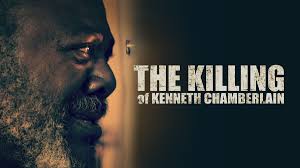
    I was recently stopped in my tracks by the film The Killing of Kenneth Chamberlain. It is a harrowing, claustrophobic piece of cinema that does something the 2012 grand jury failed to do: it forces you to sit in that hallway for every agonizing minute of the escalation.

    Watching the film, I was taken aback by the sheer callousness of the officers. It wasn’t just a “mistake” or a “miscommunication.” It was a total absence of empathy. The film uses the actual audio from the LifeStation medical alert box and the Taser camera, making it impossible to hide from the reality of what happened. It was this film that brought me to this topic, and it should be required viewing for every lawmaker.

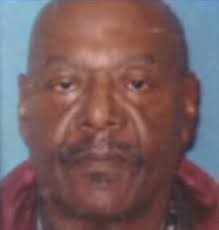
    Kenneth Chamberlain Sr.

    The Breach: The Reality of Kenneth Chamberlain Sr.

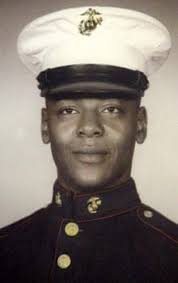
    On November 19, 2011, Kenneth Chamberlain Sr.—a 68-year-old retired Marine and father—was sleeping in his White Plains apartment. He lived with a heart condition and struggled with his mental health. When his medical alert pendant accidentally triggered, it was supposed to be a safety net. Instead, it became a death sentence.

    He had served his country with honor in both the Vietnam War and in Haiti. He survived the rigors of combat and the dangers of foreign service, returning home with an honorable discharge. He then spent another 20 years serving his community as a corrections officer.

    He survived war, only to be killed at home.

    The White Plains police arrived for a “wellness check.” From behind his locked door, Mr. Chamberlain repeatedly told them he was okay and asked them to leave. To anyone with a modicum of empathy, his distress was clear. He was a man in his own home, confused and fearful.

    The police didn’t see a decorated veteran; they saw a “subject.” They mocked his Marine slogans—as he shouted “Semper Fi” and “Hoorah” through the closed door, they shouted it back at him in a taunting, sarcastic tone while they pried at his door with a halligan tool. Think about that: a man who put his life on the line for this country was mocked by local police while he stood in his underwear, terrified, in his own home.

    They did not see a neighbor in need of consideration. They saw a challenge to their power. For over an hour, they escalated the situation. They mocked him. They used racial slurs that revealed a deep-seated callousness—a sign that they had already decided he was “less than.” When they finally smashed through his door, they didn’t bring a medic; they brought a Taser and a gun. The people we pay to protect us treated a veteran in crisis like an enemy combatant. They breached his door, Tased him, and fatally shot him twice in the chest.

    Kenneth Chamberlain Sr. was killed for the “crime” of being confused and non-compliant during a medical accident. No one deserves that. No family should have to watch their patriarch being taunted and slaughtered by the people paid to protect him. It is a violation of the basic human right to dignity.

    The Legal Aftermath: A System Protecting Itself

    One of the most disturbing aspects of the Chamberlain case—and the film that depicts it—is the use of racial slurs by the officers. In the legal proceedings that followed, these slurs were largely glossed over. The system treated them as “incidental” or “salty language” rather than what they truly were: evidence of a biased mindset that dictated the use of lethal force.

    This is the “Blue Wall of Silence” in action. It isn’t just about officers refusing to testify against one another; it is about a legal culture that normalizes racism. When a grand jury declines to indict despite audio proof of racial taunting, it sends a message that the victim’s humanity is secondary to the officer’s “discretion.” It tells us that for certain people, the “protection” of the law does not apply.

    The tragedy of Kenneth Chamberlain Sr. did not end when the bullets were fired. For his family, a second trauma began in the courtrooms of Westchester County. To understand why we need reform, we must look at how the legal system systematically dismantled any hope for officer accountability.

    The Grand Jury (2012) In May 2012, a Westchester County Grand Jury declined to indict any of the officers involved. Grand jury proceedings are secret, but the outcome was a clear signal: the state did not believe a crime had been committed. Despite the audio recording of racial slurs, the DA’s office at the time argued that the use of the “n-word” by an officer—while “deplorable”—did not prove criminal intent in the shooting. By separating the bias from the bullets, the system allowed the officers to hide behind the “reasonable officer” standard. They argued that because Mr. Chamberlain had a small knife, any level of force was justified.

    The Federal Response (2014) The family turned to the U.S. Department of Justice, hoping for a civil rights indictment. However, in 2014, federal prosecutors announced they would not bring charges, stating there was “insufficient evidence” to prove the officers willfully violated Chamberlain’s rights. This highlights a terrifying reality: under current law, an officer can be biased, aggressive, and unnecessary in their escalation, but as long as they claim they “feared for their safety” in the final second, the law protects them.

    The Civil Settlement and the Family’s Stand (2023) It took twelve years of relentless advocacy by Kenneth Chamberlain Jr. to achieve even a fragment of acknowledgment. After several lower courts dismissed the family’s civil lawsuits, a federal appeals court in 2020 made a landmark ruling. They stated that a jury should indeed decide if the police had any legal right to break down the door in the first place. This hit at the heart of the “Control” model: just because police are called for a wellness check doesn’t mean they have a blank check to destroy property and lives.

    In 2023, the City of White Plains finally agreed to a $5 million settlement with the family. But for Kenneth Jr., the money was never the point. Upon the settlement, he stated:

    “This is not justice. Justice would be my father still being here. Justice would be the officers facing a jury of their peers. This is simply a way for the city to move on, but we will never move on until the laws change.”

    The family’s reaction has been one of “transformed grief.” They have used the settlement and their platform to become the leading voices for Daniel’s Law, turning their private pain into a public demand for a system that values a Black man’s life over an officer’s ego.

    Daniel’s Law

    The fight to ensure this never happens again is currently crystallized in a piece of New York legislation known as Daniel’s Law.

    The law is named after Daniel Prude, a 41-year-old Black man who was experiencing a mental health crisis in Rochester, NY, in March 2020. Daniel’s brother, Joe, did what any of us would do for a family member in distress: he called 911. He was seeking a “wellness check.” He was seeking help.

    When police arrived, they found Daniel naked in the street during a light snowfall. He was unarmed and clearly suffering from a psychotic break. Instead of a blanket and a clinician, Daniel was met with handcuffs and a “spit hood.” Officers pressed his head into the pavement until he lost consciousness. He died a week later.

    The tragedy of Daniel Prude is the tragedy of every family member who has ever hesitated to call for help because they fear the “help” will be fatal. Daniel’s Law (S3670/A4617) aims to end this fear by mandating that mental health professionals and peers—people trained in de-escalation and empathy—be the primary responders to these calls.

    The Crisis Next Door: Mental Health Statistics

    This isn’t just “someone else’s” problem. Mental health struggles are woven into the fabric of American life. When we ignore these cases, we are ignoring our own neighbors and family members.

    • Veterans and PTSD: According to the VA, approximately 7 out of every 100 veterans will have PTSD at some point in their lives. For Vietnam veterans like Mr. Chamberlain, that number is estimated to be even higher. Veterans are at a significantly higher risk for mental health crises, yet they are often met by police who are trained for combat, not clinical care.
    • The National Landscape: About 1 in 5 U.S. adults (over 50 million people) experience mental illness each year.
    • The High Stakes of 911: People with untreated mental illness are 16 times more likely to be killed during a police encounter than other civilians.

    If you have a son, a sister, or a father who struggles with depression, bipolar disorder, or PTSD, Kenneth Chamberlain’s story could easily be theirs. We are all just one “accidental” call away from a system that prioritizes control over care.

    A Pattern of Dehumanization

    If we are to argue that consideration is a human right, we must look at the cases where that right was systematically denied. The pattern is clear: when the police are the only tool in the toolbox, every crisis looks like a nail.

    • Deborah Danner (2016): A 66-year-old Bronx woman who lived with schizophrenia. During a wellness check, a Sergeant ignored the presence of health professionals and shot her in her bedroom.
    • Kawaski Trawick (2019): A 32-year-old man in the Bronx who had locked himself out of his apartment while cooking. After the Fire Department let him in, police arrived and broke through his door. In just 112 seconds, they Tased and killed him.
    • Saheed Vassell (2018): A man known by his Crown Heights neighborhood for his struggles with bipolar disorder. He was “managed” by his community with care for years. But when the state intervened, they shot him within seconds of arriving.

    Why Care Must Replace Control

    The current system is built on control. It demands immediate compliance, regardless of whether a person is physically or mentally capable of providing it. But mental health is a public health reality. Having family members with these conditions teaches you that “compliance” isn’t always an option during a crisis. What is needed is time, space, and de-escalation.

    Daniel’s Law is a demand for a new social contract. It proposes a Mental Health Response Council that would redirect 911 calls away from police dispatch and toward clinical teams, utilizing “Peers” who have lived through mental health challenges.

    The Video Evidence: A Mirror We Cannot Ignore

    If there is one thing I took away from the film and the real-life footage of these cases, it is that video evidence is the only reason we are even having this conversation. For decades, these killings happened in the dark. The “official narrative”—the police report—was the only truth allowed to exist. But video and audio don’t lie. They capture the racial slurs that the courts want to ignore.

    Without the Taser camera and the LifeStation audio, Kenneth Chamberlain Sr. would have been just another statistic. The video stripped away that lie. It showed us a man who was terrified and a police force that was relentless. Video gives us the truth, but it doesn’t give us justice. That part is up to us.

    Call to Action

    I urge you to contact your New York State representatives and ask them to support Daniel’s Law.

    Primary Contacts:

    • Senator Samra Brouk (SD-55, Chair of the Senate Mental Health Committee)
    • Assemblymember Jo Anne Simon (AD-52, Chair of the Assembly Mental Health Committee)
    • Assemblymember Harry Bronson (AD-138, Primary Sponsor)

    Glossary of Terms

    • Blue Wall of Silence: An informal code of silence among police officers not to report on a colleague’s errors, misconduct, or crimes.
    • Daniel’s Law (S3670/A4617): Proposed New York State legislation that would establish a state council to oversee mental health emergency responses by health professionals rather than law enforcement.
    • De-escalation: A set of techniques used to reduce the intensity of a conflict or a potentially violent situation.
    • EDP (Emotionally Disturbed Person): A law enforcement term for an individual appearing to be mentally ill or having a psychiatric crisis.
    • Qualified Immunity: A legal doctrine that shields government officials from being held personally liable for constitutional violations—like the right to be free from excessive police force—for money damages under federal law so long as the officials did not violate “clearly established” law.
    • Wellness Check: A police visit to a person’s home to ensure they are safe, often requested by family, neighbors, or medical alert companies.

    Bibliography & Further Reading

    • Chamberlain Jr., K. (2021). The Killing of Kenneth Chamberlain: A Son’s Search for Justice. (Personal Advocacy & Interviews).
    • New York State Senate. (2025). Senate Bill S3670: The Daniel’s Law Act. [Official Legislative Record].
    • ProPublica. (2020). How Police “Wellness Checks” Can Turn Deadly. Investigative Report on mental health dispatches.
    • The New York Times. (2012). Grand Jury Declines to Indict Officers in Shooting of Kenneth Chamberlain Sr. [Archived News Report].
    • The Urban Institute. (2024). The Impact of Civilian-Led Crisis Response Models in Urban Environments. Research Study.
    • Wertz, David. (Director). (2019). The Killing of Kenneth Chamberlain. [Feature Film].
    #Blogging #CivilRightsHistory #Dailyprompt #Danielslaw #Humanrights #Kennethchamberlain #Mentalhealth #Socialjustice #Thekillingofkennethchamberlainmovie #History #politics #Society