 hrbrmstr 🇺🇦 🇬🇱 🇨🇦
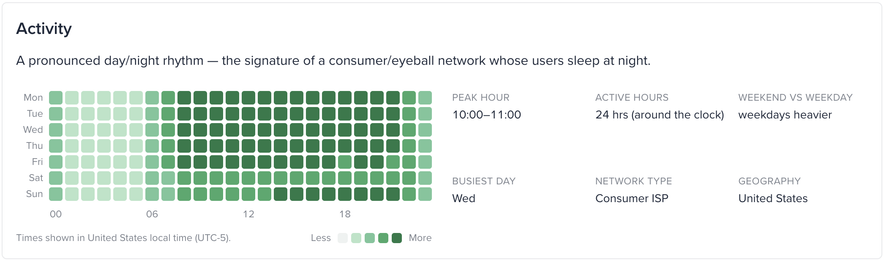
via @mle => neat new "GitHub activity heatmap"-esque ASN vis feature on IPInfo
| web | https://whyli.me |
via @mle => neat new "GitHub activity heatmap"-esque ASN vis feature on IPInfo
TIL about SQL pipe syntax. It was proposed in 2024 but I just came across it today. Seems like a cool idea.

Slept, had a solid stroller speed + hills workout, and I have fresh blueberries AND raspberries for my oatmeal today. Watch out, world.
I've worn a Garmin for 10+ years and logged thousands of runs, rides, hikes...you name it. That data can also tell you where I live, where I've traveled, and when I've been under stress.
After reading @zackwhittaker 's recent story on Oura ring's lack of transparency reporting, I was curious about the current state of other wearables.
I looked at 12 major wearable brands to see who publishes transparency reports (aka the documents that tell you how often a company hands your data to the government).
2 out of 12 do: Apple and Google/Fitbit.
https://whyli.me/blog/wearable-transparency/

What a name for an ISAC
RE: https://infosec.exchange/@metacurity/116606035408836456
One wonders about the “unnamed” VSCode extension 
some good things:
met some friends for a run this morning (like the old days 🥲)
have fresh sourdough for toast and reasonably strong iced coffee
shared some crisp apple slices with small human this morning
working on a hackathon project with some of my favorite people (and VERY COOL DATA)
I wrote about AI notetakers, the erosion of consent, and the hidden cost of the permanent record.
Have you changed the way you speak in meetings since the bots arrived?
Today’s the first day I’ve left the house for a full-day work thing since small human was born and it’s so strange.
I feel like I’m wearing a giant “NEW MOM” sign on my head but also literally nobody has any idea which is almost weirder?
I’ve been thinking a lot about all these identities we carry around with us lately. I don’t have anything cohesive or profound to say about it yet (or maybe ever?), but it’s so surreal.
 Ron Bowes
 Yael Grauer