miller_klein

91 Followers
55 Following
280 Posts

Founder Miller-Klein Associates Ltd.

Innovation, Sustainability, and the Future of Cities and Urban Living.

Current focus on net-zero transition plans.

Twitterhttps://twitter.com/miller_klein

We all contribute to climate change, but our contributions aren't equal.

πŸ’° The richest 1% produce more than twice the carbon emissions of the poorest 50%.

🌍 People living in countries like Australia, Canada and the US emit over 20x the carbon of those in many low-income countries.

πŸ‡ΊπŸ‡Έ In the US, 12% consume half the meat and fly two thirds of the miles.

That's why we need system change: so the easiest and most affordable options for everyone are also the best options for people and the planet.

Over the last few decades the U.S. has seen a surge in billion-dollar weather disasters and this year tops the list (and it's only September!)

On average, there's been...
πŸ“… 1980s: a disaster every 4 months
πŸ“… 2010s: a disaster every 3 weeks
πŸ“… 2023: one every 2 weeks - so far

Extreme weather isn't new, but as the planet warms it's making extremes more frequent and/or more dangerous-- and, increasingly, we can put a number on just how much worse climate change is making them.

Read more: https://www.nytimes.com/2021/08/17/opinion/extreme-weather-climate-change.html?unlocked_article_code=B8ArVhU5TMA3yRhDQvEg4UViDGsFinhtl_NQhxMfqHUnPB8eOiAedpxpPheQlXjlkk7iKrBKmV5Vwt7DM7YpujUl2nMGxvcmGQLYXXkh90DaHREtSIn1IBPR4rBNEVCdmdcDpc9Jlkc20odxKlMSRrMeiI6fwCi-dqOpFCiisSGR1Mbd0jvsROs4tjy1Ul9XFXsSVGeC-tKdX5c_3KtVtgE0Y4am8M3-oMysAQXhelA9ztVBgEWny_YA3CFz30RQlUtiv14FYfZgZtlpUXlKRjPGHReBfgNWHZ6WIPag3gdxDwuG7YvZc8EoSiKwAyPmh9soyV7MXDc9lnoIQtpJB_RaYt7wJVG4XQ&smid=url-share

Opinion | What Cutting-Edge Science Can Tell Us About Extreme Weather

Advances in attribution science have made clear how climate change is making floods, fires and heat waves worse.

The New York Times
The track of the sun recorded between Jan 2022 and May 2023 with a pinhole camera (solarcan.co.uk) tucked up in the eaves of my house. #astronomy @TheSolarCan #photography
RT @nicholas_till
So I’ve made it into Private Eye at last (for the right reasons).
A group of climate activists @InsureOurFuture has called on 30 insurance company bosses to "immediately" stop underwriting new #FossilFuel projects in the wake of a stark climate warning from UN πŸ‡ΊπŸ‡³ #IPCC scientists in a letter seen by Reuters https://www.reuters.com/business/sustainable-business/stop-insuring-carbon-projects-immediately-ngos-tell-ceos-2023-03-28/
Stop insuring carbon projects 'immediately', activists tell bosses

A group of climate activists has called on 30 insurance company bosses to "immediately" stop underwriting new fossil fuel projects in the wake of a stark climate warning from U.N. scientists, a letter seen by Reuters showed.

Reuters

RT @heatpolicyrich
Maybe by the time I retire it will be:

Explain how a fridge works?
It's like a heat pump in reverse.

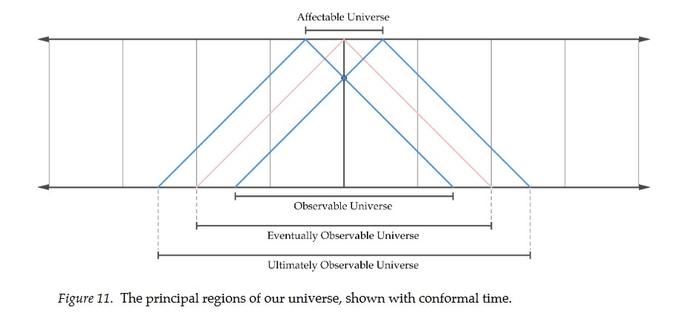
Toby Ord's chart shows 4 things:

β€’ Everything we can observe now is the "observable universe".

β€’ Everything we can ever observe if we stay here is the "eventually observable universe".

β€’ Everything we can ever observe if we send spacecraft out in every direction at all speeds slower than light is the "ultimately observable universe".

β€’ Everything those spacecraft can ever affect is the "affectable universe".

His chart is drawn in funny coordinates where a galaxy at rest moves straight up the page and light moves at 45Β° angles. The Big Bang is the horizontal line at the bottom, and the infinite future is the horizontal line at top. The expansion of the universe is hidden in these coordinates!

How big are these 4 things?

β€’ When we observe distant galaxies we see what they were like long ago, when they were closer. Those galaxies *now* form a ball of radius 46 billion light years in diameter. So people say the radius of the observable universe is 46 billion light years. But beware: we can't see what the galaxies in the observable universe look like *now*.

β€’ The galaxies in the eventually observable universe *now* form a ball of radius 63 billion light years.

β€’ The galaxies in the ultimately observable universe *now* form a ball of radius 80 billion light years.

β€’ The galaxies in the affectable universe *now* form a ball of radius 16 billion light years.

These figures change with time. For example, shortly after the Big Bang the radius of the affectable universe was 63 billion light years. It has now shrunk to 16 billion light years. 90% of the galaxies we could in theory once reach - if we could have started right away - are lost to us now!

(1/2)

RT @MaxFordhamLLP
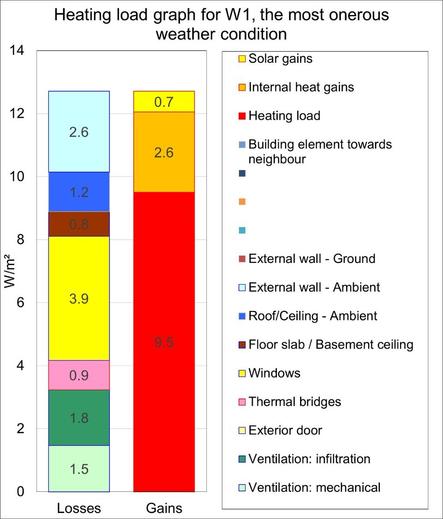
We’re big fans of the energy modelling tool #PHPP, so in 2021 we developed a plug-in that generates a peak heating load graph and shared it with our followers.

We have now updated the plug-in for PHPP 10.

Get the update here πŸ‘‰ http://bit.ly/3lmKpOP

#Passivhaus @phplusmag

PHPP Plug-in: Peak Heating Load - PHPP 10 - Max Fordham

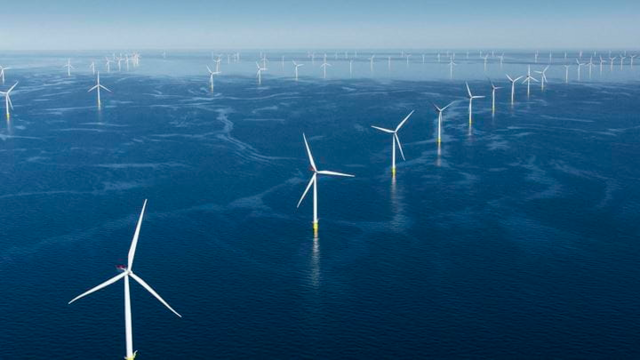
Right now, the entire country of Denmark is using 4245MW of electricity.

Windmills are producing: 3442 MW
Solar is producing: 746 MW

So if we do the math, wind + solar = 98.7% of our energy use right now is 100% renewable

Just a reminder that not only can we fix climate change, we are fixing it.

@miller_klein

What a beautiful image!

The cosmos is there we come from.

Earth is the small planet, there we make our stand (Carl Sagan). Ther are thousands of planets in the making in this image. Will there be life on one of these? Might there be conscious beings developing on one of those?

We still do not know. Let's "...deal more kindly with one another, and preserve and cherish the pale blue dot, the only home we've ever known." (Carl again)