
Martin Gratzer

@mgratzer
133 Followers
241 Following
429 Posts
👨‍💻 Staff+ Software Engineer
👨‍👩‍👧‍👦 Raising padawans with @miripapiri
🚵 Weekend warrior on the road bike
📷 Hibernating photo walker
Githubhttps://github.com/mgratzer
Homehttps://mgratzer.com
Workhttps://www.topmind.eu
Bskyhttps://bsky.app/profile/mgratzer.com
“If someone 50 years ago planted a row of oaks or a chestnut tree on your plot of land, you have something that no amount of money or effort can replicate. The only way is to wait.” https://lucumr.pocoo.org/2026/3/20/some-things-just-take-time/
Some Things Just Take Time

On friction, patience, and planting trees.

Armin Ronacher's Thoughts and Writings

Weekend project that got a bit meta: I build an agent skill that coaches you how to build a coding agent from scratch.

Eight steps and you understand what's happening when these tools work.

https://mgratzer.com/posts/from-ore-to-iron/

From Ore to Iron: Build Your Own Coding Agent | Martin Gratzer

I used a coding agent to build a skill that runs inside a coding agent to show how to build a coding agent. It's agents all the way down.

I finally wrote something longer than a toot. First blog post, about building software with agents and the workflow I developed around it.

I built an app for my kids over the holidays. What surprised me wasn't how much the agent could do, but how much the result improved when I treated it like onboarding a new team member instead of prompting a tool.

The post covers the workflow, what worked, where agents fall short, and why code review matters more now, not less.

https://mgratzer.com/posts/forging-a-workflow/

Forging a Workflow: Agentic Engineering in Practice | Martin Gratzer

A side project, a workflow, and the case for keeping humans in the loop when agents write the code.

Just finished Super Mario Wonder with my kids. The joy on their faces the whole way through… Nintendo just gets it.

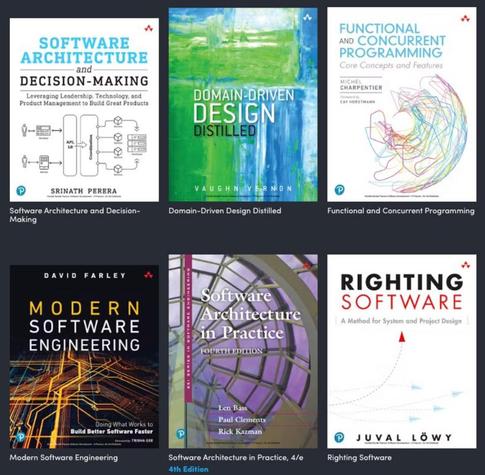
There’s another Software Architecture Humble Bundle, this time with books from Pearson. (17 more days)

https://www.humblebundle.com/books/software-architecture-pearson-books

Finally, full disclosure: I am in now way, shape, or form oposed to the use of LLMs in general. I use them a lot myself, for tasks I know they can acomplish. And I always keep myself as the human in the loop. In fact, the code to render the charts above was generated by an LLM, and then manually reviewed and valdiated by myself, to save time.

What I am oposed to is the mindless use of LLMs to generate slop, or worse, supposed journalistic content. Especially on tax payer money.

Introverts. We care a lot… at a distance.

We keep repeating the same hubris. We keep praying to the oracle of prediction, hoping we'll be spared the storm.

But the storm always comes.

And it never looks like the forecast.

Here's why I'm done future-proofing my life.

https://www.joanwestenberg.com/p/i-m-done-future-proofing-my-life

I’m Done Future-proofing my Life.

Let the Storm Come

Westenberg.
John Oliver hat 10 Minuten über #Bernd das #Brot gemacht und erstaunliche charakterliche Übereinstimmungen festgestellt. 😂

This is beautiful; pure poetry: https://obsidian.md/blog/less-is-safer/

(Obsidian’s dependency-management philosophy.)

I have a suggestion: If you have a project or repo that's getting popular, stop writing features for a few months and implement this instead.

#softwaredevelopment #softwareengineering #0dependencies

Less is safer: how Obsidian reduces the risk of supply chain attacks

Supply chain attacks are malicious updates that sneak into open source code used by many apps. Here’s how we design Obsidian to ensure that the app is a secure and private environment for your thoughts.

Obsidian