
Marwin Segler

@marwinsegler
297 Followers
204 Following
28 Posts
{Organic, Medicinal, Comp.} Chemistry, ML, Drug Discovery, Catalysis, Computer Assisted Scientific Discovery & Creativity, Music. At Microsoft Research (MSR) AI4Science
Quite a pleasant sea view, and delighted not having spent 24 h crammed in a plane. You can still check out our ICML paper “Retrosynthetic Planning with Dual Value Networks” led by my fabulous colleague Guoqing Liu, happy to set up a virtual coffee to chat about it. Also on arxiv: https://arxiv.org/abs/2301.13755
Retrosynthetic Planning with Dual Value Networks

Retrosynthesis, which aims to find a route to synthesize a target molecule from commercially available starting materials, is a critical task in drug discovery and materials design. Recently, the combination of ML-based single-step reaction predictors with multi-step planners has led to promising results. However, the single-step predictors are mostly trained offline to optimize the single-step accuracy, without considering complete routes. Here, we leverage reinforcement learning (RL) to improve the single-step predictor, by using a tree-shaped MDP to optimize complete routes. Specifically, we propose a novel online training algorithm, called Planning with Dual Value Networks (PDVN), which alternates between the planning phase and updating phase. In PDVN, we construct two separate value networks to predict the synthesizability and cost of molecules, respectively. To maintain the single-step accuracy, we design a two-branch network structure for the single-step predictor. On the widely-used USPTO dataset, our PDVN algorithm improves the search success rate of existing multi-step planners (e.g., increasing the success rate from 85.79% to 98.95% for Retro*, and reducing the number of model calls by half while solving 99.47% molecules for RetroGraph). Additionally, PDVN helps find shorter synthesis routes (e.g., reducing the average route length from 5.76 to 4.83 for Retro*, and from 5.63 to 4.78 for RetroGraph).

arXiv.org

if you want to intern with us at Microsoft Research AI4Science (including my team), please apply here until the 24th of Dec!

https://careers.microsoft.com/us/en/job/1497779/Internship-Opportunity-AI4Science

Internship Opportunity: AI4Science in Cambridge, Cambridgeshire, United Kingdom | Research, Applied, & Data Sciences at Microsoft

Apply for Internship Opportunity: AI4Science job with Microsoft in Cambridge, Cambridgeshire, United Kingdom. Research, Applied, & Data Sciences at Microsoft

Microsoft

We're organising a workshop on Physics for ML at #ICLR2023.

Submit your work on physics-based ML, equivariance, etc.

Site: https://physics4ml.github.io
OpenReview: https://openreview.net/group?id=ICLR.cc/2023/Workshop/Physics4ML

Deadline 3rd Feb.

https://twitter.com/tk_rusch/status/1603791044398702595

#Physics4ML #AI4Science #GeometricDeepLearning

Overview

Physics4ML

ICLR 2023 Workshop on Physics for Machine Learning

After few days here it's time for an #Introduction. I am

... a computational chemist interested in #OrganicChemistry and #MolecularChemistry,
... a researcher / lecturer at the university (#WWU), giving courses for undergraduate and MSc students,
... living in #muenster with a small family and a #dog,
... traveling by #bicycle whenever possible.

I would like to discuss scientific and other topics: #compchem, #python, #Fortran, #Cycling, #hiking, #norway, #ElectronicMusic, #muenster, etc ...

Chemical Synthesis Planning algorithms are making progress thanks to ML, however, they have many moving pieces and intricacies, which makes them hard to benchmark. We’ve now started to look into this, and present our preliminary results at the NeurIPS AI4science workshop https://openreview.net/forum?id=8VLeT8DFeD - so far, we found algorithms are much less different that previously reported. Feedback welcome!
Re-Evaluating Chemical Synthesis Planning Algorithms

Supposedly SOTA Synthesis Planning Algorithms perform not better than prior work when compared under equal conditions.

OpenReview
PhD Programme in Advanced Machine Learning | Cambridge Machine Learning Group

The Cambridge Machine Learning Group (MLG) runs a PhD programme in Advanced Machine Learning. The supervisors are Jose Miguel Hernandez-Lobato, Carl Rasmussen, Richard E. Turner, Adrian Weller, Hong Ge and David Krueger.

Cambridge Machine Learning Group

If you want to reconnect with those from #ChemTwitter who have created accounts here in the #Fediverse, here is a Google Sheet that >400 people have added themselves to.

https://docs.google.com/spreadsheets/d/1qdJvHHvu-BC4N6nk1jNMhTwoBrIaqHLUCZRf9pCQwDs/edit?usp=sharing

If you want to add your details, you need to either fill in this Google Form: https://forms.gle/gF9MLUGMWs23EFix6 or just ask me to add your details if you'd rather not use a Google product (note: the form does not capture e-mail addresses).

#ChemiVerse #Chemistry #ChemToots

ChemCommunity on Mastodon (Responses)

ChemCommunity on Mastodon Sheet maintained by @[email protected] (DIRECT FEDIVERSE LINKS IN COLUMN G) TO ADD YOURSELF TO THIS SHEET, PLEASE COMPLETE THIS FORM: <a href="https://forms.gle/gF9MLUGMWs23EFix6">https://forms.gle/gF9MLUGMWs23EFix6</a> IF YOU WANT TO BE ADDED BUT DON'T WIS...

Google Docs
So far Mastodon feels a lot more like Twitter from ~2012 back when I actually enjoyed using it! Exciting to feel like that is being recaptured here; I hope the momentum continues and that it sticks!

#introduction

I'm a senior researcher at Microsoft Research AI4Science in Amsterdam.

My research interests include AI4Science, single- and multi-agent reinforcement learning, and structure, symmetry, and equivariance in deep learning.

#reinforcementlearning #ai4science #machinelearning #deeplearning #equivariantagents

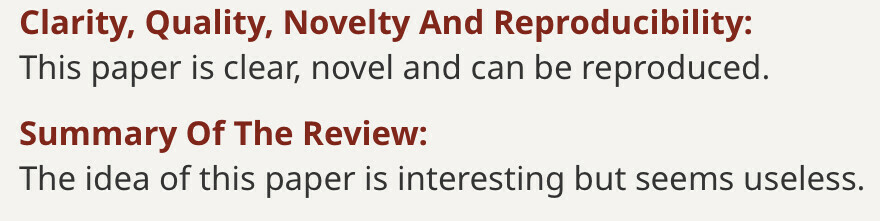
ML conference reviews… 🥸