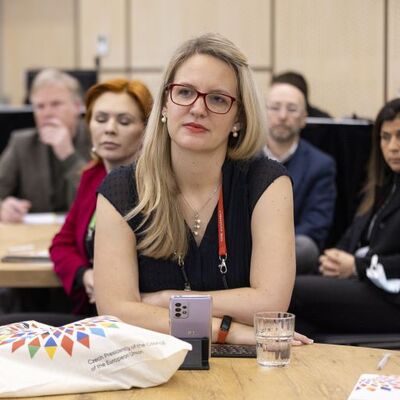
🧠 Why are some brains more vulnerable to extremism?
In the latest Conflict Tipping episode, I speak with Dr Leor Zmigrod about what neuroscience can teach us about radicalisation.
🎧 Listen now + buy her book #TheIdeologicalBrain!
https://www.podbean.com/eas/pb-8g82b-18a271f
@politicalpsychology @politicalscience
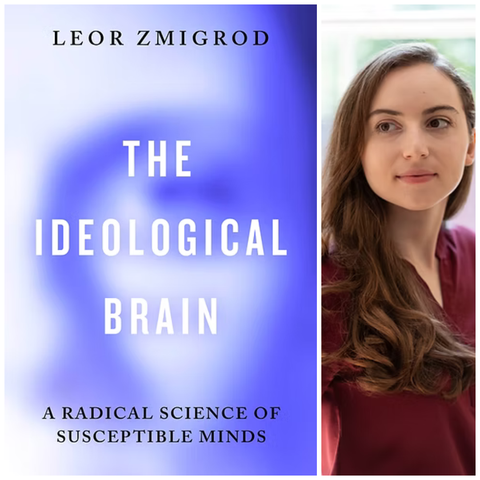

The Ideological Brain with Dr Leor Zmigrod [Ep. 42]
In this episode of the Conflict Tipping podcast, Laura May speaks with political neuroscientist and psychologist Dr Leor Zmigrod, author of incredible new book The Ideological Brain. Leor’s groundbreaking research explores what makes our brains susceptible to rigid beliefs, ideological extremism, and group identity—drawing from cognitive science, psychology, and neuroscience.
Key Highlights:
Why This Research?Leor shares what drew her to study ideological extremism, including her initial interest in understanding why some young people in Europe were drawn to join ISIS.
What She FoundFrom the Wisconsin Card Sorting Test to creative uses for a cup, Leor explains how unconscious cognitive patterns can predict a person’s openness—or vulnerability—to extreme ideologies.
Intelligence vs. RigidityCognitive rigidity is distinct from intelligence. Flexible thinkers are more adaptable and less drawn to simplified worldviews.
The Role of Culture and StressOur brains react to environmental stress—and even mild discomfort—by narrowing perception and reducing openness. Scarcity and insecurity can make us more rigid, more tribal, and more susceptible to dehumanising others.
Emotional Impulsivity and ExtremismPeople drawn to ideological extremism tend to be more emotionally impulsive and reactive—highlighting the importance of emotion regulation and broader psychological support.
So What? Practical TakeawaysWhy cognitive flexibility matters—for individuals and societies. How we can better design counter-extremism approaches, and what you can do to cultivate more flexible thinking.
Note from Laura May: due to circumstances beyond our control, a chunk of the recording where we talked about the brain on social media, and about even more findings from Leor's fantastic book, was lost—so I insist you buy a copy of her book!
About the Book
Leor’s new book, The Ideological Brain, takes readers on a journey through the psychology and neuroscience of belief, showing how dogmatic ideologies can shape not just our thinking, but our biology—and why this matters now more than ever.
Where to Find Leor:
Website: www.leorzmigrod.com
Twitter/X: @LeorZmigrod
Instagram: @LeorZmigrod
Book available at your favourite independent bookstore or online. Find a store using Leor's LinkTree: http://linktr.ee/leorzmigrod
In the latest ep of the Conflict Tipping podcast, I speak with Fleur Ravensbergen--conflict mediator extraordinaire! She's spent years working in some of the world's most challenging conflict zones, from Northern Ireland to Iraq & the DRC.
Podbean link below, or search 'Conflict Tipping' on your podcast app of choice.
https://conflicttipping.podbean.com/e/violent-conflict-disarmed-with-fleur-ravensbergen-ep-40/
#mediation #conflict #podcast @politicalscience


Violent conflict "Disarmed" with Fleur Ravensbergen [Ep. 40] | The Conflict Tipping Podcast
In this episode of the Conflict Tipping podcast we welcome Fleur Ravensbergen, mediator, author, and co-founder of the Dialogue Advisory Group. Fleur shares stories and lessons from her work mediating violent armed conflicts in some of the world’s most challenging regions, including Northern Ireland, Iraq, and the Democratic Republic of Congo. Her book Disarmed, newly available in English, provides a rare glimpse into the important work of facilitating dialogue in violent conflict zones.
Highlights:
Why Fleur decided to write a book about her experiences in peace mediation and the challenges of maintaining confidentiality while telling these stories.
The story of a surprising act of cooperation during a dialogue in Iraq and how it saved lives, illustrating the hidden impacts of mediation.
How gender norms can shape the opportunities and challenges of being a mediator
The differences between facilitating dialogues in violent conflict zones and mediating workplace or political disputes.
Fleur’s perspective on the current challenges facing the peacebuilding field, including funding issues and shifts in global dynamics.
Practical and inspiring guidance for those looking to contribute to the field of conflict resolution and peacebuilding.
Links:
Disarmed: From IRA to IS: My Life as a Peace Negotiator by Fleur Ravensbergen is available in English and in Dutch, on Amazon or wherever you buy good books.
Fleur's LinkedIn: https://www.linkedin.com/in/fleur-ravensbergen/
Timestamps:
[00:00:00] Introduction
[00:01:16] Writing Disarmed
[00:05:34] A moment of generosity during dialogue in Iraq
[00:16:19] Mediating violent conflict and gender norms
[00:27:08] Public and political mediations vs armed conflict mediation
[00:34:21] Is peacebuilding in crisis?
[00:46:02] Advice for aspiring peacemakers
[00:53:00] Where to buy Disarmed
This episode offers insights into the often unseen work of peace mediation and the transformative power of dialogue in violent conflict.
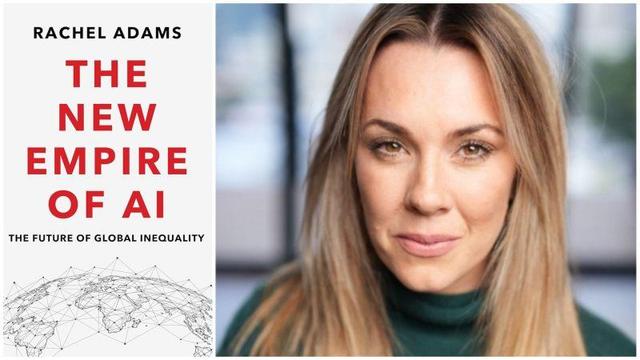
The New Empire of AI with Dr Rachel Adams [Ep. 39] | The Conflict Tipping Podcast
In this episode of the Conflict Tipping podcast, host Laura May welcomes Dr Rachel Adams, founder and CEO of the Global Center on AI Governance and author of The New Empire of AI: The Future of Global Inequality. Rachel’s book explores how AI is reshaping global inequalities and examines its historical ties to colonialism. Together, Laura and Rachel explore the complexities of AI governance, the AI divide, and the ethical challenges facing emerging technologies.
Key Highlights:
[00:00:00] Rachel’s journey into AI and governance: From her PhD on transparency and surveillance to becoming a global thought leader on AI governance, Rachel shares her professional journey.
[00:05:10] Why isn't AI transparent?: What makes AI systems so complex and why transparency in AI remains a critical and elusive goal.
[00:08:16] AI, inequality, and colonialism: How AI’s development and supply chains echo historical patterns of extraction and exploitation, and its disproportionate impact on the Global South.
[00:18:21] The AI divide: Examining the stark disparities in access to AI technologies and their benefits, and the resulting social and economic inequalities.
[00:23:26] Who does the work, and where?: Exploring the human cost of AI production, from data labelling to e-waste, and the economic challenges for workers in the Global South.
[00:28:36] AI governance and policy-makers: The need for international regulation, capacity-building in the Global South/Global Majority Countries, and empowering oversight institutions to create fairer systems.
[00:36:35] What can we do to help?: Concrete steps for individuals to support more equitable AI development and the importance of raising awareness about AI’s impact on global inequality.
[00:40:53] Where to learn more?: Connect with Rachel--and buy her book!
Links:
The New Empire of AI: The Future of Global Inequality by Rachel Adams (Polity Press): Available Here (Polity Press), Amazon US (hardback releasing January 2025, Kindle already available), Amazon UK (hardback releasing November 22), Waterstones
Global Center on AI Governance: globalcenter.ai
African Observatory on Responsible AI: africanobservatory.ai
Follow Rachel on LinkedIn and Twitter/X
Key Takeaway: Dr Rachel Adams argues that AI’s inequalities cannot be fully understood without recognising their roots in colonialism. Her book challenges us to rethink AI’s role in society and invites us to join the conversation about building a more equitable future.
Because I'm feeling fancy (and not because i'm procrastinating against paper-writing), I've added episode tags for the Conflict Tipping #podcast. That means if there's something in particular you're interested in, you can filter the episodes at https://conflicttipping.podbean.com/.
For instance, the #polarization tag (https://conflicttipping.podbean.com/category/polarization) will show you episodes from @luiza_santos on #empathy across political divides, Dr Tamsin Parnell on discourse and division (in #brexit ), and more!
@politicalscience

The Conflict Tipping Podcast | a podcast by Laura May, PhD
The Conflict Tipping Podcast, hosted by Laura May PhD, focuses on innovative strategies for responding to social conflict. Episodes will bring in guests with expertise in all facets of conflict, from organizational behavior, emotions, technology, media, p...