167 Followers
87 Following
65 Posts
Associate Professor of Sociology at the University of Maine at Augusta. Research & Teaching Interests: social networks, social media, gender, and social politics. Content is obviously not endorsed by my institution.
AboutAssociate Professor of Sociology at the University of Maine at Augusta. Research and Teaching Interests: social media, social networks, gender, and the sociology of politics.
The fact that far too many people cannot recognize fascism unless it looks exactly like Nazi Germany is very dangerous.
@socprof Call Walgreens @ 800-925-4733 and make a complaint that you will not spend a penny there until they reverse their decision. This complaint will go to corporate. Let's flood their phone lines and hit 'em where it hurts $$$ #WalgreensHatesWomen #BoycottWalgreens #ByeWalgreens
Compared to the days of multiple costume changes and raucous, noisy sets, this #Rhianna halftime show was as Apple as if Jony Ive had designed it: spare, elegant, and beautiful. #SuperBowl
@nasa “No more pains of childbirth!”
THIS.
Well, it isn’t every day that a boy gets sampled by NORC. #fanboy #sociology #data
@nasa if I squint, I can see Anakin. Or is that Frodo?
@kjhealy I appreciate Patrick Sheehan’s study of people doing work to build alternative pathways to professional identity. I particularly admire the way he avoids the temptingly easy, cheap choice of status preservation through mockery or dismissal. Sheehan places the emotional labor of coaches in context and deserves the awards he won for it. I can tell I’m going to enjoy reading this young scholar’s future work. https://www.journals.uchicago.edu/doi/10.1086/718471
The Paradox of Self-Help Expertise: How Unemployed Workers Become Professional Career Coaches1 | American Journal of Sociology: Vol 127, No 4

A wide range of self-styled experts have emerged in recent years to sell professional self-improvement advice in fields as diverse as employment, health, and finances. Despite lacking traditional markers of expertise, these minor experts are gaining credibility and clientele, often at the expense of official experts in their field. Why do people turn to these experts? How do they build credibility? This article analyzes the paradoxical case of career coaches, many of whom were themselves long-term unemployed, to advance a theory of credibility construction among self-improvement experts. Drawing on qualitative data, the author finds that self-improvement experts build their credibility through strategic interactions and relational work with clients rather than through the institutional affiliations and credentials normally associated with expertise. The author identifies three complementary techniques—(1) constructing a shared moral order, (2) building affective trust relationships, and (3) sharing personal testimonials of transformation—and argues that this bundle of tactics represents an alternative and growing pathway for building expert credibility.

American Journal of Sociology
If I have to be more explicit about why I don't like mandatory pronoun sharing, it's because A) it reifies the idea that the most important thing to know about someone is their gender and B) collapses their gender down to just do they use the pronoun you expect/think matches them.
#auspol
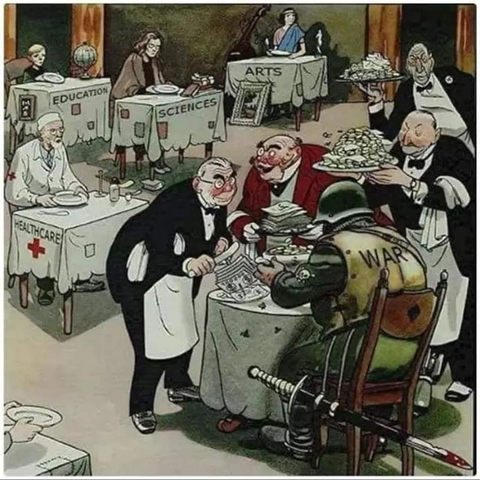
This cartoon is from the 1930s. Has much changed? Remember what happened next?