41 Followers
79 Following
106 Posts
We help investors and SMEs address cybersecurity challenges pragmatically, measurably, and sustainably.
Websitehttps://www.intcube.io
GitHubhttps://github.com/intcube-io/
Cringe Networkhttps://www.linkedin.com/company/intcubeio
Xitter (defunct)https://twitter.com/intcubeio
(Ir)responsible for contenthttps://todon.eu/@ljrk
Pronounsthey/them

Hallo #Berlin Bubble,

wir suchen eine*n Werkstudent*in für IT Ops, IT Security Ops und Automation, zwischen Delivery, Sales und Backoffice. Wir sind ein übersichtliches Team mit einem Büro in Berlin Charlottenburg.

Wir beraten Organisationen in IT-Sicherheit, so weit, so standard. Wir möchten aber nicht klassisches Consulting anbieten, sondern nachhaltigere IT-Sicherheitskonzepte entwickeln. Wenn Kund*innen uns nicht mehr brauchen, dann haben wir eigentlich alles richtig gemacht :-)

Schreibt uns gerne per Mail an oder fragt per DM nach.

#FediHire

@polylux_network machen wunderbare Arbeit -- und wir haben gerade erst gesehen, dass sie auch im Fedi vertreten sind :3

https://mastodon.social/@polylux_network/114070817278392436

Wir lassen uns nicht einschüchtern:

Polylux finanziert linke Vorfeldorganisationen im ländlichen Raum im Osten, also Vereine, Initiativen und Projekte der kritischen Zivilgesellschaft. Wir finanzieren was die AfD & die #CDU hassen!

Sei dabei und werde Fördermitglied! 💸💸💸

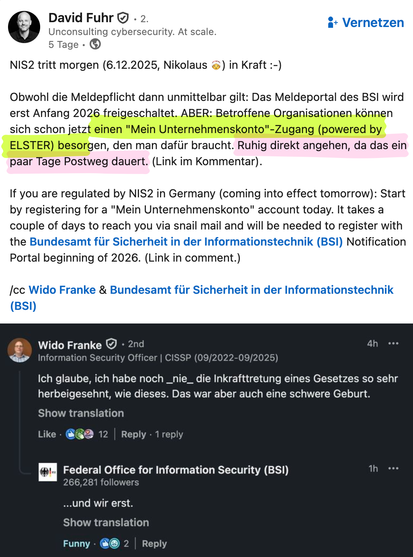
Von LinkedIn, zum Stand der Digitalisierung in Deutschland 🤦🏻‍♂️

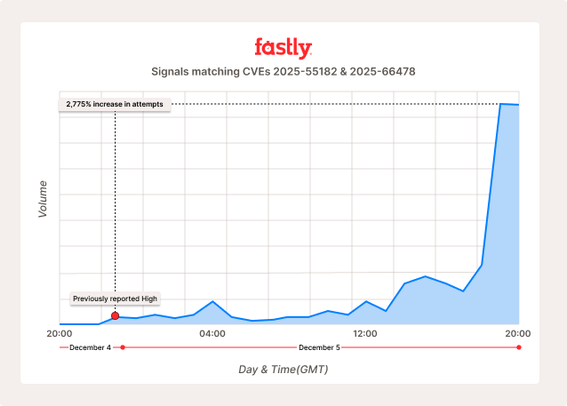
Another #React2Shell Update: Fastly saw a 2,775% increase in attack activity across our global network between the peak we reported yesterday (Dec. 4th) and 20:00 UTC today (Dec. 5th).

⚠️ This in-the-wild evidence suggests attackers are relentlessly probing for vulnerable applications at scale. ⚠️

It is worth your time to verify, not just trust, that you have zero exposure, and then drop everything to patch.

After the POC publicly dropped around 21:04 UTC yesterday (Dec. 4th), @fastlydevs detected what appeared, at the time, like a sharp escalation in attack activity.

In the 24 hours since then, the number of requests triggering our NGWAF signals for React2Shell exploded by 2,775% (as shown in the graph).

🌎 Fastly's Security Research team verified that select public PoCs grant attackers the single-step ability to execute commands, exfiltrate data, and gain write access on vulnerable servers.

This means cybercriminals and nation state actors alike face an alluring ROI, which is likely to motivate them to invest in weaponizing and operationalizing this at scale.

We are sharing this intelligence not to sow fear, but to reinforce the undeniable, urgent necessity of patching at this point. We also have a few updates for our customers:

🛡️ Fastly's teams expanded our Virtual Patch for CVE-2025-55182 to detect scan/probe activity and attempts to circumvent our NGWAF protections.

🛠️ We discovered the built-in "Attack Tooling" signal in our NGWAF already detects scanners that emerged in the past 24h to probe for vulnerable apps; we suggest customers investigate any requests that triggered this signal, as it may indicate React2Shell activity.

🤖 Fortuitously, Fastly's Bot Management product flagged some react2shell attack tooling as a "Suspected Bad Bot," offering organizations another layer of defense here.

At this time, Fastly's goal is to provide our customers with breathing room to patch.

The best available fix at this time is to update your apps to the applicable patched versions. We are at the point where it is no longer "if," or possibly even "when," but "how often"?

We will continue monitoring global attack activity, investing in additional mitigations for our customers, and sharing intel with the public community.


Since @index only posts on X, here's the vid they posted from exploiting the recent FortiNet issue CVE-2025-64446

> another exploited in-the-wild FortiWeb vuln? It must be Thursday!

Forget Meyers-Brigg, this is the real personality test:

We've seen our fair share of Cyber-Cyber-Cyber vendors of a certain repute, whether it's our own German Jean Pereira (who has been called out by many, among them by LiveOverflow), or international companies with similar scare tactics and using lots of green text + hoodies to bully company decision makers into thinking that these are the real haxx0rzs and know better.

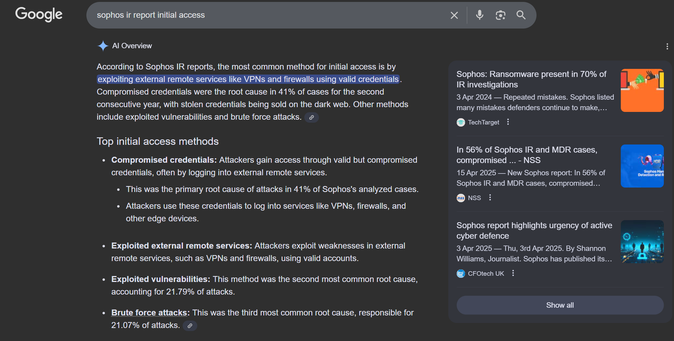
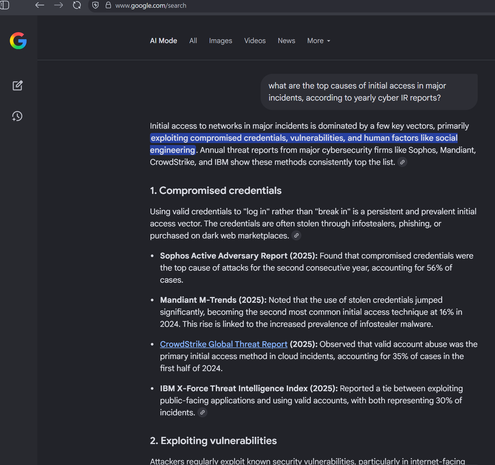
The truth is: Keeping attackers out by actually doing the boring work is much more worthwhile. The "hard" stuff is done by companies/orgs actually focusing on solving the hard problems: Signal, 1Password/Bitwarden, Browser Vendors, ... . If you're not them, it's much more crucial to just get your credentials safe, keep things up-to-date and do privilege and network separation.

https://cyberplace.social/@GossiTheDog/115485799641353474

Kevin Beaumont (@[email protected])

I'm coining another term - cyberslop. Cyberslop is where trusted institutions use baseless claims about cyber threats from generative AI to profit, abusing their perceived expertise. I'm also starting a series about it, called CyberSlop. Much more soon.

Cyberplace

I'm coining another term - cyberslop.

Cyberslop is where trusted institutions use baseless claims about cyber threats from generative AI to profit, abusing their perceived expertise.

I'm also starting a series about it, called CyberSlop. Much more soon.

The management at my org is thankfully very good and gets it, but if you are struggling to explain to your management as to why they should stop sucking the GenAI marketing juice and chasing the AI laser pointer like a cat and instead do foundational security, explain it a way they'll understand: AI.