I'm delighted to announce that my forthcoming book, "Religious Activism on Campuses in Togo and Benin: Christian and Muslim Students Navigating Authoritarianism and Laïcité, 1970-2023" is now listed on the De Gruyter website. It is currently scheduled for publication in March 2025, but we aim to have it published and made available in open access by the end of the year.
This book, based on my research with the Remoboko project at ZMO since 2021, examines Christian and Muslim student associations at the Universities of Lomé and Abomey-Calavi. It explores their resilience over five decades, navigating authoritarianism, political change and laïcité while shaping campus life and offering a "social curriculum". The study offers new insights into the role of faith in public universities and social change in West Africa.
I'm grateful to many people, especially Abdoulaye Sounaye, the project's PI, my colleagues at ZMO, and all the interviewees in Benin and Togo.
https://www.degruyter.com/document/isbn/9783111429182/html
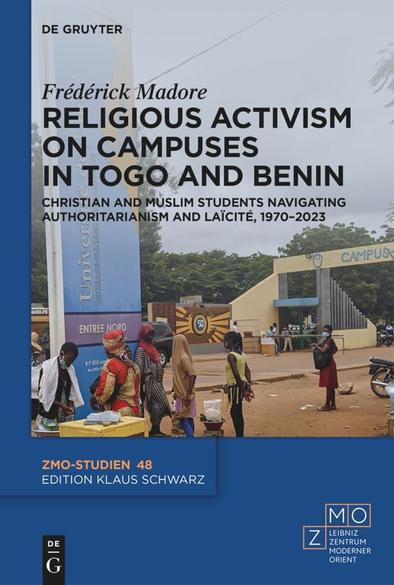

Religious Activism on Campuses in Togo and Benin
The interplay between religion and student activism at the universities of Abomey-Calavi (Benin) and Lomé (Togo) has often been overlooked, although faith-based organisations and student unions have coexisted since the 1970s. Based on interviews with different generations of activists, this book uncovers the neglected history of Christian and Muslim student associations on these campuses, originally strongholds of leftist and secular ideologies. It analyses the emergence of these groups under a Marxist-Leninist regime in Benin and a one-party dictatorship in Togo, and explores the implications of growing religiosity for these public universities as secular institutions. The history of these associations reveals the campus as a microcosm reflecting wider national socio-political life, while also highlighting the importance of translocal factors in shaping the internal dynamics of these groups. Amidst the massification of university enrolments and rising graduate unemployment, faith-based associations have come to provide more than religious guidance. Increasingly, they offer a "social curriculum", providing a space for socialisation and a set of skills, norms and moral values that complement the secular academic curriculum.