 Ekki DF4OR
I enjoy digital modes on HF, especially on 30 and 60m, but will also participate in SSB contests occasionally.
Mostly posting in English.
| QTH | JO42 |
| Pronouns | they/them |
| Logbook | https://logbook.qrz.com/lbstat/DJ6DP |
| DARC DOK | H13 |
| QTH | JO42 |
| Pronouns | they/them |
| Logbook | https://logbook.qrz.com/lbstat/DJ6DP |
| DARC DOK | H13 |
| yes | |
| no | |
| touch screens? What fresh hell is this? |
Why #MeshCore scales well when #Meshtastic doesn't. How two very different #LoRa architectures have very different ideal use profiles. #RDUMesh
https://magnus919.com/2026/05/how-meshcore-scales-where-other-lora-meshes-hit-walls/

This is a technical deep-dive into the MeshCore protocol’s architecture. If you’re looking for a buying guide or setup tutorial, start with the MeshCore FAQ or the official quick start. How MeshCore Scales Where Other LoRa Meshes Hit Walls The Problem: LoRa Mesh Scaling Is Not Incremental LoRa radio is a shared, narrow medium. The North American MeshCore preset uses 62.5 kHz of bandwidth, roughly the width of a single FM radio station. Every packet your node sends occupies that medium for everyone else within range. The physics is inescapable: more nodes means more contention, and at some point the network chokes on its own traffic.
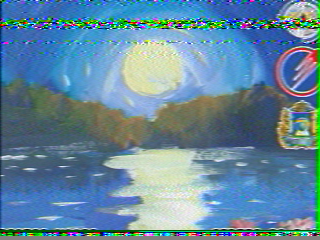
And another one! 📺
This pass had a higher max elevation, but the results weren't better than with the previous pass. Sometimes it even seems that shallower passes, despite the longer distance the signal has to travel through the atmosphere, work better.
With a proper cross yagi or even some circular polarized antenna as well as actual tracking this might be a completely different case of course. I don't have any of that and the great thing about @ARISS_Intl is its accessibilty! 🙂
 Carlo IU1KGS 📻
 Magnus Hedemark