Clare Press

150 Followers
130 Following
24 Posts

Prof at Birkbeck, UoL, and Wellcome Centre for Human Neuroimaging, UCL. Cognitive neuroscientist examining action and perception. Cellist, lazy runner, mum.

https://psyc.bbk.ac.uk/actionlab/
https://www.fil.ion.ucl.ac.uk/team/action-and-perception/

@clarepress and I are excited to share this #preprint about the history of #cognitivePsychology and #neuroscience research on how expectations influence #perception

We talk about a handful of the technological and theoretical advances that have enabled discoveries that could not have happened previously, and about the fact that technological and theoretical advances scaffold each other in a virtuous cycle.

We'd love to hear your thoughts!

https://psyarxiv.com/a28yd

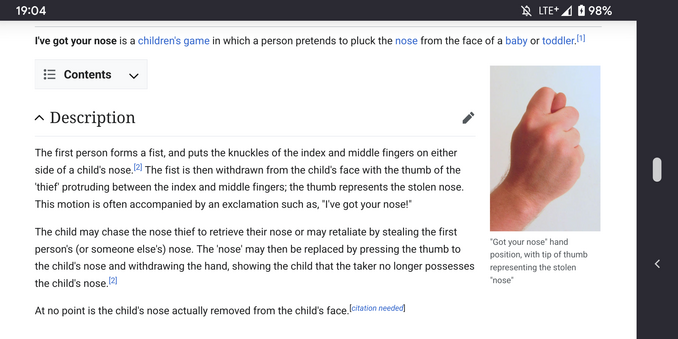
I've got your nose - Wikipedia

@clarepress

The next session of this talk series is next Wednesday, 26th April.

Dr Lei Zhang (University of Birmingham) will tell us about flexible learning in the face of changing environmental contingencies, in a talk entitled:

"Cracking the neurocomputational mechanisms of flexible (social) behavior in health and disease"

Join us in person for an informal lunch from 12:30 in room 534, Malet St, or just for the talk from 1-2. Message me to join online.

The first paper from my PhD student Helen Olawole-Scott has now officially come out in JEP:G! πŸ₯‚

#proudsupervisormoment

Expectations about precision bias metacognition and awareness.

https://psycnet.apa.org/fulltext/2023-57855-001.html

On explanations in brain research:

A thread of the same idea comes up again and again in brain research. It's the notion that identifying the biological details (such as the brain areas/circuits or neurotransmitters) associated with some brain function (like seeing or fear or memory) is not a complete explanation of how the brain gives rise to that function (even if you can demonstrate the links are causal). To paraphrase:

Mountcastle: Where is not how https://www.hup.harvard.edu/catalog.php?isbn=9780674661882
Marr: How is not what or why http://mechanism.ucsd.edu/teaching/f18/David_Marr_Vision_A_Computational_Investigation_into_the_Human_Representation_and_Processing_of_Visual_Information.chapter1.pdf
@MatteoCarandini: Links from circuits to behavior are a "bridge too far" https://www.nature.com/articles/nn.3043
Krakauer et al: Describing that is not understanding how https://www.cell.com/neuron/pdf/S0896-6273(16)31040-6.pdf
Poppel: Understanding brain maps does not formulate "what about" the brain gives rise to "what about" behavior https://www.ncbi.nlm.nih.gov/pmc/articles/PMC3498052/

Any other explicit references to add to this list? @Iris, @knutson_brain, Anyone?

Also, I imagine that some form of the opposite idea must also be percolating: the notion that 'algorithmic' descriptions of the type used to build AI will be insufficient to do things like treat brain dysfunction (where we arguably need to know more about the biology to, e.g., create drugs). Any explicit references of that idea? @albertcardona @schoppik, @cyrilpedia, Anyone?

#neuroscience #cognition #neuroAI #psychology #philosophy

Perceptual Neuroscience β€” Vernon B. Mountcastle

This monumental work by one of the world's greatest living neuroscientists does nothing short of creating a new subdiscipline in the field: perceptual neuroscience. Vernon Mountcastle has gathered information from a vast number of sources reaching back through two centuries, from phylogenetic, comparative, and neuroanatomical studies of the neocortex to rhythmicity and synchronization in neocortical networks and inquiries into the binding problem.

@clarepress

The first session of the new series of Birkbeck Psychology seminars is this Wednesday, 8th March.

Dr Emma James (University of York) will tell us about reading difficulties and accompanying difficulties in other domains, entitled:

"Specific comprehension difficulties are very rarely specific: tales from experimental and data-driven approaches"

Join us in person for an informal lunch from 12:30 in room 534, Malet St, or just for the talk from 1-2. Message me to join online.

RT @MH_Christiansen

In a letter in Cognitive Science, @pcontrerask,
@ross_dkm and I argue that Large Language Models - despite their many shortcomings - demonstrate that human-like grammatical language production can be learned from experience alone.

Read it for free here:
https://onlinelibrary.wiley.com/doi/epdf/10.1111/cogs.13256

https://twitter.com/MH_Christiansen/status/1629600135901478915?t=V2SDmOKU3nmFce7iLjeU3A&s=19

πŸ“’ Dates for diary: Birkbeck Psychological Sciences are relaunching our seminar series πŸ“’

Organised by me and @clarepress

Starting in 2 weeks; Wednesdays 1-2 pm UK time, Malet St London (and online). More details to follow.

Please feel free to share, and join us!

πŸ“’A few days left to apply for these postdoc and PhD positions πŸ“’. To answer a common question, we are very flexible wrt start date. Please continue to ask me questions and circulate!

πŸ“’ New postdoc/PhD positions πŸ“’

Examining how the oscillatory rhythm of sensory sampling is determined. M/EEG; modelling; psychophysics. With Matt Davis and Peter Kok.

PhD (by 27 Feb): https://www.findaphd.com/phds/project/oscillatory-rhythms-of-sensory-sampling-fully-funded-phd/?d5780p154698
Postdoc (by 5 Mar): https://www.jobs.ac.uk/job/CWY349/postdoctoral-researcher

Pls retoot /circulate and ask me any questions

Oscillatory rhythms of sensory sampling – fully-funded PhD at University College London on FindAPhD.com

PhD Project - Oscillatory rhythms of sensory sampling – fully-funded PhD at University College London, listed on FindAPhD.com

www.FindAPhD.com