Andreas Brunthaler

@brunthal
281 Followers
170 Following
301 Posts

Astronomer at the Max Planck Institute for Radio Astronomy

Main interests are the Milky Way and the Local Volume.

I think the omnipresence of #aislop everywhere has made me well prepared for #AprilFoolsDay—or was it the other way around? I can’t tell anymore.
Behold this most serious paper, in submission to Acta Prima Aprilia. A three-way collaboration with @[email protected], myself & Laura Revell 🛰️🐄🤠🔭

Cow-culation: Reentry Impact R...
Cow-culation: Reentry Impact Risk to Livestock in the Satellite Megaconstellation Era

The commercial space industry is launching more satellites into Low Earth Orbit every year. Aotearoa New Zealand (NZ) has a thriving dairy and cattle industry. Unfortunately, these industries could come into (high speed) cow-llision, as the rapid launch rate and short operational lifetimes of satellites in megaconstellations like Starlink result in a high reentry rate at NZ's latitudes. This could intersect with NZ's famously large population of livestock. We predict this will be an udder disaster for any cows that are hit, as they are squishy and moo-ve much more slowly than space debris. Using a global bovine density dataset, previously published satellite casualty probability code, and a complete lack of funding to do this calculation carefully enough for submission to a peer-reviewed journal, we calculate a $\simeq 0.3-1% chance of a cow-sualty in NZ from reentering Starlink Gen2 debris over the next 5 years.

arXiv.org

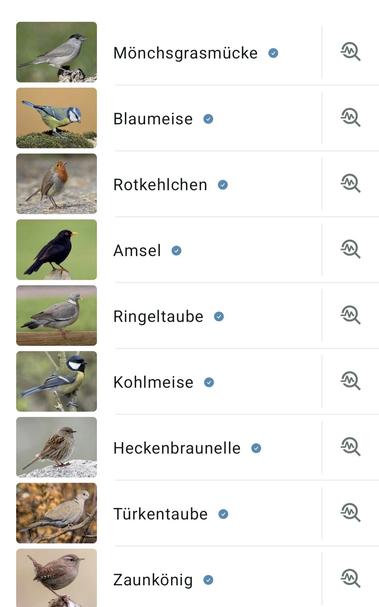
What's going on here, #bee experts? I have this old pot with soil from last year in my garden. And it's always full with bees, about 10-20 at any time. They come, crawl around a bit, stay at one location for a while and then leave.

This is already going on for at least two weeks. There is a similar pot right next to it with soil, but there is typically only one bee.

My ObsIdentify app says they are honey bees (Apis mellifera).

title text: It's ok, I still have some nice, cool gas clouds that aren't collapsing. As long as nothing ionizes them, I can continue to enjoy their ... HEY! NO!!!

desktop link: https://xkcd.com/3222
mobile link: https://m.xkcd.com/3222
explainxkcd: https://www.explainxkcd.com/wiki/index.php/3222

On my way to work I drove by a couple of excavators on a field today. I was wondering what they were doing and did some research. It turned out that they are starting the construction of a couple of wind turbines there.

Exciting to witness the progress every day for the next few months. It will be a spectacular view when they install the 80m long blades.

📢 New team member wanted!

We are looking for

--- Scientific Coordinator (m/f/d) ---

This role combines scientific project management, coordination of research activities, and collaboration with international partners. You will work closely with the director and a dynamic team of researchers, contributing to projects ranging from telescope operations to outreach and scientific communication.

🛰️ Ideal candidates have a PhD in astronomy (or a related field), strong organisational and communication skills, and enjoy working in an international research environment.

👉 https://jobs.b-ite.com/jobposting/18c9e9d3c55691565ec205501759c335f7c021290

“Africa Millimetre Telescope to bring black holes into sharper focus for movies”

We have the go now for a new telescope in Namibia that shall be part of the Event Horizon Telescope in 2028. I am excited that we soon will have extended periods where we can see „stuff go around the black hole“ in the center of our Milky Way. This is a collaboration of European and African universities, led by our own @Radboud_uni.

https://www.ru.nl/en/about-us/news/africa-millimetre-telescope-to-bring-black-holes-into-sharper-focus-for-movies

#blackhole #astrodon #astrophysics #astronomy #africa

Africa Millimetre Telescope to bring black holes into sharper focus for movies | Radboud University

An international consortium led by Radboud University has secured a contract agreement for the construction of a radio telescope that will become the Africa Millimetre Telescope (AMT) in Namibia.

Eine überraschende Beobachtung bereitet Astronomen seit zwei Jahrzehnten Kopfzerbrechen: Nur wenige Milliarden Jahre nach dem Urknall existierten bereits massereiche und entwickelte Galaxien. Forschende hatten erwartet, in dieser frühen Phase der Geschichte unseres Universums nur Galaxien mit jungen Sternen und aktiver Sternentstehung zu finden. Stattdessen gibt es viele elliptische Galaxien mit älteren Sternpopulationen und sehr wenig kaltem Gas, aus dem neue Sterne entstehen könnten.
👉 https://www.mpifr-bonn.mpg.de/pressemeldungen/2026/massereiche-galaxien-im-fruehen-universum
-------
A surprising observation has puzzled astronomers for two decades: Massive and evolved galaxies already existed just a few billion years after the Big Bang. Researchers expected to only find galaxies with young stars and ongoing star formation so early in the history of our Universe. Instead, there are many elliptical galaxies with older stellar populations and very little cold gas to form new stars.
👉 https://www.mpifr-bonn.mpg.de/pressreleases/2026/forming-massive-galaxies-in-the-early-universe

© Animation: N. Sulzenauer | MPIfR

Oh it's back. How many different error messages do they have?
Oh, ADS is not working right now. But at least they have funny error messages to keep the astronomers happy.