Bobtail (Tiliqua rugosa) relocated from the backyard - where the dog doesn’t welcome visitors!
Dr Rob Davis
- 161 Followers
- 210 Following
- 33 Posts
West Australian ornithologist, conservation biologist and fan of islands. Senior lecturer at Edith Cowan University where I head up the Wildlife Lab. Check it: http://wildlifelab.org
Invasive rats are enemy number one for wildlife on islands. We just published a comprehensive review of the state of the art in monitoring approaches to detect rats. We summarise all current approaches and look to the future. Check it out open access:
https://link.springer.com/article/10.1007/s10530-023-03133-0

A review of methods for detecting rats at low densities, with implications for surveillance - Biological Invasions
Invasive rats are the biggest threat to island biodiversity world-wide. Though the ecological impacts of rats on insular biota are well documented, introduced rats present a difficult problem for detection and management. In recent decades, improved approaches have allowed for island-wide eradications of invasive rats on small-medium sized islands and suppression on large islands, although both these still represent a formidable logistical and financial challenge. A key aspect of eradication or suppression and ongoing management is the ability to detect the presence of rats, especially at low densities. Here we review recent developments in the field of rat surveillance and summarise current published literature to recommend practices and the factors to consider when developing a surveillance program for either eradication or suppression plans. Of 51 empirical studies covering 17 countries, 58% were from New Zealand. Although detecting rats at low density is extremely challenging, advances over the past 15 years, have significantly improved our ability to detect rats. Motion-sensored cameras and rodent detection dogs have greatly improved our ability to detect rats at low densities, with cameras consistently showing an ability to detect rats at lower densities than other techniques. Rodent detection dogs are also able to reliably detect even an individual rat, although there are challenges to their widespread adoption, particularly in developing countries, due to the cost and skills required for their training and maintenance. New monitoring devices, the use of eDNA and drones represent current and future innovations to improve detection.
 Christian Schwägerl
Crazy numbers from #Anthropocene Earth:
Weight of all wild mammals on land: 22 million tons
Weight of all wild mammals in ocean: 40 million tons
Weight of all humans: 390 million tons
Weight of all land mammals domesticated by humans: 630 million tons.
Interesting to test some of figures as e.g. sperm whales alone should be 20m t not 7m t.
But overall ratios are impressive.
New Study in PNAS:
https://www.pnas.org/doi/10.1073/pnas.2204892120
Article in Guardian:
https://www.theguardian.com/environment/2023/mar/18/a-wake-up-call-total-weight-of-wild-mammals-less-than-10-of-humanitys
How do you survey a mammal that hides in dense grass, doesn’t go into traps and is hardly ever seen in a spotlight? Enter eDNA. We analysed Mala scats to identify individuals then put the data into a mark-recapture framework to estimate population size. This novel approach has great potential for cryptic species of conservation concern. https://www.publish.csiro.au/WR/WR22122

Scat DNA as a non-invasive method for estimating the abundance of the vulnerable mala (Lagorchestes hirsutus)
Context Population-monitoring programs often use direct (e.g. live capture or spotlighting) or indirect (e.g. scats sightings) observations to estimate population abundance. Such methods, however, are often inadequate for rare, elusive, or cryptic species due to the difficulty in achieving sufficient encounters or detection rates. The mala (Lagorchestes hirsutus), a small native Australian macropod, listed as Vulnerable by the IUCN, is difficult to capture, susceptible to capture myopathy, and not easily sighted in their dense habitat; consequently, the population size cannot always be estimated. The use of molecular markers to identify individual genotypes from non-invasively collected samples is increasingly being used in wildlife conservation and may be an alternative approach for mala.Aim The aim of this study was to evaluate the efficacy of non-invasive scat DNA sampling to estimate the population abundance of mala.Methods A panel of microsatellite markers was developed for the identification of individual mala via profiling of their scats. Scats were systematically collected from a wild mala population located in an 1100-ha fenced reserve in Western Australia. Individual genotypes were determined using the microsatellite markers, and the abundance of mala was estimated using the genotypes with spatially explicit capture–recapture (SECR) and mark–resight analyses.Key results The genetic markers proved variable and with sufficient exclusionary power to confidently identify unique individuals (mean locus genotyping error rate: 3.1%). Individual genetic identification from scat sampling, when used with traditional mark–recapture/resight analytical models, provides feasible estimates of population abundance. This is the first reliable abundance estimate of this mala population, suggesting a >70% increase in population size since the initial reintroduction of 64 individuals in 2011–13.Conclusions Given the inherent difficulties in surveying mala, this approach would be valuable to ensure effective monitoring of the few remaining fenced and island mala populations to prevent further decline of this vulnerable species.Implications This is the first study to identify species-specific microsatellite markers for mala and use genetic-capture sampling with scat DNA to estimate the abundance of a mala population. The study provides an evaluation of a valuable species monitoring technique that can be applied to other rare, elusive, or cryptic threatened species.
Imagine designing a study to use a museum specimen collection of the most common reptiles to look at changes over time in your city. Now imagine you find out that the specimen collection does not have sufficient geographical or temporal coverage to answer your questions. It happened to us so we wrote a paper about it. Check it and let us know what you think. https://www.mdpi.com/2076-2615/13/6/1078

Going, Going, Gone The Diminishing Capacity of Museum Specimen Collections to Address Global Change Research: A Case Study on Urban Reptiles
It has been increasingly popular to use natural history specimens to examine environmental changes. As the current functionality of museum specimens has extended beyond their traditional taxonomic role, there has been a renewed focus on the completeness of biological collections to provide data for current and future research. We used the collections of the Western Australian Museum to answer questions about the change in occurrence of five common reptile species due to the rapid urbanization of Perth. We recorded a significant decline in collection effort from the year 2000 onwards (F = 7.65, p < 0.01) compared to the period 1990–1999. Spatial analysis revealed that only 0.5% of our study region was well sampled, 8.5% were moderately sampled and the majority of the regions (91%) were poorly sampled. By analysing the trend of specimen acquisition from 1950 to 2010, we discovered a significant inconsistency in specimen sampling effort for 13 common reptile species across time and space. A large proportion of past specimens lacked information including the place and time of collection. An increase in investment to museums and an increase in geographically and temporally systematic collecting is advocated to ensure that collections can answer questions about environmental change.
 Dr Alex Bond
Five days thinking and talking about #museums, #collectors, and #specimens has been surprisingly renewing. Not intense academic discussion, but after dinner stories, names that come up again and again, places and species that are a common interest.
Also present is the sad state of affairs in many small and local museums with important material (in the UK and elsewhere). As a #curator I just want to go and fix all the problems, but I am only one soul with one lifetime.
Recently I got to rescue this hatchling Gould’s goanna from the backyard. One day he/she could grow to 1.6 m and weigh 6kg!
 yyecats
 kcarruthers
Woot!
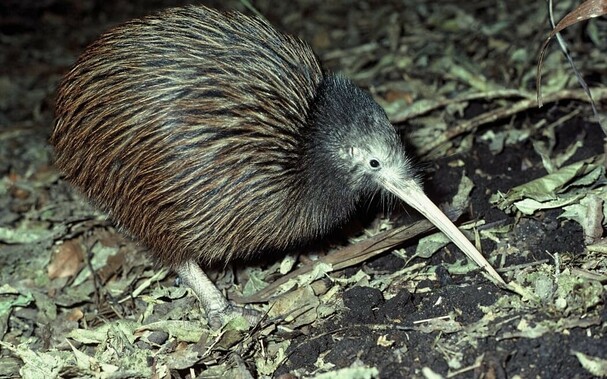
First wild kiwi egg laid in Wellington in over a century 🙌
https://www.rnz.co.nz/news/national/482754/first-wild-kiwi-egg-laid-in-wellington-in-over-a-century

 Andy McKay
This is really important research in the Hauraki Gulf and for all ecosystem-based fisheries management.
"With relatively low diet flexibility across the whole food web, a 10% reduction in the biomass of any single group of small/medium pelagic fishes led to a 3.5–5.8% reduction in the total biomass of birds, a 2.0–2.4% reduction in the biomass of cetaceans, and a 0.4–0.6% reduction in the biomass of snapper."