 Coach Pāṇini ®
 Maartje
Train conductor or astronaut… whatever job level you always are in charge of repairing shitty toilets 😅
| Blog | https://blog.arnopeters.nl |
| Bio | https://arnopeters.bio.link/ |

| Blog | https://blog.arnopeters.nl |
| Bio | https://arnopeters.bio.link/ |
What an amazing view of Earth from Artemis II.
The Sun is behind the Earth, illuminating a thin crescent. This low-light shot, taken by Reid Wiseman using a Nikon D5, shows auroras over the poles, city lights, and the glow of the atmosphere.
And yes, there are stars!
https://www.nasa.gov/image-article/hello-world/ #space #science #nature #technology

If you don’t have the resources to write and understand the code yourself, you don’t have the resources to maintain it either.
Any monkey with a keyboard can write code. Writing code has never been hard. People were churning out crappy code en masse way before generative AI and LLMs. I know because I’ve seen it, I’ve had to work with it, and I no doubt wrote (and continue to write) my share of it.
What’s never been easy, and what remains difficult, is figuring out the right problem to solve, solving it elegantly, and doing so in a way that’s maintainable and sustainable given your means.
Code is not an artefact, code is a machine. Code is either a living thing or it is dead and decaying. You don’t just write code and you’re done. It’s a perpetual first draft that you constantly iterate on, and, depending on what it does and how much of that has to do with meeting the evolving needs of the people it serves, it may never be done. With occasional exceptions (perhaps? maybe?) for well-defined and narrowly-scoped tools, done code is dead code.
So much of what we call “writing” code is actually changing, iterating on, investigating issues with, fixing, and improving code. And to do that you must not only understand the problem you’re solving but also how you’re solving it (or how you thought you were solving it) through the code you’ve already written and the code you still have to write.
So it should come as no surprise that one of the hardest things in development is understanding someone else’s code, let alone fixing it when something doesn’t work as it should. Because it’s not about knowing this programming language or that (learning a programming language is the easiest part of coding), or this framework or that, or even knowing this design pattern or that (although all of these are important prerequisites for comprehension) but understanding what was going on in someone else’s head when they wrote the code the way they wrote it to solve a particular problem.
It frankly boggles my mind that some people are advocating for automating the easy part (writing code) by exponentially scaling the difficult part (understanding how exactly someone else – in this case, a junior dev who knows all the hows of things but none of the whys – decided to solve the problem). It is, to borrow a technical term, ass-backwards.
They might as well call vibe coding duct-tape-driven development or technical debt as a service.
🤷♂️
"Every time any of LinkedIn’s one billion users visits linkedin.com, hidden code searches their computer for installed software, collects the results, and transmits them to LinkedIn’s servers and to third-party companies including an American-Israeli cybersecurity firm.
The user is never asked. Never told. LinkedIn’s privacy policy does not mention it."
Microsoft is running one of the largest corporate espionage operations in modern history. Every time any of LinkedIn’s one billion users visits linkedin.com, hidden code searches their computer for installed software, collects the results, and transmits them to LinkedIn’s servers and to third-party companies including an American-Israeli cybersecurity firm. The user is never asked. Never told. LinkedIn’s privacy policy does not mention it. Because LinkedIn knows each user’s real name, employer, and job title, it is not searching anonymous visitors. It is searching identified people at identified companies. Millions of companies. Every day. All over the world.
I learned I am not working on April 1st… sad…
Anyway
“Dear Passengers, in 15 minutes we will be arriving in Paris-Nord. Passengers with a connection to the Euroster to New York you have a guaranteed connection on platform two. Passengers for the TGV to Sydney please contact the station staff for further directions. Thank you for travelling with ÖBB Nightjet”
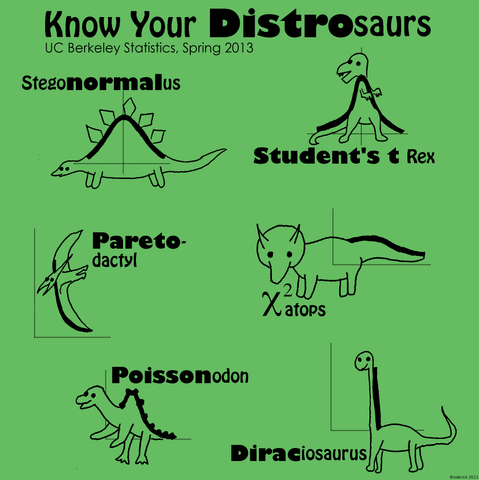
Afterward, multiple people reached out to ask about our charts - we used Tamara Broderick’s “Distrosaurs” to illustrate statistical distributions. I’m delighted to share that the distrosaurs are available under a CC license:
 Corey S Powell
 Aral Balkan
 Tane Piper ⁂
 Kevin Beaumont
 Bruno Miguel
 J. Nathan Matias 🦣