Life sciences research is the strongest contributor to the University of British Columbia's first-place ranking among all Canadian institutions in Nature Index 2022 - driven by a 61.3% share in patents linked to high-profile publications.

UBC Life Sciences Institute
- 3 Followers
- 6 Following
- 11 Posts
Our 1,200 researchers, postdocs, students and staff innovate and pursue excellence through collaborative research in life sciences.

🕫 TOMORROW @ 3PM PST | Hybrid Seminar - LSC3 and Zoom
How do developing organisms generate and maintain diverse populations of cells necessary for life?
UW Biology’s Dr. Clemens Cabernard will speak on asymmetric stem cell division in Drosophila neuroblasts.
Can't make it in person? https://bit.ly/3IJexgp
LSI Paper of the Day☀️
New work in Scientific Reports led by Drs. Isobel Mouat and Marc Horwitz demonstrates a novel role for age-associated B cell (ABCs): they continuously respond in an effector manner to latent viral infection by secreting anti-viral cytokines and antibodies.
Read the paper: https://www.ncbi.nlm.nih.gov/pmc/articles/PMC9729602/

Age-associated B cells are long-lasting effectors that impede latent γHV68 reactivation
Age-associated B cells (ABCs; CD19[+] CD11c[+] T-bet[+] ) are a unique population that are increased in an array of viral infections, though their role during latent infection is largely unexplored. Here, we use murine gammaherpesvirus 68 (γHV68) ...
LSI Paper of the Day☀️
Dr. Jibin Sadasivan and a team from the Eric Jan Lab provide new insights into how viruses manipulate the formation of stress granules - a potential strategy for protecting viral proteins and RNA and promoting infection in a new @PLOS Pathogens study.
https://journals.plos.org/plospathogens/article?id=10.1371/journal.ppat.1010598#ack
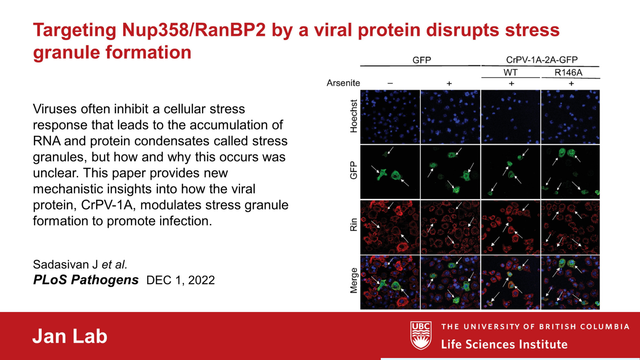

Targeting Nup358/RanBP2 by a viral protein disrupts stress granule formation
Author summary Viruses often inhibit a cellular stress response that leads to the accumulation of RNA and protein condensates called stress granules. How this occurs and why this would benefit virus infection are not fully understood. Here, we reveal a viral protein that can block stress granules and identify a key amino acid residue in the protein that inactivates this function. We demonstrate that this viral protein has multiple functions to modulate nuclear events including mRNA export and transcription to regulate stress granule formation. We identify a key host protein that is important for viral protein-mediated stress granule inhibition, thus providing mechanistic insights. This study reveals a novel viral strategy in modulating stress granule formation to promote virus infection.
@auscandoc - thank you for the nudge. Still getting used to this platform, and loving the ability to edit posts!
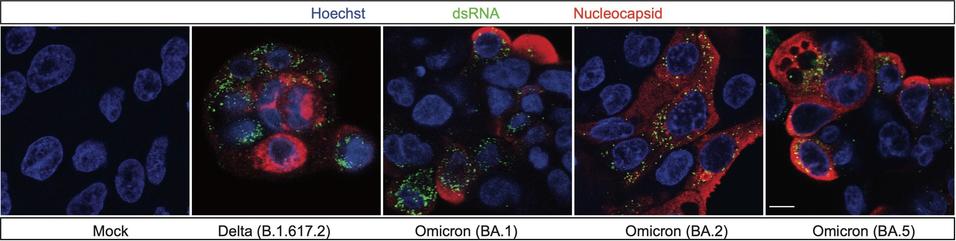
UBC and international researchers find BC sea sponge has #COVID-fighting powers: In an Elsevier Antiviral Research study, they identify three compounds with potent activity against highly transmissible Omicron subvariants BA.5, BA.2, BA.1. #SARSCoV2
https://www.sciencedirect.com/science/article/pii/S0166354222002534?via%3Dihub
LSI Paper of the Day☀️
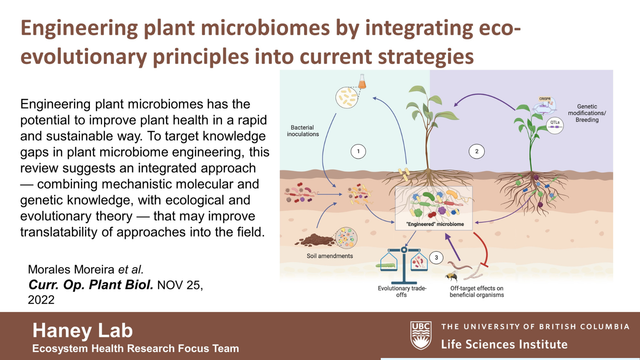
Engineering plant microbiomes with an integrated approach has the potential to rapidly improve plant health in a sustainable way: A new Current Opinions in Plant Biology review from Drs. Melissa Y. Chen and Zayda P. Morales in the @cara_haney lab, w/illustrations by Daniela L. Yanez Ortuno.
 Cab
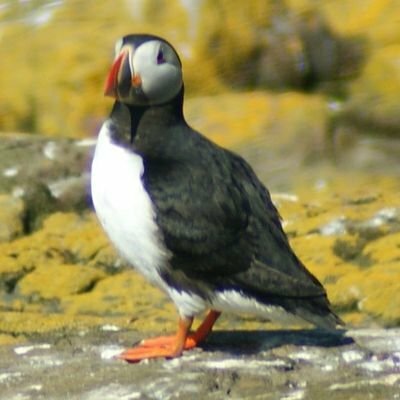
CabScientists left a hamster wheel in the woods, and wild mice, frogs even slugs had a wild time running in it. #Science #Mice #Rodents #Hamster https://royalsocietypublishing.org/doi/10.1098/rspb.2014.0210
Wheel running in the wild | Proceedings of the Royal Society B: Biological Sciences
The importance of exercise for health and neurogenesis is becoming increasingly clear. Wheel running is often used in the laboratory for triggering enhanced activity levels, despite the common objection that this behaviour is an artefact of captivity and ...
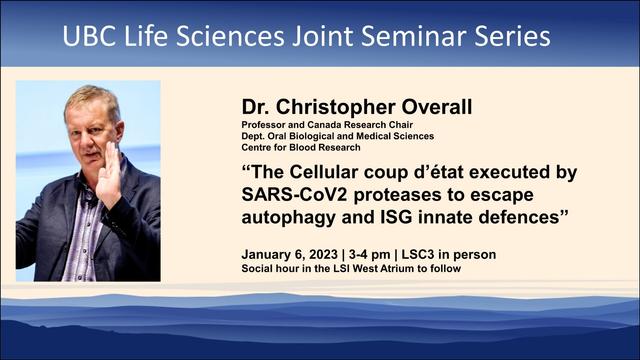
🕫LSI Joint Seminar Series begins TODAY @ 3 pm PST | live in LSC3 and via Zoom!
Don't miss Dr. Christopher Overall describing the cellular coup d'état staged by #SARSCoV2 to escape cellular housekeeping and immune defenses.
Zoom registration: https://bit.ly/JOINTSEMINAR-JAN6
A team led by Drs. Isobel Mouat, Lisa Osborne & Marc Horwitz advances understanding of the biological basis of relapsing #MS.
In a new #ScienceAdvances study, they show Gammaherpesvirus infection drives pathogenicity in mouse and human age-associated B cells.
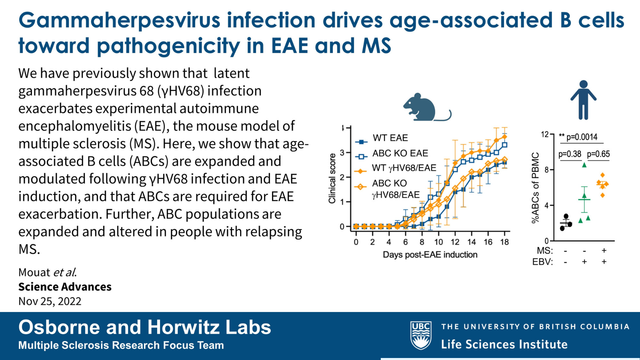
Gammaherpesvirus infection drives age-associated B cells toward pathogenicity in EAE and MS
While age-associated B cells (ABCs) are known to expand and persist following viral infection and during autoimmunity, their interactions are yet to be studied together in these contexts. Here, we directly compared CD11c[+] T-bet[+] ABCs using models ...