@TPVogels

746 Followers
359 Following
89 Posts
Boutique Neurotheory and snazz CompNeuro at @ISTAustria. Helping with @cosyne_meeting @worldwideneuro and the @imbizo. More at www.vogelslab.org
Scholarhttps://scholar.google.com/citations?user=RsHPZroAAAAJ&hl=en
Labhttp://www.vogelslab.org
Institutehttp://www.ist.ac.at
Worldwideneurohttp://world-wide.org
It's that time of year again, please tell your friends & colleagues: Applications for the imbzo are open, and we are waiting eagerly for your application! Put your application in and come join us for the most beautifully located summer school in the world! http://imbizo.africa
Image
#Imbizo - Computational Neuroscience Imbizo - #Imbizo

IBRO-Simons Computational Neuroscience Imbizo summer school in Cape Town, South Africa

@worldwideneuro created a searchable, interactive programme for the citable, virtual and real posters & audio briefs of #COSYNE'23....with awesome recommendations for what to look at! Check out the programme at https://www.world-wide.org/cosyne-23/

Preprints are free to post and read (which is fantastic!) but the services that enable this aren't free to run. So, how can we financially sustain these services?

There's plenty of examples of models that differ from monopoly capitalism. I believe we have a choice.

This blog is my reflection on the current situation, building on many other people's work and opinions. Thanks to Michael Taster @ LSE Impact blog for the chance to write this!

https://blogs.lse.ac.uk/impactofsocialsciences/2023/03/02/lack-of-sustainability-plans-for-preprint-services-risks-their-potential-to-improve-science/

Lack of sustainability plans for preprint services risks their potential to improve science

During the COVID-19 pandemic, preprint servers became a vital mechanism for the rapid sharing and review of vital research. However, discussing the findings of a recent report, Naomi Penfold finds …

Impact of Social Sciences
I hope the two guys that keep Google Scholar going as a pet project didn't get laid off. Just as a quiet reminder of the fragile contingency of this core academic service.
Because I keep reading that Escher's work entered the public domain today.
From 2003: http://www.andrewlipson.com/escher/relativity.html
Escher's "Relativity" in LEGO

Over many years, I have been gradually replacing all of the paragraphs in the Ship of Theseus Wikipedia article.

Looking forward to reading these results (from #NatureMedicine's '11 clinical trials that will shape medicine in 2023'

"Prophylactic vaccines against human papilloma virus (HPV), first rolled out 15 years ago, protect women against cervical cancer and are now routinely offered to young girls in most high-income countries. As time moves on, more women who were vaccinated as girls become eligible for cervical cancer screening, and it is important to understand the most effective screening approaches in a vaccinated population. This trial is important, as it is the first large-scale randomized controlled trial internationally that will assess primary HPV screening in a population that is heavily vaccinated against HPV."

#Immunology #Vaccine #CervicalCancer

https://www.nature.com/articles/s41591-022-02132-3

11 clinical trials that will shape medicine in 2023 - Nature Medicine

Nature Medicine asks leading researchers to name their top clinical trial for 2023, from cervical and prostate cancer screening to new drugs for Parkinson’s disease and Alzheimer’s disease.

Nature
Holding information in mind may mean storing it among synapses

Comparing models of working memory with real-world data, MIT researchers found that information resides not in persistent neural activity, but in the pattern of their connections

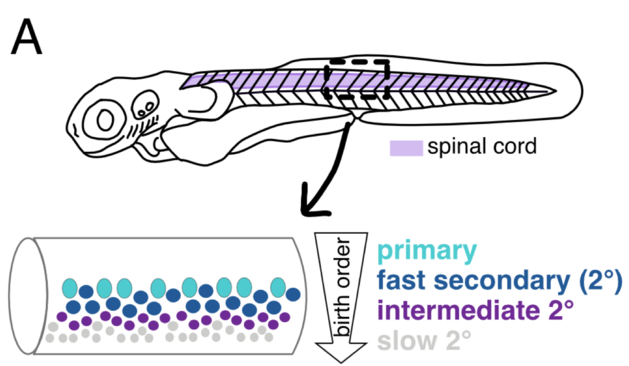
Amazing discovery: how motor neurons come to control fast and slow muscles!

Q: How do developing motor neurons decide to be "fast" (controlling fast-twitch, or "sprinting" muscle fibers) or "slow" (endurance)?

A: Genes called transcription factors determine fast motor neuron "fate." Losing factors make fast neurons project to slow muscle & express "slow motor neuron" genes!

Work from my & Jeremy Dasen's lab: https://www.biorxiv.org/content/10.1101/2022.12.23.521820v1

Pls boost -- trying to beat that other site 🤷🏻‍♂️😝.

My background is humanities -> clinical psychology -> cognitive neuroscience and now computational neuroscience. Throughout my PhD I learned a lot of techniques and analytical tools but I always felt like they’re scattered pieces and I have little insight when it comes to the mathematics of them. A few days ago I found an online YouTube course by Steve Brunton and every video is just pure insight. Everything makes sense and finally after all these years I’m looking forward to equations! If you also struggle (and feel it’s too late to ask!), give it a try:
https://youtube.com/playlist?list=PLMrJAkhIeNNTYaOnVI3QpH7jgULnAmvPA
Engineering Math: Differential Equations and Dynamical Systems

This series presents a comprehensive introduction and overview to Differential Equations & Dynamical Systems. Dynamical systems are differential equations th...

YouTube