—Cape Cod to Cape Canaveral

SharkScience
- 101 Followers
- 129 Following
- 36 Posts
Cape Canaveral Scientific: not-for-profit Marine Biological & Ecological Research - Stressors & health effects on sharks, other fishes, & ocean ecosystems.
—Cape Cod to Cape Canaveral
—Cape Cod to Cape Canaveral
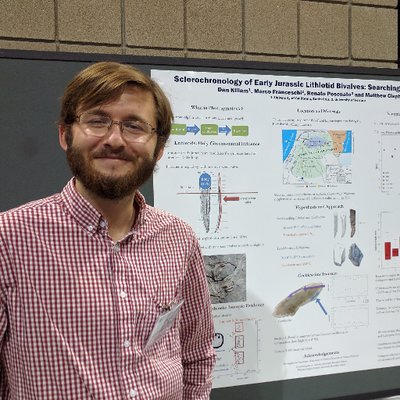 Dr. Dan Killam
Unfortunately that viral story about the 214 year old 'Abraclam Lincoln' that's been going around is mostly inaccurate. Not Arctica islandica and not likely to be more than a few decades old. Still a cool specimen though! Malacologist Dan Marelli lays it out for us.
https://www.tallahassee.com/story/opinion/2023/03/17/marine-scientist-disputes-214-year-old-clam-report-he-appears-to-be-right/70014587007/
https://www.tallahassee.com/story/opinion/2023/03/17/marine-scientist-disputes-214-year-old-clam-report-he-appears-to-be-right/70014587007/

 bioGraphic
Researchers have found that mesopredator sharks are thriving in New Zealand's marine reserves, likely because they, and the lobsters and fish they eat, are protected from fishing. #InGraphicDetail📊
#Shark #Sharks #Parks #InGraphicDetail #MarineReserve #TopeShark #SevengillShark #ProtectedArea #Fishing #NewZealand
https://hakaimagazine.com/videos-visuals/in-graphic-detail-sharks-in-parks/

New Cownose Ray paper: Characterization of the complete mitochondrial genome of the brazilian cownose ray Rhinoptera brasiliensis (Myliobatiformes, Rhinopteridae) in the western Atlantic and its phylogenetic implications. https://link.springer.com/article/10.1007/s11033-023-08272-0


Characterization of the complete mitochondrial genome of the brazilian cownose ray Rhinoptera brasiliensis (Myliobatiformes, Rhinopteridae) in the western Atlantic and its phylogenetic implications - Molecular Biology Reports
Background The Brazilian cownose ray, Rhinoptera brasiliensis has undergone a global population reduction and is currently classified by IUCN as Vulnerable. This species is sometimes confused with Rhinoptera bonasus, the only external diagnostic characteristic to distinguish between both species is the number of rows of tooth plates. Both cownose rays overlap geographically from Rio de Janeiro to the western North Atlantic. This calls for a more comprehensive phylogenetic assessment using mitochondria DNA genomes to better understand the relationships and delimitation of these two species. Methods and results The mitochondrial genome sequences of R. brasiliensis was obtained by next-generation sequencing. The length of the mitochondrial genome was 17,759 bp containing 13 protein-coding genes (PCGs), two ribosomal RNA (rRNA) genes, 22 transfer RNA (tRNA) genes, and a non-coding control region (D-loop). Each PCG was initiated by an authoritative ATG codon, except for COX1 initiated by a GTG codon. Most of the PCGs were terminated by a complete codon (TAA/TAG), while an incomplete termination codon (TA/T) was found in five out of the 13 PCGs. The phylogenetic analysis showed that R. brasiliensis was closely related to R. steindachneri whereas the reported mitogenome as R. steindachneri (GenBank accession number KM364982), differs from multiple mitocondrial DNA sequences of R. steindachneri and is nearly identical to that of R. javanica. Conclusion The new mitogenome determined in this study provides new insight into the phylogenetic relationships in Rhinoptera, while providing new molecular data that can be applied to population genetic studies.
 Anne Jefferson
Did you know that the USGS will be looking for 5 regional directors and 3 deputy directors for the Climate Adaptation Science Centers? Keep track of this page for the official announcements on USA Jobs. Apparently the openings may close quickly, but these sound like great jobs for those looking to make a real difference on a large scale.
Upcoming Job Openings with the USGS Climate Adaptation Science Centers | U.S. Geological Survey
Do you want to serve in a leadership role in a federal agency helping to understand and mitigate climate change impacts to America's landscapes? The USGS Climate Adaptation Science Centers will soon be hiring Regional Administrators and Assistant Regional Administrators at select regional centers around the country. Learn more below and get your application ready!
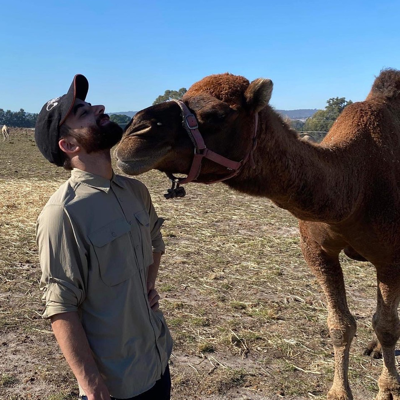 Jon Mifsud
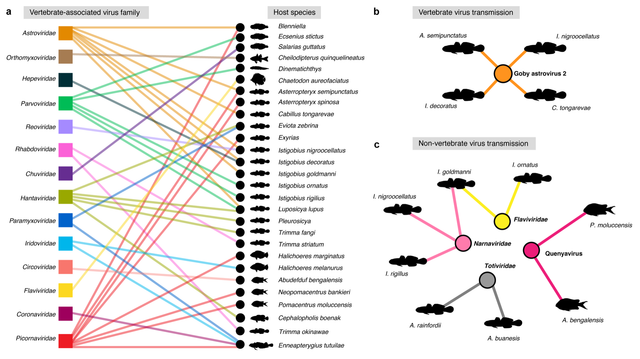
Metatranscriptomic sequencing reveals the viromes of 61 reef fish species in the Great Barrier Reef, with little evidence for virus transmission between species, despite ample exposure. Study led by Vincenzo Costa 🐠
Limited Cross-Species Virus Transmission in a Spatially Restricted Coral Reef Fish Community
https://academic.oup.com/ve/advance-article/doi/10.1093/ve/vead011/7023158?login=false

 jebyrnes
RT @cpnscience
JOB ALERT: @SchoodicInst is hiring 7 Ecology Field Technicians!
Come build your ecological research skills while working on diverse projects spanning multiple ecosystems in Acadia National Park. #conservationjobs
https://schoodicinstitute.org/about-us/employment-opportunities/

A right #whale mom/calf pair was spotted near Sebastian Inlet along the #Florida coast today. This is a busy area for boating. Please give these #endangered whales space (at least 500 yards) and let us know if you see a right whale, call 1-877-WHALE-HELP

Impressive #fish on the 1st day of the year. Tarpon (Megalops atlanticus). In #Florida -Tarpon is a #catchandrelease only fishery. 1 tarpon tag per person per year may be purchased when in pursuit of a Florida state or world record. Vessel, transport & shipment limited to 1 fish.

New US lawsuit targets ‘forever chemicals’ in plastic food containers. #PFAS https://www.theguardian.com/environment/2022/dec/27/lawsuit-houston-company-inhance-forever-chemicals-pfas