 Paul Harrison
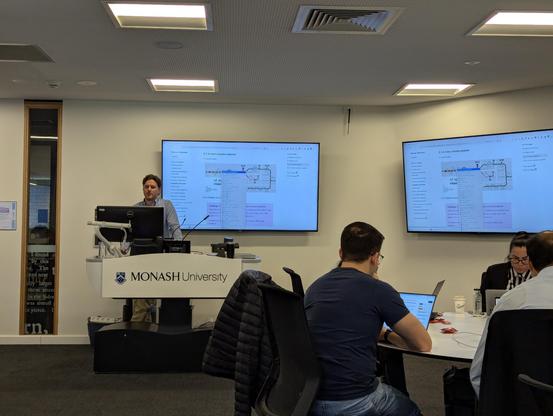
This week the Monash Genomics and Bioinformatics Platform did a bulk RNA-Seq workshop, covering end-to-end from experimental design, through library preparation, then using web tools to run an analysis pipeline and dig into differential expression.

We are a collaborative service group that helps researchers tackle data science challenges in genomics, proteomics and structural biology. Toots by multiple members of the Monash Bioinformatics Platform.
"nobot"
| Web | https://bioinformatics.erc.monash.edu |
| Github | https://github.com/MonashBioinformaticsPlatform/ |
I feel very lucky that @SeqeraLabs agreed to take on the @MultiQC project when I joined, so that it can continue to grow and help the bioinformatics / scientific community 🧬🎉📈
---
RT @SeqeraLabs
Genomic data management can be a challenge, but with #MultiQC, it doesn't have to be.
This open-source tool, with '000s of users, helps researchers quickly and easily assess the quality of their genomics data across multiple samples 🧬💻
Lea…
https://twitter.com/SeqeraLabs/status/1633415167361916929
“Genomic data management can be a challenge, but with #MultiQC, it doesn't have to be. This open-source tool, with '000s of users, helps researchers quickly and easily assess the quality of their genomics data across multiple samples 🧬💻 Learn more: https://t.co/iXq9NK0YmN”
Scientists isolated enzyme (Huc) that allows soil bacteria to consume hydrogen from the air and convert it into energy, producing electricity directly when exposed to hydrogen.
@nature #Pedology #Science @MonashBioinfo #Enzyme #microbiology
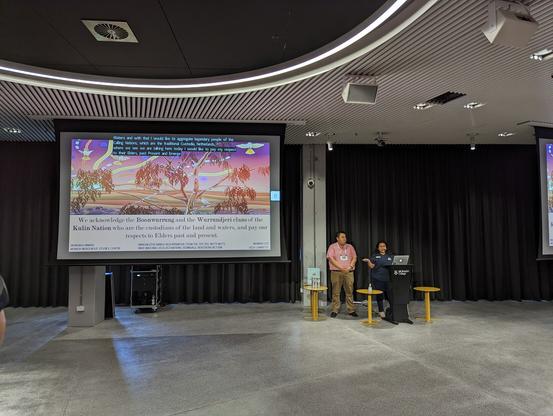
This is my first toot, mundanely to clarify for the #ABACBS2022 conference that the preferred hashtag is now #ABACBS22
@SimonSadedin @pansapiens @MonashBioinfo @pfh @tanyaaneichyk @BeardyMcJohnFace
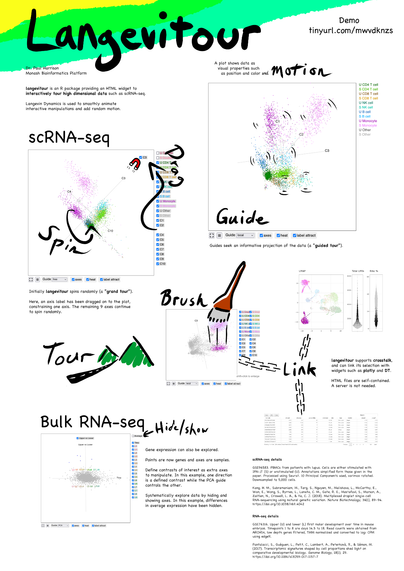
Getting ready for the #abacbs2022 bioinformatics conference. This is my poster.
In unrelated news, I bought a wacom tablet and some manga authoring software, and it is a lot of fun.
How do Reactome pathways get collapsed to gene sets?
I noticed GMT files from Reactome (and Reactome in MSigDB) sometimes include identifiers of genes which are negatively regulated by given pathway. It looks like a bad thing for GSEA and friends. I wonder if this is intentional or not. An example is IL18 in IL10 signalling pathway (https://reactome.org/content/detail/R-HSA-6783783).
Join our team ! There's an opportunity as a Senior Research Fellow (Bioinformatician), working with both the Monash Bioinformatics Platform and clinical researchers at the Australian Centre for Blood Diseases, Central Clinical School.
 Phil Ewels
 Kira Cook
 Sonika Tyagi
 Dr Andrew Lonsdale
 Michał Krassowski