Learn Data Science

73 Followers
23 Following
16 Posts

The meetup group for people who want to LEARN Data Science - taking online courses & reading books together with some hands-on workshops.

We are at: https://www.meetup.com/LearnDataScience/

When we think about image generative models, the most notable one that comes to mind would be DALL-E2, Stable Diffusion or MidJourney. A lot of these underlying techniques were initially invented by physicists, which have become very important in machine learning.

Some of those physicists are Jascha Sohl-Dickstein, Yang Song and Jonathan Ho on diffusion model algorithm.

Let's find out what they did!

https://www.quantamagazine.org/the-physics-principle-that-inspired-modern-ai-art-20230105/
The Physics Principle That Inspired Modern AI Art | Quanta Magazine

Diffusion models generate incredible images by learning to reverse the process that, among other things, causes ink to spread through water.

Quanta Magazine

AI is designed to assist with real-life decision-making when data involved are beyond human comprehension. According to the journal published by Harvard Business Review, however, AI is not ready to assume human qualities and ethical, moral and other human considerations that guide the course of business, life and society at large yet.

Let's find out why it is so!

https://hbr.org/2022/09/ai-isnt-ready-to-make-unsupervised-decisions

AI Isn’t Ready to Make Unsupervised Decisions

AI has progressed to compete with the best of the human brain in many areas, often with stunning accuracy, quality, and speed. But can AI introduce the more subjective experiences, feelings, and empathy that makes our world a better place to live and work, without cold, calculating judgment? Hopefully, but that remains to be seen. The bottom line is, AI is based on algorithms that responds to models and data, and often misses the big picture and most times can’t analyze the decision with reasoning behind it. It isn’t ready to assume human qualities that emphasize empathy, ethics, and morality.

Harvard Business Review

We are holding the Reading Group meeting (online & in-person) on Tuesday, January 10, 2023.

Our group discussion is based on the reading:
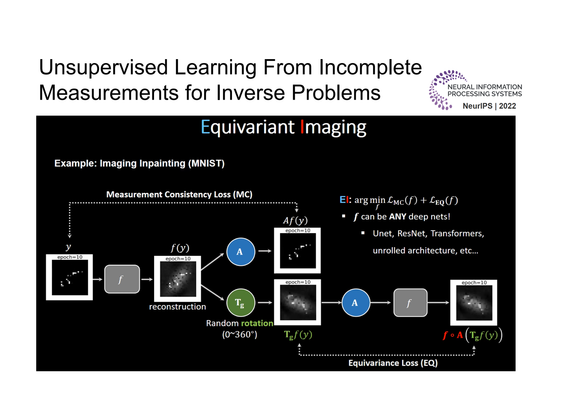
Unsupervised Learning From Incomplete Measurements for Inverse Problems https://arxiv.org/abs/2201.12151

For joining us, RSVP here: https://www.meetup.com/learndatascience/events/290330412/

Unsupervised Learning From Incomplete Measurements for Inverse Problems

In many real-world inverse problems, only incomplete measurement data are available for training which can pose a problem for learning a reconstruction function. Indeed, unsupervised learning using a fixed incomplete measurement process is impossible in general, as there is no information in the nullspace of the measurement operator. This limitation can be overcome by using measurements from multiple operators. While this idea has been successfully applied in various applications, a precise characterization of the conditions for learning is still lacking. In this paper, we fill this gap by presenting necessary and sufficient conditions for learning the underlying signal model needed for reconstruction which indicate the interplay between the number of distinct measurement operators, the number of measurements per operator, the dimension of the model and the dimension of the signals. Furthermore, we propose a novel and conceptually simple unsupervised learning loss which only requires access to incomplete measurement data and achieves a performance on par with supervised learning when the sufficient condition is verified. We validate our theoretical bounds and demonstrate the advantages of the proposed unsupervised loss compared to previous methods via a series of experiments on various imaging inverse problems, such as accelerated magnetic resonance imaging, compressed sensing and image inpainting.

arXiv.org

Thank you for being with Learn Data Science this year. Let's begin our new journey with enriching and abundant learning and experiences in 2023. Happy New Year, everyone!

#newyear2023 #learning #2023vision #datascience

Claude Shannon was a rare individual. He never won a Nobel Prize, and was not a well-known scholar like Albert Einstein or Richard Feynman, but with a single groundbreaking paper, he laid the foundation for the entire communication infrastructure underlying the modern information age, making central contributions to math, science & engineering. This paper was written more than 70 years ago.

Who was Claude Shannon? How did he make the impact to the future of our time?

https://www.quantamagazine.org/how-claude-shannons-information-theory-invented-the-future-20201222/

How Claude Shannon Invented the Future

Today’s information age is only possible thanks to the groundbreaking work of a lone genius.

Quanta Magazine

Season's Greetings! May the Holiday Season bring happiness and joy to you all. Happy Holiday and let's watch Python draw a Christmas Tree 🎄 ✨ 🎉

Python Source: copyassignment.com
Music Source: Infaction

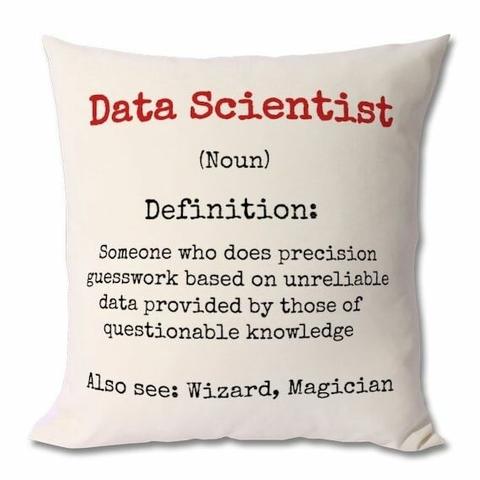
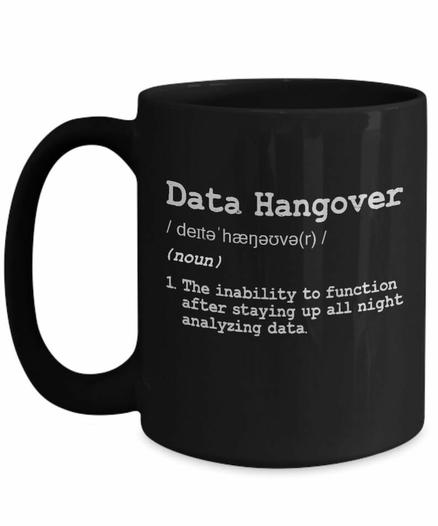
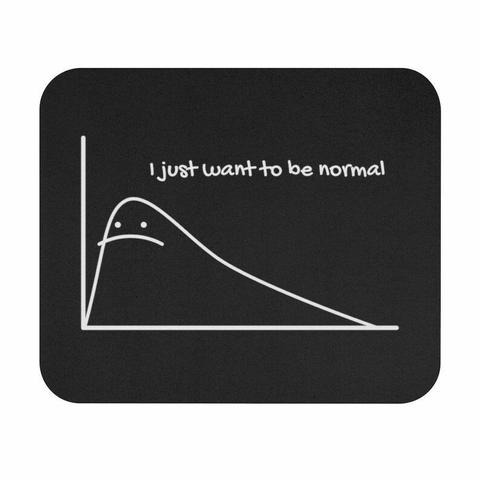
On the flip side, data science can mean something humorous and apparently, it is available in a cushion, mug, mouse pad, and so much more!

What is your data science humour?

#datascience #data #normaldistribution

Using Python, you can create a model representing the supply chain network to optimize the operations and support strategic decisions. This model is called a Supply Chain Digital Twin.

How can we create such model? What is it and how can it be useful? Let’s find out from Samir Saci's latest post at Towards Data Science!

#datascience #python #digital #supplychain #network #machinelearning

https://towardsdatascience.com/what-is-a-supply-chain-digital-twin-e7a8cd9aeb75

What is a Supply Chain Digital Twin? | Towards Data Science

Use python to create a model representing your supply chain network to optimize your operations and support strategic decisions.

Towards Data Science

ChatGPT, NLP driven AI chatbot, was launched by OpenAI on November 30, and less than a week later, it is generating buzz around the internet and already crossing over one million users. Will it pose a threat to Google and other existing business models? Will it become sustaining or disruptive innovation? Let's find out! https://www.zdnet.com/article/what-is-chatgpt-and-why-does-it-matter-heres-what-you-need-to-know/

#ai #aitechnology #openai #chatgpt #datascience #nlp #machinelearning #deeplearning #technology #ml #dl #innovation #iot #media

What is ChatGPT and why does it matter? Here's what you need to know

This AI chatbot's advanced conversational capabilities are making quite the buzz. Here's everything you need to know.

ZDNET