Juha Karvanen

29 Followers
52 Following
22 Posts
Professor of Statistics, University of Jyväskylä, Finland. Causal inference, missing data, study design.
WEBhttp://users.jyu.fi/~jutakarv/

In longitudinal studies, dropout leads to a monotone missing data pattern. We show in a new article that monotonicity sometimes enables and sometimes prevents the identification of  the full law, i.e., the joint distribution of actual variables and response indicators.

https://openreview.net/pdf?id=kVthdlAVks

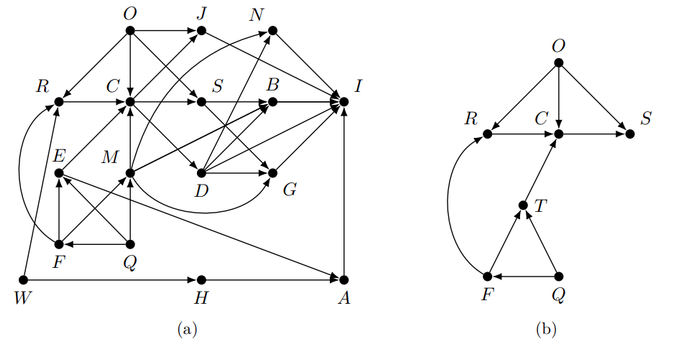
In a new preprint, we study causal effect identification with multiple data sources. We show that certain clustering and pruning operations of the causal graph are identification invariant. This means that we may use the smaller graph to make conclusions on the larger graph.
https://arxiv.org/abs/2505.15215
Our paper on the value of information for a risk-averse decision maker was published. Koski, V., Karvanen, J. Risk aversion in the value of information analysis: application to lake management. Stochastic Environmental Research and Risk Assessment (2025) https://doi.org/10.1007/s00477-025-02970-w
Risk aversion in the value of information analysis: application to lake management - Stochastic Environmental Research and Risk Assessment

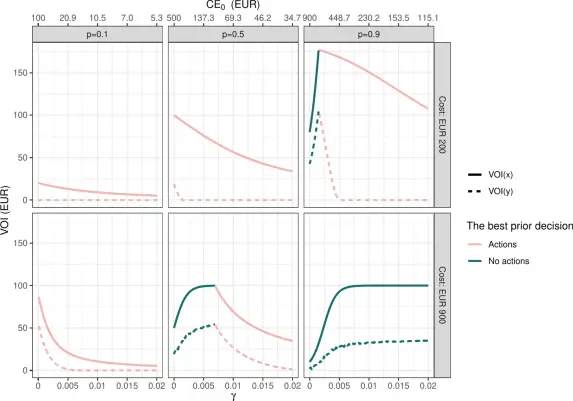
We analyze the relationship between the value of information (VOI) and the decision-maker’s risk aversion in the lake monitoring where one needs to decide about whether to implement costly management actions or not. We calculate the value of perfect as well as imperfect information for risk neutral and risk averse decision-makers. The risk aversion is measured using the certain equivalent and the Arrow-Pratt risk aversion measures, which are defined using the derivatives of the utility function. We consider two utility functions for a risk averse decision-maker, an exponential utility and a power utility function, and demonstrate their use with lake management data from Finland. The results show that, in this context, a risk averse decision-maker’s VOI may be lower or higher than a risk neutral decision-maker’s VOI, depending on the prior probability of the lake being in the need of management actions and the cost of the actions. The risk aversion seems to have a clear impact on decisions. This may encourage the decision-makers to contemplate their risk preferences instead of hastily assuming the risk neutrality.

SpringerLink

ELLIS Institute Finland is hiring Principal Investigators in AI + machine learning. World-class resources for research incl. LUMI supercomputer, generous starting package & professorship affiliation with a university in the world’s happiest country!

Apply by March 9: https://www.ellisinstitute.fi/PI-recruit

@samikaski
@ELLISforEurope

Principal Investigator positions at ELLIS Institute Finland | ELLIS Institute Finland

Now recruiting new PIs in artificial intelligence and machine learning

Adaptive MCMC can be very useful in practice, but theoretical results are technical. We attempted to write a more accessible story about adaptive MCMC theory: https://arxiv.org/abs/2408.14903 It starts from the beautiful martingale decomposition of Andrieu & Moulines (2006):
An invitation to adaptive Markov chain Monte Carlo convergence theory

Adaptive Markov chain Monte Carlo (MCMC) algorithms, which automatically tune their parameters based on past samples, have proved extremely useful in practice. The self-tuning mechanism makes them `non-Markovian', which means that their validity cannot be ensured by standard Markov chains theory. Several different techniques have been suggested to analyse their theoretical properties, many of which are technically involved. The technical nature of the theory may make the methods unnecessarily unappealing. We discuss one technique -- based on a martingale decomposition -- with uniformly ergodic Markov transitions. We provide an accessible and self-contained treatment in this setting, and give detailed proofs of the results discussed in the paper, which only require basic understanding of martingale theory and general state space Markov chain concepts. We illustrate how our conditions can accomodate different types of adaptation schemes, and can give useful insight to the requirements which ensure their validity.

arXiv.org

Simulating values from a known distribution is a basic task in statistics. But how to simulate from a counterfactual distribution? We consider this question in a recently published paper.

https://jair.org/index.php/jair/article/view/15579/27053

The proposed algorithm is applied to fairness analysis in credit-scoring.

View of Simulating Counterfactuals

Applications are open for the doctoral program in AI!
🎓 Fully funded PhD positions across 10 Finnish universities
🧭 Collaboration with industry
📹 Professor Arno Solin introduces the program in this video 👇
Apply here by Sept. 9 ➡️ https://fcai.fi/doctoral-program

#phdPosition #doctoralprogram #phd #artificialintelligence #machinelearning #finland #studyinfinland #research

Doctoral program — FCAI

FCAI

Looking for a fully-funded PhD position in AI or ML? We are opening the next call for applications in the Finnish AI doctoral program soon!
See all the details and how to apply: https://fcai.fi/doctoral-program

#phdPosition #phd #academicjobs #artificialintelligence #machinelearning #finland #recruitment

Doctoral program — FCAI

FCAI

dynamite: Bayesian Modeling and Causal Inference for Multivariate Longitudinal Data (built with Stan) by Santtu Tikka and @jouni_helske

... complex panel (time series) data comprising of multiple measurements per multiple individuals measured in time via dynamic multivariate panel models...

https://docs.ropensci.org/dynamite/index.html

#bayes #mcmc #rstats

Bayesian Modeling and Causal Inference for Multivariate Longitudinal Data

Easy-to-use and efficient interface for Bayesian inference of complex panel (time series) data using dynamic multivariate panel models by Helske and Tikka (2022) <doi:10.31235/osf.io/mdwu5>. The package supports joint modeling of multiple measurements per individual, time-varying and time-invariant effects, and a wide range of discrete and continuous distributions. Estimation of these dynamic multivariate panel models is carried out via Stan. For an in-depth tutorial of the package, see (Tikka and Helske, 2023) <arxiv:2302.01607>.

We are looking for 7 PhD students in AI & ML to research groups at University of Jyväskylä
👉 https://ats.talentadore.com/apply/doctoral-education-pilot-seven-7-doctoral-researchers-in-finnish-doctoral-program-network-in-artificial-intelligence-ai-doc/ZjKNdE
Please apply also in the national call (soon - call closes 2.4.)
👉 https://fcai.fi/doctoral-program
Doctoral education pilot / Seven (7) Doctoral Researchers in Finnish Doctoral Program Network in Artificial Intelligence (AI-DOC)

We are seeking to recruit seven (7) Doctoral Researchers for a fixed term of three years to the Doctoral Education Pilot for the Finnish Doctoral Program Network in Artificial Intelligence (AI-DOC). Depending on the applicant, the positions are filled to the departments of [Mathematics and Statistics](https://www.jyu.fi/en/science/maths) and [Biological and Environmental Science](https://www.jyu.fi/en/science/bioenv) at the [faculty of Mathematics and Science](https://www.jyu.fi/en/science), the [faculty of Information Technology](https://www.jyu.fi/en/it), the departments of [History and Ethnology](https://www.jyu.fi/en/humsoc/hela) and [Language and Communication Studies](https://www.jyu.fi/en/humsoc/kivi) at the [faculty of Humanities and Social Sciences](https://www.jyu.fi/en/humsoc), or [Jyväskylä University School of Business and Economics](https://www.jyu.fi/en/jsbe). We expect applicants to be ready to start on 1.8.2024 or 1.1.2025 and to be motivated to complete their dissertation within the three-year target period and to possibly be employed in Finland after graduation. Artificial intelligence (AI), the fastest developing general-purpose technology, is a key area for Finland’s competitiveness: every field and business needs AI expertise. Finnish AI research is among the best in Europe in selected fields of research, and we have a favorable operating environment for the creation, development, and utilization of AI technologies. The doctoral education pilot is a programme funded by the Finnish Ministry of Education and Culture for the period 2024-2027 and implemented by Finnish universities, which will fund a total of up to 1,000 new fixed-term doctoral researcher positions and part of the associated supervision. The programme will develop new practices in doctoral training that will enable doctoral researchers to complete their dissertations in three years and support their employment in a wide range of sectors of the Finnish society. Read more about the [doctoral education pilot programme at the University of Jyväskylä](https://www.jyu.fi/en/doctoral-education/doctoral-education-pilot).