 neville park
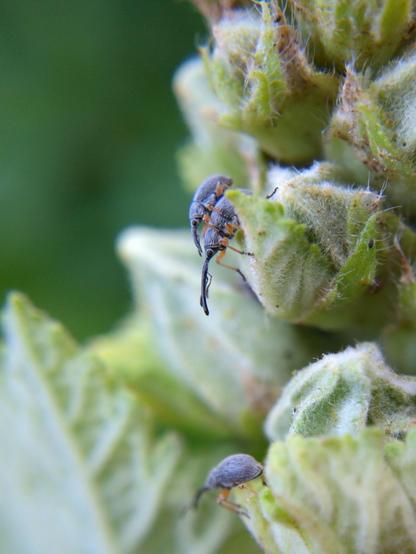
Good morning, it's #WeevilWednesday! Tragically and inexplicably, the patch of hollyhocks in the park near me is devoid of hollyhock weevils (_Rhopalapion longirostre_) so far this year. God knows it's not because anyone takes care of that bit of park. Luckily I know of a few other gardens in the neighbourhood with weevil-ridden hollyhocks right by the sidewalk.
Here you can see the difference in length between the typical male and female snouts. The females' long snouts help them bore deep into the flower buds to lay eggs.
#bugstodon #insects #beetles #weevils #Coleoptera #Curculionoidea #Brentidae #Apioninae
 bees and nature