 abadidea
info on the github breach appears to only be available on xitter 🙄 , I fished it out for you.
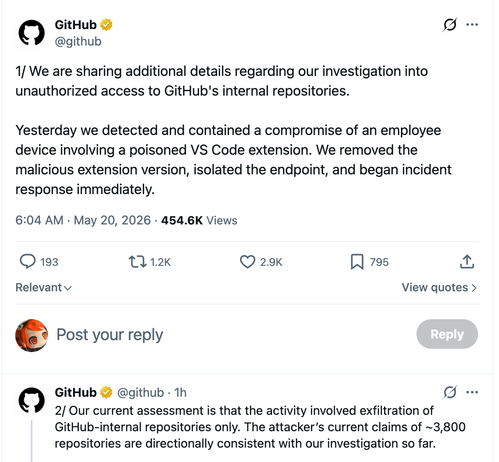
I’ve thought about this for a while and I think the difference is the marketplace. I use a bunch of vim extensions but vim and emacs don’t have a built-in thing that advertises extensions to me. There’s no ‘click here to install…’ button with flashy marketing. There’s no built-in concept of ‘recommended extensions’.
When I install an extension in vim, it’s almost always because someone looks over my shoulder and says ‘wow, I forgot how bad vim was without [my favourite extension]’ and I try it and decide it actually does make life nicer. When people install extensions in VS Code it’s because they’ve been trained that there’s always an extension in the store and it’s the top result for their search. And that gives people a big incentive to put malicious extensions in the store.
@phil @0xabad1dea @david_chisnall No no, Emacs has a *far* more sophisticated security model than VSCode.
Malware authors sit down to learn Emacs, so they can write Elisp malware ...
... and ten years later they're still customising their editor, and haven't written a single line of malicious code.
(Posted with love as an  user for several decades ...)
@david_chisnall @0xabad1dea I could not ever have thought that to be a problem! Who has ever heard of it being problematic to download random code from the Internet and run it with full privileges on your computer? This realization is a breakthrough in infosec. Someone deserves a Nobel price for this. And a Turing award.
(#sarcasm just in case)
 David Chisnall (*Now with 50% more sarcasm!*)
 Phil
Phil Duncan Bayne
 Lars Wirzenius