Hi! Can we entertain each other with our fun stories about the oldest or weirdest tech we've come across?

Please boost for science or cows or something. TELL US YOUR COOL STORY!

edit: as suggested, adding the hashtag #WeirdOldTech to keep this stuff going a bit (hint: you can follow hashtags).

#technology #WeirdOldTech

I'll start. It's the story that triggered this question :)

It's about the time a new technician at work did something stupid.

We received an industrial computer controlled machine with fire damage. Goal was to restore it to the state it had a seconds before the fire started.

The new tech got a simple task: disassemble the included PC (which only had minor smoke damage) and label the parts. Procedure is that we replace parts where it makes sense.

So he discarded the 3½-inch floppy drive.

1/3

FYI: we have good procedures, and peer checks etc etc. We also employ humans. And humans need to learn, and make mistakes.

To continue:

Our procedure on replacing parts has long been: store the old one for a year after project conclusion.

Our new tech just whacked it with a hammer before discarding it. He couldn't explain why.

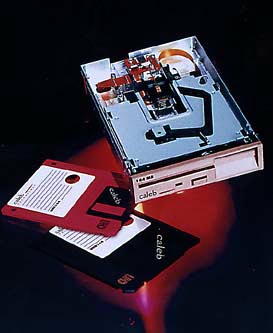
Turns out it was something called a UHD 144 drive. It took a full day to find a new-old-stock one. At a cost of around 5000 euro. 🤭

https://en.wikipedia.org/wiki/Caleb_UHD144

🤷

2/3

Caleb UHD144 - Wikipedia

fallout:

-We still have the remains of the drive the tech whacked to death with a hammer. It's used during onboarding.

-tech has been happily working with us for many years. He's over the embarrassment (or acts that way).

-the client thought it was HILARIOUS. They also figured out a way to upgrade the system to work with SD cards 🙂.

-costs were 4800 euro. An exact 4000 for the drive, and 800 for "one-day delivery" (seller drove from DE to NL on a Sunday).

3/3

@Pepijn
Do you also still have the hammer?
@mattdawhit Not as demo. The tool we still have though. He's now a senior technician.

@Pepijn

> the client thought it was HILARIOUS

Can I have your client?? Please???

@Pepijn
That sounds vaguely familiar.

Back in the mid 2010's my boss had a minor panic when one of the main Japanese manufacturers announced the cessation of blank 3.5" floppy disk production. The DOS based CNC software we used wrote directly to floppys.
The solution was elegant.
Physically remove the floppy and remap the A: drive to a C:\ folder. One tech then wrote a Delphi program to copy the CNC code across the network to the industrial machines that used the code.

@raymierussell Nice. And much more practical as well :)

To be fair: I think the world will never run out of new-old-stock of these disks. There's SOOOO MUCH of it available.

@Pepijn
Ironically the biggest hurdle was actually a very minor change that slightly confused the machine operators.

I produced production plans with 2 digit numbers (it was actually the last 2 digits of a 4 digit number).

In the old way you could have 2 plans with the same number which was a not problem because CNC code on the disk was different.

The new way we used the full 4 digit plan number and it was suddenly an issue as it was "different". The operators soon got used to it.

@raymierussell It's always little things like that.

Many years ago I made the error of introducing a new way of versioning in our various documents.

It went from 1, 2, 3 ... 10, 11 ... 102, 103 etc. to R001, R002, R003 etc. With R meaning "revision" or even nothing at all.

Most people just got it and used it properly. Some people though decided this isn't right and started... versioning.

Years later we still have some documents with versions like R003-1, R003-version2, R003-V04 etc.

@raymierussell @Pepijn I loved Delphi!

@NormanDunbar
"Modern" Turbo Pascal I am told.

With Lazarus being a FOSS cousin.

@raymierussell Yes indeed. I got involved a few years back, in building a Free Pascal cross compiler for the Sinclair QL.

It runs on a PC, compiles Pascal code to upload onto a QL.

For no good reason. 😉

https://github.com/NormanDunbar/FPC-CrossCompiler-QL/releases/download/1.7alpha/QlCrossCompiler.1.7alpha.pdf

@NormanDunbar
I loved Turbo Pascal back in my college days. Haven't been near it since then.
Z80 is my occasional coding indulgence these days.

Never seen a QL in RL 🙂

@raymierussell @NormanDunbar the QL is a perfect example of how Sir Clive could take a good idea, and make it a miserable experience in the pursuit of squeezing every farthing out of the bill of material costs.

It's going to have a 68K processor! Yay!!!

With an 8 bit data bus! Err..?

I really wanted to like mine, but the very clever, very unreliable microdrives were abysmal.

Regarding Pascal and Delphi - it bugged the heck out of C programmers that Pascal programs compiled faster and ran faster, before C compiler writers got their act together on optimisation 😆

@AbramKedge
Lol, penny pinching with the speccy was mostly fine as it was aimed at the home hobbyist. But the business market were never gonna stand for it.

@raymierussell True - it introduced huge numbers of people to programming who would never have had the opportunity otherwise, so that's officially a Good Thing.

I knew someone who worked at a company that cut keyboards of AIM65 computers with a hacksaw, so I took one and grafted it onto my young brother in law's Spectrum when its keyboard failed with multiple dead keys. Took me a while, I had to patch the board to match the required matrix.

Yeah, he wasn't happy, he wanted a new computer 😄

@AbramKedge @raymierussell Clive has a certain knack.....😉

To be fair, I used microdrives for years with very few problems. On my Spectrum too. Much more reliable than cassette tape!

Disc(s) would have been great but we're too costly back then I expect, for Clive anyway!

My emulator has a MC68020 now.

@NormanDunbar @raymierussell I really liked the CAD program that came with mine, but after a couple of months it wouldn't load any more 🤷‍♂️

@AbramKedge @raymierussell Was that Easel? Part of the suite that Psion wrote?

Archive the database system.
Easel for graphics.
Quill for word processing.
Abacus was the spreadsheet.

And, you could export and import from one to another. Cutting edge stuff back then!

The Union at work used a QL to produce their newsletters for ages!

@NormanDunbar @raymierussell I think so, yes - and it looked GLORIOUS in the red, green, white on black palette
@AbramKedge @raymierussell I can't remember ever using it! I used, and occasionally still use, the others though.

@raymierussell There are plenty of QL emulators available. I used QPC2 by Marcel Kilgus. It's for windows but I use it under Wine on Linux.

I taught myself Z80 assembly because I was crap at games on my ZX-81 and Spectrum and needed infinite lives or I'd be stuck on level 1. (I still couldn't get off level 1 😐)

@raymierussell "Interesting" QL fact. Linus Torvalds had one when he started writing Linux but decided to develop for the PC instead.
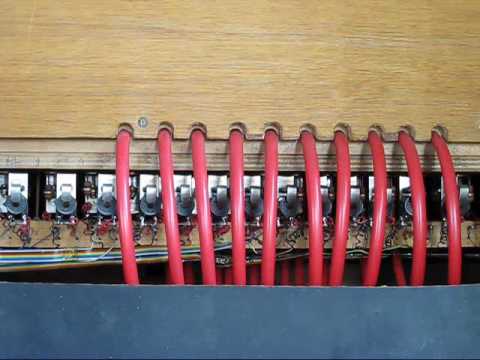
@Pepijn how about, my 87-year old dad uses software he wrote himself on a BBC micro, and hardware he soldered himself, to make the church pipe organ play tunes that are too difficult for him to master. He's been doing it for over 20 years. If you want the full story, it's here, in 3 parts! https://cazmockett.com/?s=Ernie
Ernie | Search Results | Cazmockett.com

@cazmockett o m g I actually read your story a great many years ago, way before we connected here!

Is he still doing it?

@Pepijn yep! And that's WILD!! 😂
@cazmockett I can't see the video, could you check please?

@autkin It's the "hardware in action" video I think? https://www.youtube.com/watch?v=4GiY3nFFyJo

@cazmockett

Ernie's Innards

YouTube
@Pepijn Yes! not weird tech but a sweet story. Here goes:
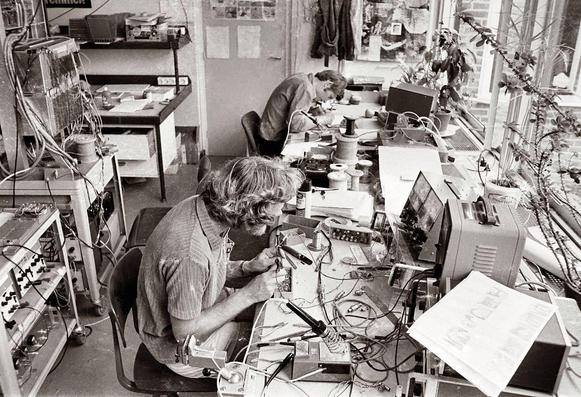
My dad was a techy, he was part of the team that built the radiotelescopes in Westerbork in Holland. So his work was already amazing. (Picture: him at his work, a place of magic for me.)
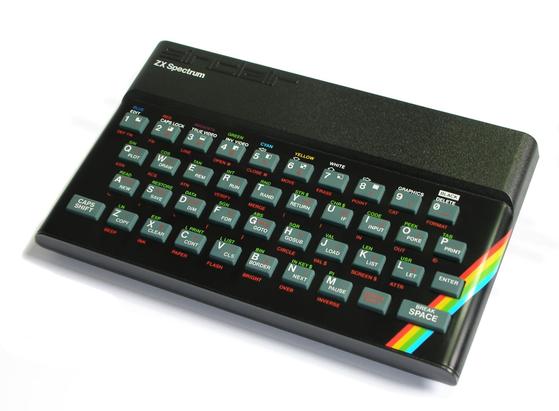
At home he made us into techies as well. I have fond memories of the ZX Spectrum with the rubber keys. I felt so cool writing basic! (Ok copying it from a magazine).
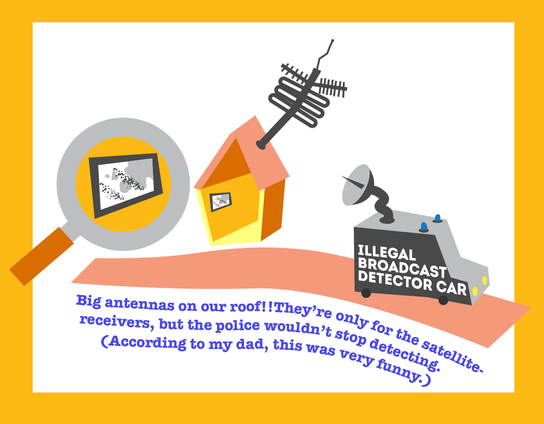
In our garden we had some huge antennas. Probably about 10 meters high, next to our house. It was the era of illegal radio stations, so every once in a while a special police car would slowly drive past our house.
The joke was that we were only receiving, not sending. So we laughed a lot. And the best part is that the antennas had such a small task: we received data from weather satellites that would tell us if we needed to pack our raincoats to school.
We had a weather app before there was proper internet! He is dead now, but sometimes I still hear him laughing. ❤️
@astridpoot That's both awesome and super sweet. Thanks for sharing both the words and photos!

@astridpoot @Pepijn

I'm amused that PTT RCD/ "witte muizen" would have kept checking the antennas, as surely they must have known what they were for, and PTT had some input into what satellites were around? maybe they still didn't trust your dad as just about *everyone* who had any knowledge of RF seemed to be building pirate transmitters (and some still are in NL and even occasionally across the North Sea in UK (we shared a lot of designs)

@astridpoot that is next-level fixation with the weather 😆👏🏻👏🏻👏🏻
@cazmockett or just an excuse to build big things!
@astridpoot Reminds me of an anecdote I've heard about the free radio @RDL: A few years ago in the 80s, back when they weren't on air legally yet and the Grether area in Freiburg (where they have their studio) was a squatted factory site, the police searched for their antennas a lot, all over the grounds. They never managed to find them, hidden away in the old chimneys :D
@astridpoot alt-text says "chaotic workshop". What do you mean? Looks completely as I remember electronics workshops from 70ties and 80ties. Those were the days, before health and safety officers spoiled every creative process by insisting on clean tables and no coffee mugs (and definitely no Danish pastry) at the soldering station...😉😁

@jakobtougaard Health and safety officer here. I make a point of walking around with coffee cups in our electronic workshops. Unless there's a very delicate operation going on there's no real risk.

I was actually thinking how relatable everything in the photo is. At least two of our current techs could be starring in it (although they wouldn't have the plants).

@astridpoot

@Pepijn @astridpoot I like that attitude. The key problem with H&S is that it cannot leave much to "common sense " because there will always be a moron that has zero common sense. I'm annoyed by the many restrictions, but at the same time horrified by what we got away with back in the days. I always tell my students that we follow the rules, because I don't want to die on my job.

@Pepijn

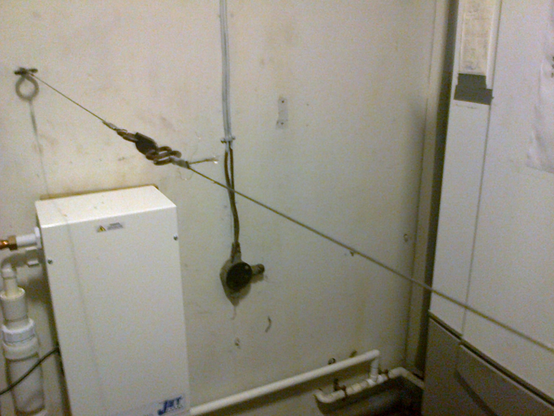
When I worked on maintenance team for senior homes, we had this in one of the boiler rooms (I am short and the wire is exactly at neck height for me - so I always had to beware of it.

But there is good reason for it being present, there's a lead link at one end and a pulley and weight ; if a fire starts the lead would melt, and then the weight pulls down the lever and shuts off the gas supply to the building (to prevent gas feeding the blaze)

@vfrmedia @Pepijn Simple, yet clever - and fail proof. I wonder why they hang it at neck height, because in case of fire the temperature would be the highest closer to ceiling. But maybe the purpose was a natural selection of careless maintenance operators ;)

@kravietz @Pepijn

maybe because you *have* to keep an eye on it, and it encourages maintenance staff to check that its usable (and not block the wire with any items).

The same area is shared with the 400V three phase incoming service cable (which isn't as common nowadays - instead the gas and electricity supplies are in different parts of the building)

@vfrmedia Interesting! And thanks for the photos as well!
I love it when complex "if and then" situations are solved down to a solution that is as minimal as that.
@Pepijn @vfrmedia A similarily clever mechanism in the railways comes to my mind: electric trains with overhead line equipment (OLE) use pantographs (you know, these metal rod constructions at the roof of the train) to collect current from the overhead line. The part that actually touches the overhead line is called contact strip, is made out of graphite and is very much a wear part.
@Pepijn @vfrmedia The contact strip continually looses material and thus at a certain point there is the risk that it breaks, wreaking havoc with the OLE installation - the pantograph is pressed towards the overhead line with considerable force to ensure optimal contact with the wire because otherwise electric arcs can form which damage both the line and the contact strip.
@Pepijn @vfrmedia To avoid destruction of OLE due to a failing contact strip, the contact strip is actually hollow and the mechanism keeping the pantograph streched up is working with pressurised air passing through the contact strip. When the contact strip breaks, pressure is lost and the pantograph is automatically lowered.

@Pepijn @vfrmedia What can happen to your OLE installation if you don't have such a system in place can be seen in this video:
https://www.youtube.com/watch?v=9UiukIch79g

(Link found on https://de.wikipedia.org/wiki/Schleifleiste )

Athína Train

YouTube
@vfrmedia @Pepijn in this era of electronic sensors and switch gadgetry I'm always impressed to see the best solution is usually the simplest. A really clever design.
@Pepijn I’ve been inside a Soviet submarine. There were a lot of valves and zero screens (that I could see). I discovered that Soviet submarines were not built with 2m tall Dutch girls in mind.
@venite I've visited a Dutch navy submarine, am just 190cm and had a similar feeling. I'm amazed people working in these things don't end up wearing full body armour.
While starting Uni (2006!), I was a part-time IT labourer at my former school. There were computers for programming classes, and I think they had 32 MB RAM at that point. Sometimes Windows OS would stop booting on them, and I would come with my personal handy LiveCDs collection. Linux LiveCDs (Knoppix, Slax) were cool, but didn't boot on 32 MB as I remember. But FreeBSD one, called Frenzy, booted, and I could inspect the hardware condition, mount disk, repair filesystems (FAT and NTFS).
Project Frenzy - FreeBSD-based LiveCD

@Pepijn Probably the oldest technology item I have personal experience with was a positive-ground Motorola tube- based two-way radio, older than I am (so pre-1964). This was back in my days as a radio technician, late 80s or very early 1990s.

The owner got mad when my employer cancelled the annual fixed-price maintenance contract. But we had no choice, because the last time we repaired it under the contract, the replacement component required was the last one. In the world.

@Pepijn Different story: from 2003-2005 I worked for a large junior college. One day I was the security rep accompanying an inspector of some kind (I forget who he worked for) and one of our network engineers in our main, very old, and small, data center. He notices a device in tge bottom of a rack. “Is that really a Bay Networks router?”
“Yup.”
“What does it do?”
“It’s part of the network core.”

At that point Bay Networks had not existed for over a decade.