
Hi! Can we entertain each other with our fun stories about the oldest or weirdest tech we've come across?

Please boost for science or cows or something. TELL US YOUR COOL STORY!

edit: as suggested, adding the hashtag #WeirdOldTech to keep this stuff going a bit (hint: you can follow hashtags).

#technology #WeirdOldTech

I'll start. It's the story that triggered this question :)

It's about the time a new technician at work did something stupid.

We received an industrial computer controlled machine with fire damage. Goal was to restore it to the state it had a seconds before the fire started.

The new tech got a simple task: disassemble the included PC (which only had minor smoke damage) and label the parts. Procedure is that we replace parts where it makes sense.

So he discarded the 3½-inch floppy drive.

1/3

FYI: we have good procedures, and peer checks etc etc. We also employ humans. And humans need to learn, and make mistakes.

To continue:

Our procedure on replacing parts has long been: store the old one for a year after project conclusion.

Our new tech just whacked it with a hammer before discarding it. He couldn't explain why.

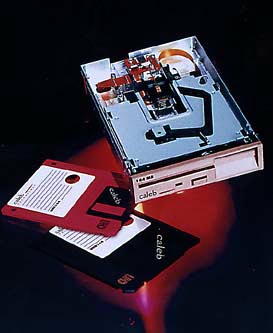
Turns out it was something called a UHD 144 drive. It took a full day to find a new-old-stock one. At a cost of around 5000 euro. 🤭

https://en.wikipedia.org/wiki/Caleb_UHD144

🤷

2/3

Caleb UHD144 - Wikipedia

fallout:

-We still have the remains of the drive the tech whacked to death with a hammer. It's used during onboarding.

-tech has been happily working with us for many years. He's over the embarrassment (or acts that way).

-the client thought it was HILARIOUS. They also figured out a way to upgrade the system to work with SD cards 🙂.

-costs were 4800 euro. An exact 4000 for the drive, and 800 for "one-day delivery" (seller drove from DE to NL on a Sunday).

3/3

@Pepijn
That sounds vaguely familiar.

Back in the mid 2010's my boss had a minor panic when one of the main Japanese manufacturers announced the cessation of blank 3.5" floppy disk production. The DOS based CNC software we used wrote directly to floppys.
The solution was elegant.
Physically remove the floppy and remap the A: drive to a C:\ folder. One tech then wrote a Delphi program to copy the CNC code across the network to the industrial machines that used the code.

@raymierussell Nice. And much more practical as well :)

To be fair: I think the world will never run out of new-old-stock of these disks. There's SOOOO MUCH of it available.

@Pepijn
Ironically the biggest hurdle was actually a very minor change that slightly confused the machine operators.

I produced production plans with 2 digit numbers (it was actually the last 2 digits of a 4 digit number).

In the old way you could have 2 plans with the same number which was a not problem because CNC code on the disk was different.

The new way we used the full 4 digit plan number and it was suddenly an issue as it was "different". The operators soon got used to it.

@raymierussell It's always little things like that.

Many years ago I made the error of introducing a new way of versioning in our various documents.

It went from 1, 2, 3 ... 10, 11 ... 102, 103 etc. to R001, R002, R003 etc. With R meaning "revision" or even nothing at all.

Most people just got it and used it properly. Some people though decided this isn't right and started... versioning.

Years later we still have some documents with versions like R003-1, R003-version2, R003-V04 etc.