 papiris gjør antifascisme🌠
@midtsveen laise, fått me dæ detta på folkets hjørne i Oslo i kveld?
En annen verden er mulig: Martin Tranmæl og syndikalismen
#norskTut #allheimen #syndikalisme #anarkisme #lo #arbeiderbevegelsen
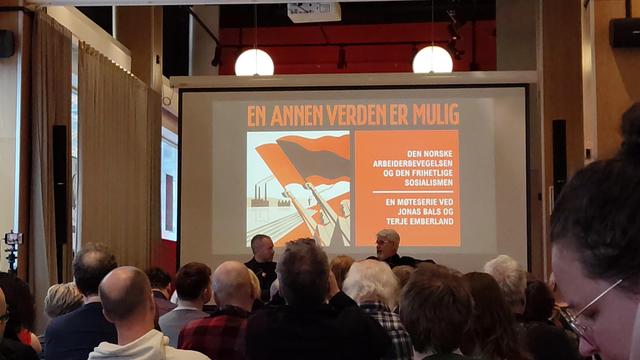
@midtsveen laise, fått me dæ detta på folkets hjørne i Oslo i kveld?
En annen verden er mulig: Martin Tranmæl og syndikalismen
#norskTut #allheimen #syndikalisme #anarkisme #lo #arbeiderbevegelsen
@papiris lol, ikke så mye aktiv her på Mastodon lenger!
Men uansett, jeg snakket faktisk nettopp om det du delte her: https://kolektiva.social/@midtsveen/116248626312952382
LO vil gjerne framstille syndikalisme, men når syndikalismen faktisk settes ut i praksis, har LO historisk sett tat tydelig avstand fra den.
Etter min mening er det grunn til å være kritisk når LO fronter dette på egne plattformer, det viser hvor langt de i realiteten står fra anarkosyndikalistisk praksis.
Jeg måtte le skikkelig da jeg så det på LOs hjemmeside, jeg tar tydelig avstand fra LO. 💀 😂
RE: https://mastodon.social/@nuwagaba2/116382310623849117
LMAO! Not dead, just permanently “in struggle” and therefore magically unkillable!
¡Viva la https://iwa-ait.org!
@nuwagaba2 I'm sorry for the short reply, that was my bad. I’ll do better and give you a proper response.
The premise is understandable, but the “permanent struggle” you’re talking about isn’t a flaw in socialism, it’s the result of living in a world still structured by hierarchy, property, and coercive control over resources.
And I probably shouldn’t have said “permanent struggle,” but that’s what came to mind in the moment. What I really mean is ongoing collective effort: not endless hardship, but the continuous work of organizing life together without bosses or imposed authority.
The question isn’t how we escape the struggle, it’s how we can transform it. There will always be coordination, upkeep, and conflict resolution in any society worth living in.
The real question is who runs it?
Is it the state and capital, imposed from above, or the workers and communities themselves, organizing from below through solidarity, direct action, and self-management?
We don’t abolish collective effort, we take it back. No bosses, no masters, just workers controlling their own lives in free association.
Also worth watching: https://kolektiva.media/w/kbQR3RDyuU5CeECaJ5uuTE
#Anarchism #Socialism #Syndicalism #Collectivism #Federalism #CollectiveStruggle #Activism
@nuwagaba2 Well if you ask me, people are not naturally divided, they are divided by the way society is organized. When survival depends on wages and competition, it becomes harder to see each other as partners in a shared struggle.
So the way people “join together” is not mainly through persuasion alone, but through building real shared experiences that make solidarity practical, not just ideal. Things like workplace organizing, tenant unions, mutual aid networks, and community assemblies give people a taste of collective power in everyday life. https://foodnotbombs.net/new_site/index.php is a great example that I really appreciate!
Children are taught to work for money because the system needs them to see work as obedience rather than cooperation. The counter to that is not just different ideas, but different structures where people learn early that they can decide things together and meet each other’s needs without bosses or profit as the mediator.
Awareness grows out of participation. When people experience direct democracy, solidarity, and collective problem solving in practice, unity stops being an abstract goal and starts becoming a lived reality worth defending.
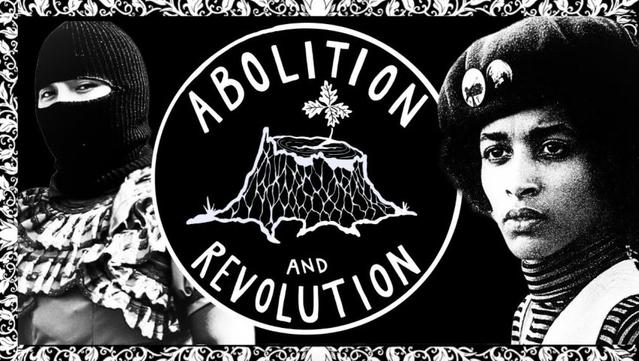
Oh and you should take a look at the EZLN as another example of this in practice. The Zapatista Army of National Liberation in Chiapas didn’t just argue for autonomy, they built it. Through Indigenous self-governance, collective decision making, and community controlled education and healthcare, they’ve shown how people can organize life outside of the state and capitalist structures while still dealing with real world pressures.
https://www.diva-portal.org/smash/get/diva2:1482125/FULLTEXT01.pdf
What makes the Zapatista experience important here is that it’s not just theory or distant idealism. It’s ongoing practice. It shows how solidarity becomes durable when it is rooted in lived participation, where people directly shape the institutions that affect their lives rather than relying on representation or external authority.
The lesson I take from all of this is that unity isn’t something you convince people into from the outside, it’s something people build themselves through shared struggle and shared care. Every time people cooperate to meet a need without profit or hierarchy getting in the way, they are already practicing the kind of society they are told is impossible.
And those practices matter because they accumulate. They build trust, skills, and confidence in collective power. That’s what makes solidarity not just an idea, but a lived habit.
So instead of waiting for the “perfect moment” or the “perfect system,” the work is to keep expanding those spaces wherever they appear, defending them when they’re attacked, and connecting them to each other whenever possible.
A great song on the topic, in my opinion, is “Introvert” by Little Simz:
https://www.youtube.com/watch?v=hxfGQ2AJHGk
I like using art and music as a way to express how I feel, and also as a way to better understand our struggles on a larger scale. Sometimes ideas and emotions are hard to put into plain words, but music captures them in a way that feels more direct and universal.
Take “Pipeline” by Worakls as another example:
https://www.youtube.com/watch?v=Guop9EPtnfc
Another song that feels even darker and more depressing, in my opinion, really drives the message home. “While We Serve” by Orbit Culture paints a bleak picture of a world trapped in cycles of fear, violence, and disillusionment. It reflects on how people keep repeating destructive patterns, choosing quick fixes and empty solutions while feeling powerless to change anything meaningful.
It also touches on the idea of people becoming numb or passive, almost like they are “serving” a system they don’t fully believe in anymore, just trying to get through it. By the end, it turns deeply personal and hopeless, showing what it feels like when belief in change collapses under the weight of everything going wrong.
https://www.youtube.com/watch?v=5E7iHU1F6NM
Another one that really fits this theme is “Brave New World” by Kalandra:
https://www.youtube.com/watch?v=EXauzZ-DdOk
I hope this helps answer some of your questions. This is just my perspective and how I understand the ongoing collective struggle happening around the world.
#Anarchism #Socialism #Syndicalism #Collectivism #Federalism #CollectiveStruggle #Activism
 Erik L. Midtsveen ✯☭
 Nuwagaba Gift