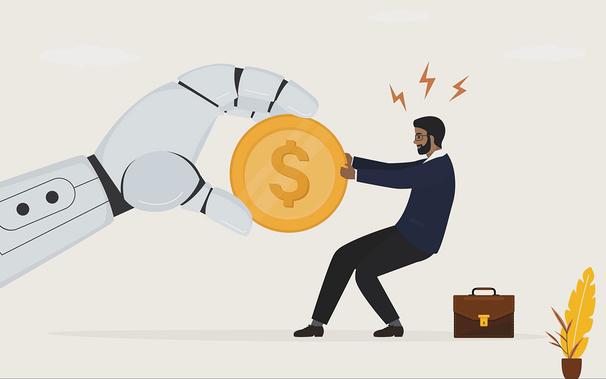
What industry calls "personalized pricing" is really *surveillance* pricing: using digital tools' flexibility to change the price for each user, and using surveillance data to guess the worst price you'll accept:

https://pluralistic.net/2025/06/24/price-discrimination/

--

If you'd like an essay-formatted version of this thread to read or share, here's a link to it on pluralistic.net, my surveillance-free, ad-free, tracker-free blog:

https://pluralistic.net/2026/04/06/empiricism-washing/#veena-dubal

1/
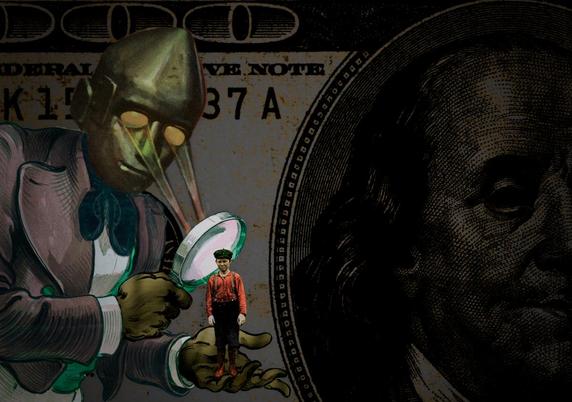
At root, surveillance pricing allows companies to revalue both your savings and your labor. If you get charged $2 for something I only pay $1 for, the seller is essentially reaching into your bank account and revaluing the dollars in it at 50 cents apiece. If you get paid $1 for a job that I make $2 for, then the boss is valuing your labor at 50% of my labor:

https://pluralistic.net/2025/06/24/price-discrimination/#

2/

Pluralistic: Surveillance pricing lets corporations decide what your dollar is worth (24 Jun 2025) – Pluralistic: Daily links from Cory Doctorow

Surveillance pricing is a key part of enshittification, relying on three of the key enshittificatory factors that have transformed this era into the enshittocene:

1. Monopoly: Surveillance pricing is undesirable to both workers and buyers, so in a competitive market, surveillance pricing would drive labor and consumption to non-surveilling rivals:

https://pluralistic.net/2022/02/20/we-should-not-endure-a-king/

3/

We Should Not Endure a King – Pluralistic: Daily links from Cory Doctorow

2. Regulatory capture: Surveillance pricing only exists because of weak regulation and weak enforcement of existing regulations. To engage in surveillance pricing, a company must first put you under surveillance, something that is only possible in the absence of effective privacy law.

In the USA, privacy law hasn't been updated since Congress passed a law in 1988 that banned video-store clerks from disclosing your VHS rentals:

https://pluralistic.net/2025/10/31/losing-the-crypto-wars/#surveillance-monopolism

4/

Pluralistic: The internet was made for privacy (31 Oct 2025) – Pluralistic: Daily links from Cory Doctorow

In the EU, the strong privacy provisions in the GDPR have been neutralized by US tech giants who fly an Irish flag of convenience. Ireland attracts these companies by allowing them to evade their taxes, but it can only keep these companies by allowing them to break *any* law that gets in their way, because if Meta can pretend to be Irish this week, it could pretend to be Maltese (or Cypriot, Luxembourgeois, or Dutch) next week:

https://pluralistic.net/2023/05/15/finnegans-snooze/#dirty-old-town

5/

Pluralistic: Ireland’s privacy regulator is a gamekeeper-turned-poacher (15 May 2023) – Pluralistic: Daily links from Cory Doctorow

What's more, competition laws in the EU and the USA ban surveillance pricing, but a half-century of lax competition law enforcement has allowed companies to routinely engage in the "unfair and deceptive methods of competition" banned in both territories.

6/

3. Twiddling: "Twiddling" is my word for the way that digitized businesses can use computers' flexibility to alter their prices, offers, and other fundamentals on a per-user, per-session basis. It's not enough to spy on users: to engage in surveillance pricing, you have to be able to mobilize that surveillance data from instant to instant, changing the prices for every user. This can only be done once a business has been digitized:

https://pluralistic.net/2023/02/19/twiddler/

7/

Twiddler – Pluralistic: Daily links from Cory Doctorow

Combine monopoly, weak privacy law, weak competition law, and digitization, and you don't just make surveillance pricing possible - at that point, it's practically inevitable. This is what it means to create an enshittogenic policy environment: by arranging policy so that the most awful schemes of the worst people are the most profitable, you guarantee that those people will end up organizing commercial and labor markets.

8/

When surveillance pricing is applied to labor, we call it "algorithmic wage discrimination," coined by Veena Dubal in her research with Uber drivers:

https://pluralistic.net/2023/04/12/algorithmic-wage-discrimination/#fishers-of-men

Uber uses historic data on drivers to make inferences about their economically precarity, and then extracts a "desperation premium" from their wages. Drivers who are pickier about which rides they accept ("pickers") are offered higher wages than drivers who take any ride ("ants"):

https://papers.ssrn.com/sol3/papers.cfm?abstract_id=4331080

9/

Pluralistic: Gig apps trap reverse centaurs in wage-stealing Skinner boxes (12 Apr 2023) – Pluralistic: Daily links from Cory Doctorow

On the back-end, Uber is inferring that the reason an ant will accept a worse job is that they have fewer choices - they are more strapped for cash and/or have fewer options for earning a higher wage.

This is a straightforward form of algorithmic wage discrimination, using the blunt signal of how discriminating a driver is when signing onto a job to titer the subsequent wage offered to that driver.

10/

More sophisticated forms of algorithmic wage discrimination draw on *external* sources of data to set the price of your labor.

That's the situation for contract nurses, whose traditional brick-and-mortar staffing agencies have been replaced by nationwide apps that market themselves as "Uber for nursing."

11/

These apps use commercial surveillance data from the unregulated data-broker sector to check on how much credit card debt a nurse is carrying and whether that debt is delinquent to set a wage: the more debt you have and the more dire your indebtedness is, the lower the wage you are offered (and therefore the more debt you accumulate - lather, rinse, repeat):

https://pluralistic.net/2024/12/18/loose-flapping-ends/#luigi-has-a-point

12/

Pluralistic: Nurses whose shitty boss is a shitty app (17 Dec 2024) – Pluralistic: Daily links from Cory Doctorow

Surveillance wages are now proliferating to other parts of the economy, as "consultancies" offer software to employers that let them set all parts of your compensation - base wage, annual raises, and bonuses - based on your perceived desperation, as derived from commercial surveillance data that has been collected about you:

https://www.marketwatch.com/story/employers-are-using-your-personal-data-to-figure-out-the-lowest-salary-youll-accept-c2b968fb

13/

Genna Contino's *Marketwatch* article on the phenomenon offers a concise definition of "surveillance wages":

> a system in which wages are based not on an employee’s performance or seniority, but on formulas that use their personal data, often collected without employees’ knowledge.

This means that carrying a credit-card balance, taking out a payday loan, or even discussing your indebtedness on social media can all lead to lower wages in the future.

14/

Contino references a recent report released by Dubal and tech strategist Wilneida Negrón, surveying 500 large firms, which concluded that surveillance wages are now being offered in sectors as diverse as "healthcare, customer service, logistics and retail." Customers for surveillance wage tools include "Intuit, Salesforce, Colgate-Palmolive, Amwell and Healthcare Services Group":

https://equitablegrowth.org/how-artificial-intelligence-uncouples-hard-work-from-fair-wages-through-surveillance-pay-practices-and-how-to-fix-it/

15/

How artificial intelligence uncouples hard work from fair wages through ‘surveillance pay’ practices—and how to fix it

How surveillance pay practices work, where they are increasingly deployed in the U.S. economy, and policy recommendations to ensure pay fairness and transparency.

Equitable Growth

After a brief crackdown under Biden, the Trump regime has been extraordinarily welcoming to surveillance pricing companies, dropping investigations and cases against firms that engaged in the practice. A few states are stepping in to fill the gap, with New York state passing a rule requiring disclosure of surveillance pricing - a modest step that was nevertheless fought tooth-and-nail by the state's businesses.

16/

In Colorado, a new House bill called the "Prohibit Surveillance Data to Set Prices and Wages Act" would prohibit the use of personal information in wage-setting:

https://leg.colorado.gov/bills/hb25-1264

This bill hasn't passed yet, but it's already doing useful work. Companies universally deny using surveillance data to set wages, insisting that they merely pay for consulting services that give them advice on how they *could* do surveillance wages - but don't actually take that advice.

18/

However, these same companies - including Uber and Lyft - are ferociously lobbying against the bill, raising an obvious question, articulated by the bill's co-sponsor Rep Javier Mabrey (D-1): if these companies don't pay surveillance wages, then "what is the problem of codifying in law that you’re not allowed to?"

Surveillance wages are a rare profitable use-case for AI, in part because surveillance wages don't need to be "correct" in order to be effective.

19/

An employee who is offered a wage that's slightly higher than the lowest sum they'd accept still represents a savings to the company's wage-bill. As ever, AI is great for fully automating tasks if you don't care whether they're done well:

https://pluralistic.net/2026/03/22/nobodys-home/#squeeze-that-hog

The fact that surveillance wages are calculated by external contractors enables employers to engage in otherwise illegal price-fixing.

20/

Pluralistic: Understaffing as a form of enshittification (23 Mar 2026) – Pluralistic: Daily links from Cory Doctorow

If all the garages in town set mechanics' wages using the same surveillance pricing tool, then a mechanic looking for a job will get the same lowball offer from all nearby employers. If those bosses were to gather around a table and fix the wage for any (or all) mechanics, that would be wildly illegal, but the fact that this is done via a software package lets the bosses claim they're not *actually* colluding.

21/

This is a common practice in other forms of price-fixing. We see it in meat, potato products, and, of course, rental accommodations (hey there, Realpage!). It's a genuinely stupid ruse based on the absurd idea that "it's not a crime if we do it with an app":

https://pluralistic.net/2025/01/25/potatotrac/#carbo-loading

22/

Pluralistic: It’s not a crime if we do it with an app (25 Jan 2025) – Pluralistic: Daily links from Cory Doctorow

@pluralistic

#Colorado the same state that is fighting right to repair laws.

@pluralistic

Surveillance pricing is now standard for contract nurses. Lower credit score, lower hourly offer.

@pluralistic

Point me please to statute that prohibits surveillance pricing.

Section 5

The official website of the Federal Trade Commission, protecting America’s consumers for over 100 years.

Federal Trade Commission

@pluralistic

On the other hand, it may be the only form of progressive taxation left in America.

@pluralistic As soon as I suspect a company is doing this I take my business elsewhere. It is harder to do this in bricks and mortar stores so that is another way I have changed my shopping