
What industry calls "personalized pricing" is really *surveillance* pricing: using digital tools' flexibility to change the price for each user, and using surveillance data to guess the worst price you'll accept:

https://pluralistic.net/2025/06/24/price-discrimination/

--

If you'd like an essay-formatted version of this thread to read or share, here's a link to it on pluralistic.net, my surveillance-free, ad-free, tracker-free blog:

https://pluralistic.net/2026/04/06/empiricism-washing/#veena-dubal

1/
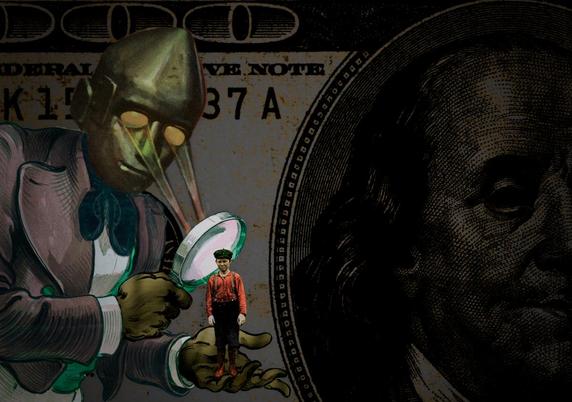
At root, surveillance pricing allows companies to revalue both your savings and your labor. If you get charged $2 for something I only pay $1 for, the seller is essentially reaching into your bank account and revaluing the dollars in it at 50 cents apiece. If you get paid $1 for a job that I make $2 for, then the boss is valuing your labor at 50% of my labor:

https://pluralistic.net/2025/06/24/price-discrimination/#

2/

Pluralistic: Surveillance pricing lets corporations decide what your dollar is worth (24 Jun 2025) – Pluralistic: Daily links from Cory Doctorow

Surveillance pricing is a key part of enshittification, relying on three of the key enshittificatory factors that have transformed this era into the enshittocene:

1. Monopoly: Surveillance pricing is undesirable to both workers and buyers, so in a competitive market, surveillance pricing would drive labor and consumption to non-surveilling rivals:

https://pluralistic.net/2022/02/20/we-should-not-endure-a-king/

3/

We Should Not Endure a King – Pluralistic: Daily links from Cory Doctorow

2. Regulatory capture: Surveillance pricing only exists because of weak regulation and weak enforcement of existing regulations. To engage in surveillance pricing, a company must first put you under surveillance, something that is only possible in the absence of effective privacy law.

In the USA, privacy law hasn't been updated since Congress passed a law in 1988 that banned video-store clerks from disclosing your VHS rentals:

https://pluralistic.net/2025/10/31/losing-the-crypto-wars/#surveillance-monopolism

4/

Pluralistic: The internet was made for privacy (31 Oct 2025) – Pluralistic: Daily links from Cory Doctorow

In the EU, the strong privacy provisions in the GDPR have been neutralized by US tech giants who fly an Irish flag of convenience. Ireland attracts these companies by allowing them to evade their taxes, but it can only keep these companies by allowing them to break *any* law that gets in their way, because if Meta can pretend to be Irish this week, it could pretend to be Maltese (or Cypriot, Luxembourgeois, or Dutch) next week:

https://pluralistic.net/2023/05/15/finnegans-snooze/#dirty-old-town

5/

Pluralistic: Ireland’s privacy regulator is a gamekeeper-turned-poacher (15 May 2023) – Pluralistic: Daily links from Cory Doctorow

What's more, competition laws in the EU and the USA ban surveillance pricing, but a half-century of lax competition law enforcement has allowed companies to routinely engage in the "unfair and deceptive methods of competition" banned in both territories.

6/

3. Twiddling: "Twiddling" is my word for the way that digitized businesses can use computers' flexibility to alter their prices, offers, and other fundamentals on a per-user, per-session basis. It's not enough to spy on users: to engage in surveillance pricing, you have to be able to mobilize that surveillance data from instant to instant, changing the prices for every user. This can only be done once a business has been digitized:

https://pluralistic.net/2023/02/19/twiddler/

7/

Twiddler – Pluralistic: Daily links from Cory Doctorow

Combine monopoly, weak privacy law, weak competition law, and digitization, and you don't just make surveillance pricing possible - at that point, it's practically inevitable. This is what it means to create an enshittogenic policy environment: by arranging policy so that the most awful schemes of the worst people are the most profitable, you guarantee that those people will end up organizing commercial and labor markets.

8/

When surveillance pricing is applied to labor, we call it "algorithmic wage discrimination," coined by Veena Dubal in her research with Uber drivers:

https://pluralistic.net/2023/04/12/algorithmic-wage-discrimination/#fishers-of-men

Uber uses historic data on drivers to make inferences about their economically precarity, and then extracts a "desperation premium" from their wages. Drivers who are pickier about which rides they accept ("pickers") are offered higher wages than drivers who take any ride ("ants"):

https://papers.ssrn.com/sol3/papers.cfm?abstract_id=4331080

9/

Pluralistic: Gig apps trap reverse centaurs in wage-stealing Skinner boxes (12 Apr 2023) – Pluralistic: Daily links from Cory Doctorow

On the back-end, Uber is inferring that the reason an ant will accept a worse job is that they have fewer choices - they are more strapped for cash and/or have fewer options for earning a higher wage.

This is a straightforward form of algorithmic wage discrimination, using the blunt signal of how discriminating a driver is when signing onto a job to titer the subsequent wage offered to that driver.

10/

@pluralistic

Surveillance pricing is now standard for contract nurses. Lower credit score, lower hourly offer.
