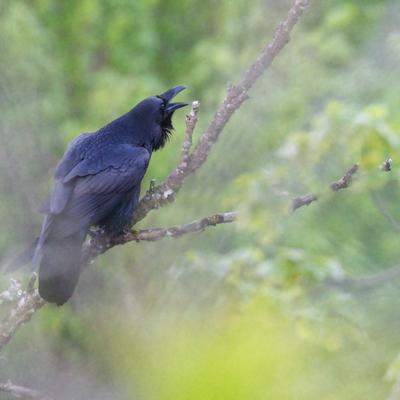
Let the games begin.

A day of intermittent bright sunshine, heavy cloud, rain, & hail – spring! 🌦️

But in the gaps, a first sighting of a dronefly, genus Eristalis.

They can be hard to differentiate 😬, but while E. tenax & E. pertinax are very common here, I think this is a female E. similis, the glass-winged dronefly (Schwarze Bienenschwebfliege in 🇩🇪).

#Heidelberg 🏰
#Photography 📷️️️️️️️️️️️️️️️️️️️️️️️️️️️️️️️️️️️️️️️️️️️️️️️️️️️️️️️️
#BugOfTheDay 🐞
#MacroPhotography 🔬
#InsectsOfMastodon 🪰
#BackGardenEntomology 🪲
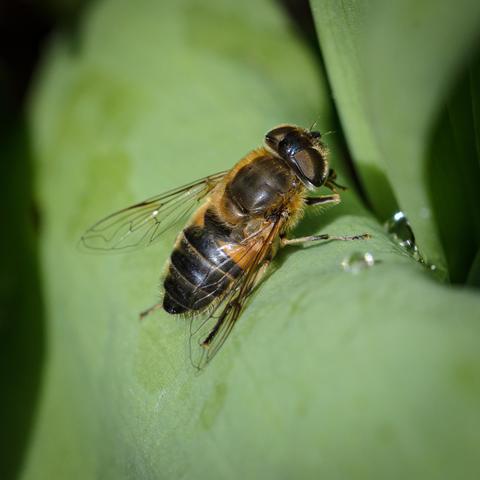
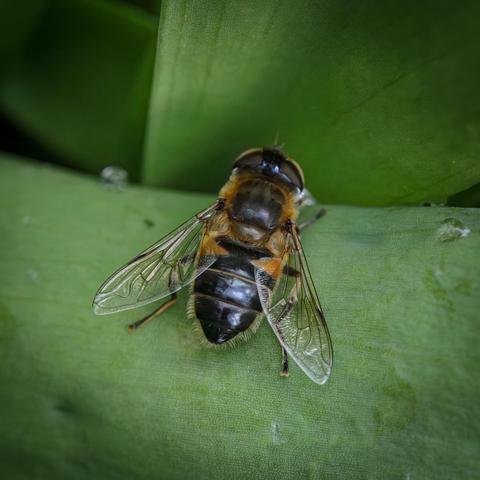
The rationale for thinking this is E. similis is that the abdomen isn't as tapered as in E. pertinax, and the very clear wings & black front and mid feet are tell-tales of E. similis.

Unfortunately, it wasn't possible to get a photo from the front of the fly – the face colouration is another helpful differentiator.

And male droneflies have their eyes much closer together, so this one is a female.

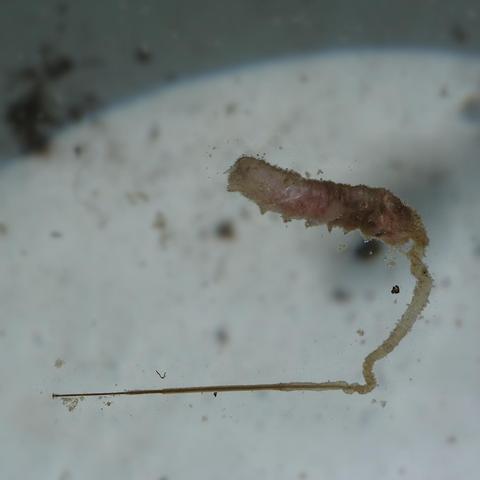
@markmccaughrean I found these larvae a couple of days ago, floating on a liquid plant-feed bin. One of the drone flies, I think, don't know which. I'm not going to give it it's common english name, related to it's breathing tube....
@wavesculptor Well, if you won't go there, I will 🙂 From appearances alone, that could be a rat-tailed maggot, which is the larva of Eristalis tenax.

@markmccaughrean

I don't have any keys handy, but the feathery arista is an important characteristic that rules out E. tenax and pertinax.