 Spaceflight 🚀
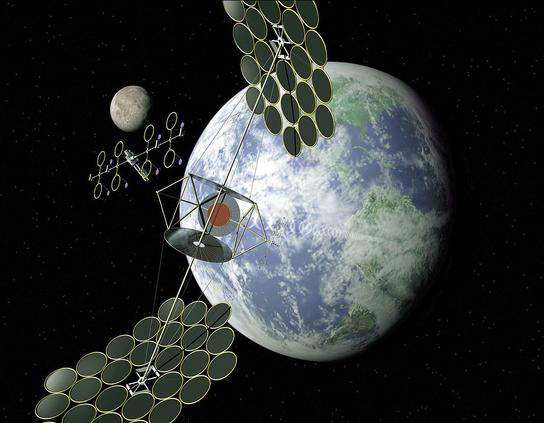
📆 2023 This #SBSP study by #Astrostrom for #ESA proposes a 29,339 m2 #solar ☀️ collector at the #Lagrange point, #SolarPanels from #Lunar 🌙 materials, transported by a #SpaceElevator 🚠 from the #Moon https://nebula.esa.int/sites/default/files/neb_study/2753/C4000136309ESR.pdf
The #UK 🇬🇧, #US 🇺🇸, #Japan 🇯🇵 and #China 🇨🇳 are now investing in #space based solar ☀️ power. The #atmosphere reflects around 30% of the #energy that reaches our planet while it absorbs around a quarter before it even reaches the Earth's surface. Space-based 🌌 solar panels can avoid this effect, but can remain in near-constant sunlight https://www.bbc.com/future/article/20251029-the-beam-dream-should-we-build-solar-farms-in-space

Based on the cost 💶 assumption of #SBSP, the projected value-adjusted levelised cost could even reach 69 EUR/MWh for the first system. Applying a learning curve metric already shows cost reduction potential in the setup of the first 10 SPS station deployments, leading to an estimated VALCoE of 49 EUR/MWh. This means that SBSP has the potential to even become a cost-competitive renewable technology https://www.rolandberger.com/en/Insights/Publications/Space-based-solar-power.html

📊 2025 : The simulations show that if the swarm design can deliver #electricity at six to nine times the projected 2050 cost of ground PV, system #costs fall by 7%–15% 📉. At that price, #space -based #solar ☀️ can displace up to 80% of wind-plus-solar capacity and cut #battery needs by more than 70% https://www.sciencedirect.com/science/article/pii/S2542435125002557
Growing efficiencies of near-infrared #lasers make them preferable over #microwaves, allowing the transmission antenna on the spacecraft to be scaled down from hundreds of meters across to about half a meter 📏. #OverviewEnergy successfully tested a system that transmitted “multiple thousands of watts” of power using a near-infrared laser from an aircraft flying at an altitude of 5,000 meters to a receiver on the ground https://spacenews.com/overview-energy-demonstrates-technologies-for-space-solar-power/

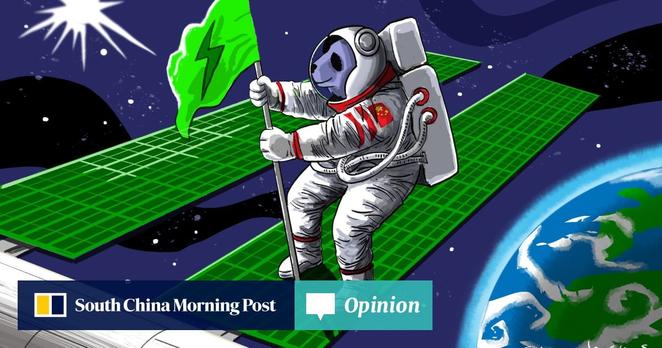
Space-based #solar ☀️ power : #ScienceFiction author Isaac #Asimov popularised the idea in 📆 1941. Advances in #robotics, wireless power transmission and sharply falling #LaunchCost are narrowing the gap between concept and reality https://www.scmp.com/opinion/china-opinion/article/3347692/why-chinas-space-based-solar-power-next-frontier-green-energy
 Michael Gemar
@spaceflight I'm extremely dubious that space-based solar can beat the literally cheapest energy on the planet with terrestrial solar (and wind). It's not like land is super-expensive in most places. (Money for space-based solar would be better spent on something like enhanced geothermal and/or storage if we want 24-hour power.)
@michaelgemar depends on the timeline https://en.wikipedia.org/wiki/Space-based_solar_power#In_the_21st_century