 soup
soup Will
Will Justin
@scandigonian
@adam any input on this?
 Adam
Adam@justin @scandigonian I tried growing them once south of Olympia. They did well at the beginning, but the thing about lentils (and other pulses like chickpeas) is they grow low to the ground and compete poorly with weeds. I don't recall harvesting any lentils, so I think they just got swallowed by the weeds.
Chickpeas are the same way. I think we just have ample soil moisture for tall weeds to outcompete them here. That's very different than in the Columbia Basin. (1/3)
@justin @scandigonian My friend was able to grow chickpeas in Olympia. I think it’s possible to grow them and lentils here – you just have to be on it with weeding.
Since they are so close to the ground, they also might be a bit harder to harvest than, say, wheat, which is something you can easily cut with a hand scythe or rice knife. The pods are throughout the plants, so you have to beat the entire bushes rather than with wheat, where the spikelets are easier to thresh (2/3).
@justin @scandigonian Favas are my personal favorite legume for the westside; they're tall, compete well with weeds, can be planted in fall as a dual cover crop/legume crop. (their winter limit is ~15F/-9C, but varies by variety). The leaves are great for salad. Seeds can be harvested green as a veggie, or left to mature for dry beans.
The large beans mean they are easy to harvest; you can thresh a lot of beans quickly. Tons of flowers for the bees. The beans make great hummus too. (3/3)
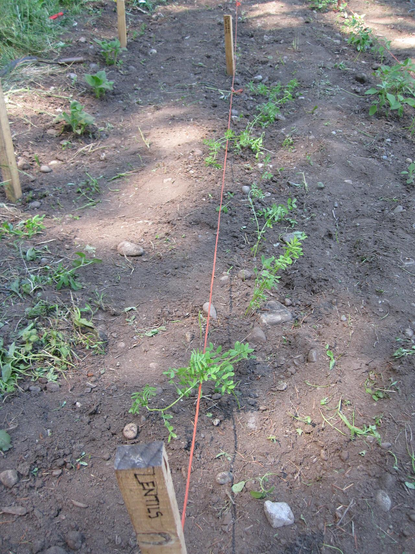
@scandigonian As luck would have it, it looks like I took a picture of the lentils!. I was off at grad school and so this was at my folks place in the Chehalis Valley. So they admittedly didn't get much weeding at all. They kind of look like sweet peas or vetch. Think I got the variety from WSU's Foundation Seed Program.
If I recall right, I came back to a giant patch of smartweed. But a lot of my other tests pulled through great (bread wheat, pasta/durum wheat, oca, mashua, hulless oats)
 Solar🌄Garden
@scandigonian @adam - they look a bit like chick-peas, another shoppy-cheapy, that I've grown for fun/experiment tho. I bundled the whole dry plants in sacks, and hung them, rattled them a bit, and many of the seeds fell to the bottom. The rest of the bag got strewn whole for new crop. Maybe this would work with lentils too? But separating the bits and pieces from the small lentils seems like a challenge.
@justin @scandigonian Since I mentioned favas, I am obligated to mention the wonderful "Fava Bean Cookbook", a publicly supported cookbook from SARE and California State University: https://projects.sare.org/media/pdf/F/a/v/Fava-Bean-Recipe-Book.pdf
I sprout lentils in 500 g batches on an almost continuous basis, as a staple food here: super-easy and fast to germinate and deal with as a food, but I've never wanted to try them as a crop, bcs of weed control and harvesting. Assumed some kind of mechanical processing would be essential for useful #growYourOwn quantities, which I just haven't got time for, esp as good quality commercial grown are so cheap.
Favas, OTOH, I grow everywhere, from improving poor soil areas (any crop yield incidental) to premium food. Compare - dry commercial lentils 2.30€/kg, yielding well over 2 kg sprouted :cf: fresh favas in pods 3€/kg, bean yield 0.3-0.4 kg... frozen commercial are better value but not as nice as own, which I freeze too.
this last winter, the conveyer-belt of named storms and non-stop rain injured then rotted a large proportion of my over-winterers, with temperatures well above freezing... but still enough coming back for a good crop, and pods presently 10-20cm
 there is beauty in simplicity
@scandigonian I am primarily familiar with the lentil growing that goes on in the Palouse region, so perhaps the dryness is important? Or it could be just good quality volcanic soil.
 Solarbird
@kinsale42 @scandigonian It's gonna be difficult, I think. I haven't tried lentils but they need warmth early and we are the opposite of that.
It feels like raised-and-covered-bed territory to me, with all the southern exposure you can get, just to get the temperature up in April and May. By June, you should be okay. I _have_ done food gardening like that, and had success with it.
But I've also had that fail, e.g., with peppers, which started great and just absolutely went into shock when I took off the cover.
Thanks for the info! Yeah, I thought it might be too cool in the spring here. I'm going to do some research to see if I can find any varieties that are somewhat more tolerant of cooler temps.
@scandigonian Well, our cool spring won't... well, shouldn't, given well-drained soil... kill them. They're temperature-hardy down way further than we get. It's more about good growth and reasonable production.
From what I'm reading that "well drained soil" is really important, too, and I'd think even moreso in our springs.
But again, I've never tried lentils in particular. I think with the right soil and really, really good southern exposure and a clear cover you _should_ be able to do it, but it's all theory.
Getting a variety that handles cool springtimes, however, would _definitely_ make it easier and if such a thing exists I'd absolutely go with it.
@scandigonian Grow Northwest (which I remember in print) has an article from 2013 where they mention lentils as possible, with a planting date of April - but as per your impulse, they strongly recommend finding the right variety:
https://grownorthwest.com/2013/04/growing-dry-beans-and-grains/
Sadly, they don't tell you _how_ to find it. Not as helpful. But that does mean they're out there! They exist! So there's real hope :D
@moira
I'm definitely going to look into this more. Though, it will be a gardening experiment for next year.
I *did* plant some olive trees, last year. Trying to adapt my gardening to dryer, warmer climates (unfortunately).
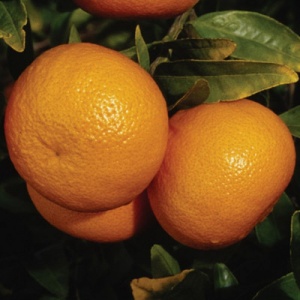
@scandigonian Nice! I planted an asian pear and moved another asian pear from an absolutely terrible location two years ago and got fruit _already_. I really want to add some sort of citrus next.
@moira
This is what I have my eye on:
 clew
clewJeez, you’d think so but if neither Adaptive nor Uprising carry lentils? Other little durable legumes tho..; I’m thinking of trying tepary beans this summer.
My dry-bean problems here have been gophers, actually. Clearly the roots are deliiiiicious and the long season gives the gophers time to really move in.