 Track_Shovel
Supply and demand
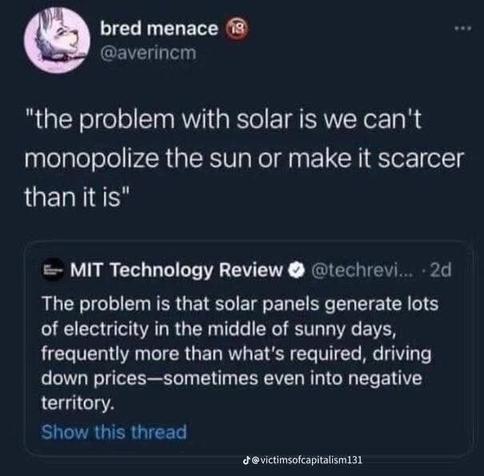
We have the storage technologies, the only thing missing is money.
When discussing large public projects whose scale is larger than anything before seen, the money is mainly an accounting placeholder for the real resources that need to be expended.
Grid scale storage has been expanding at an exponential pace, but the sheer magnitude of the materials and engineering work that needs to be done to make a dent is pretty huge.
Bloomberg projects that total cumulative installed capacity should hit 2 Terawatt hours by 2035, noting that would represent 8x the number for 2025. But when you compare those numbers to just how much electricity is produced or consumed, with 22,000 TWh per year, we’re talking about demand periods measured in minutes, not even hours, much less days.
At scales large enough to make enough of a dent to show up in global energy stats, we need to recognize that even infinite money would run into the real resource constraints of how much capacity we as a species have for pulling minerals out of the ground, processing them into useful materials, and engineering them to be useful energy storage solutions (whether pumped hydro or other gravitational systems, compressed air, flywheels, or whatever battery or fuel cell chemistries can store energy in an efficient way).
We have some technologies, but need things to improve significantly before storage can actually meet the needs for power that meets demand at any given moment in time. In the meantime, matching supply and demand in real time is a true engineering challenge, not just a monetary challenge.
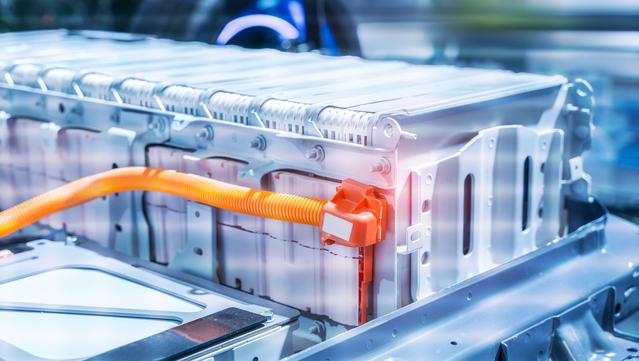
Global energy storage additions are on track to set another record in 2025 with the two largest markets – China and US – overcoming adverse policy shifts and tariff turmoil. Annual deployments are also set to scale in Germany, the UK, Australia, Canada, Saudi Arabia and Sub-Saharan Africa, driven by supportive policies, procurement by utilities and power market dynamics.
we need to recognize that even infinite money would run into the real resource constraints of how much capacity we as a species have for pulling minerals out of the ground
You can store electricity by stacking rocks. You can store it by moving large volumes of liquid. You can store it with sand. If we are in danger of exhausting these resources I think problems have gotten bad enough that energy storage is no longer a going concern.

Thanks to the modern electric grid, you have access to electricity whenever you want. But the grid only works when electricity is generated in the same amounts as it is consumed. That said, it’s impossible to get the balance right all the time. So operators make grids more flexible by adding ways to store excess electricity for when production drops or consumption rises.
A gravity storage system that stores about 100 MWh and outputs about 25 MW is much, much larger than the 65 battery containers they’d replace. It stores basically 4 hours worth of energy in what appears to be a large steel and concrete structure 150 m tall (the equivalent height as a 30-40 story building) on a 100m x 100m footprint.
If we’re talking about storing a terawatt hour, then we’d be talking about about 10,000 of these gravity storage systems needing to be built. That’s what I mean by existing technology not really meeting the scale requirements of the problem.
Gravity storage systems all basically suffer from this problem. Water-based solutions need to be sited on favorable geography to have large scale (otherwise water itself isn’t dense enough to compete with concrete and stone and sand).
Meanwhile, storing the same 100 MWh of energy in containerized lithium batteries would basically require a 4x6 stack of 40-foot shipping containers that each can store 4MWh.
We can get there on storage, but we’re talking about decades of planning and implementation, across all technologies, before we can even credibly reach storage representing one whole day’s electricity usage. How many man hours of labor does that engineering and planning and building represent? How much steel, energy, and machinery would these projects use up?
Anyone who talks about this stuff without recognizing the scale involved is basically not serious about solving it. It’s an engineering problem that exists independently of money (and it’s also a money problem, but that part will probably pay for itself because of how valuable a solution to this problem would be).
There are many ways to store the energy without chemical batteries.
We can use thermal batteries by heating water or other liquids and then release it at night. We can use kinetic batteries like compressing springs and then releasing them at night to turn a generator. Water batteries like hydro dams where you pump the water into a reservoir during the day and then release at night to again power a generator.
Giant. Freaking. Lasers.
Hey, I never claimed it was efficient.
That’s why we need a way to store the power overnight, this is a well known and obvious problem, and there are solutions. Batteries, flywheels, sand bins, etc. Solutions which should also raise the price of the electrons produced, just to make the fuckers happier.
Not everyone who writes under the banner of MIT is sincere.
I addition to what others noted, this can also create an equality issue. Say you are a working class renter in a town of well-off home owners who have solar panels on their houses. They are likely as dependent as you on the grid when the sun isnt shining, but because they can sell back to the grid. They contribute much less to paying for the grid.
The grid that everyone relies on is therefore disproportionately funded by poorer individuals. Its the same problem with all the subsidies on electric cars and solar installations; you have to be decently wealthy to be able to take advantage.
Is that 85% based on the flat rate, or an actively changing rate? If it’s the flat rate, thats a super good deal. The cost of generation can easily vary by 10x throughout the day, so if the average price is $0.15/kWh, they might be paying you 13 during the times it only costs 1.
I know in some places the meters are smart enough to track when the usage is occurring, though.
Transitioning to EVs is better for everyone in the long term. Improved technology and greater marketshare among new EVs today means more and better used EV options in the future, with the effect increasing as the economics of scale make budget models more viable.
It’s not that we shouldn’t subsidize solar and EV, it’s that we should also use incentives and regulations to make these options work for renters. We should be requiring rental properties to add outlets to parking spaces. We should be pushing policies aimed at getting solar on apartment buildings for the benefit of the tenants.
Honestly, we should be working towards getting every building to have solar and battery and reducing our dependence on the grid.
Transitioning to EVs is better for everyone in the long term.
I dont believe this (but I’m open to being wrong). I think giving the same amount of money invested into EVs to public transit and ebikes instead, we’d be better off.
incentives and regulations to make these options work for renters
Yeah, strongly agreed there. I basically just want my tax dollars to go towards equality and resilience. Instead, it seems that the best the party not 100% controlled by fossil fuels can do is enact policies that still disproportionately benefit the wealthy. I’ve heard a lot of well-off people talking about getting a $7500 dollar rebate on an EV, which seems silly when there’s a lot of people who have never even owned a car worth that much.
I dont believe this (but I’m open to being wrong). I think giving the same amount of money invested into EVs to public transit and ebikes instead, we’d be better off.
I’m all for investing in public transportation, and ebikes certainly have their place as well. But realistically, those will reduce the need for cars, not replace them entirely. We aren’t going to have trains and buses constantly running between every small town in the US. People will still need to haul big items or large amounts of stuff. And even where public transit is readily available, there is still going to be an advantage to being able to go where you want, when you want, in a vehicle you already own. Unless we ban private ownership of cars, people will still buy them because they offer much greater flexibility than public transportation.
I also don’t like that most incentives aren’t set up in a way to support poor people buying EVs. But that wasn’t going to be a realistic possibility until cheaper EVs hit the market and enough older EVs declined in value to the point that there could be truly cheap options out there. Unfortunately, the political will does not exist to simply mandate the switch to EVs. And even if we had done it that way, without developing the market for EVs the transition likely would have meant raising costs at the low end instead of gradually lowering costs at the high end.
Regardless of how we accomplish the transition from internal combustion to electric, it is better for everyone if the vehicles we use are electric. Even if we ignore the environmental side of things, EVs are much cheaper to operate and are much lower maintenance. If that first beat up old rust bucket that someone buys is an EV, that car will cost less to own and maintain, and will be less likely to die because of some hidden mechanical issue.
And of course, there’s also the massive amount that we as a society spend supporting ICE vehicles. There’s the obscene amount of money that goes into finding, extracting, refining, and distributing oil, and the billions in profits that the fossil fuel companies pocket on top of that. And then there’s the added cost to everything else because of the increased transportation costs. And the geopolitical costs. Every dollar saved by someone driving an EV is a dollar not being drained out of us by the fossil fuel industry.
I don’t know nearly enough about electrical engineering to consider what precautions must be taken when there is too much power flowing through the grid. I’ve seen enough fried motherboards that I can take a wild guess, but those were edge cases.
I’d think that in the event of a day being especially clear, cold, and sunny, there’d be a ground-fault circuit that would take the surge instead of the house.
that’s not what this means. Surge protection in a solar setup is more about protecting you from the grid, which generally is far more susceptible to surges and issues with inclement weather.
What they’re describing is excess capacity is being generated, eg a sunny day can fill a battery bank enough to not just power your home (making energy costs 0) but send excess capacity to power other people (making costs negative, eg you are now paid by the utility).
It can be an issue in a country like America because if solar occurs at enough scale it could seriously disrupt utilities from a financial standpoint. Then you’ll have people who are affluent and can afford to convert their home to a $20-70,000 solar setup draining funds from the utility. Then the lower SES people that rely on it would be more likely to have disruptions as companies lower budgets and potentially go out of business. This also means those low SES people have a portion of their energy costs funneled into far more wealthy landowners.
This is easily mitigated of course either through government subsidies of the utility or (ideally) having the utility convert to far cheaper green energy so they then maintain the role of the main supply. But the latter requires significant investment - a solar setup for a house as mentioned is tens of thousands and a solar farm is far more. And Americans are historically terrible at subsidies to benefit the lower class as well as green energy initiatives; we’d much rather go “the cost!!” As the world boils
Whoa. Awesome. Thank you for explaining.
Do you have solar panels? Is there anything else that people should know?
Lack of capitalist imagination
We own the land you need to build the solar panels on.
We own the factories that build the solar panels
We own the solar farms.
Rules are made up, as are property rights.
♪ War isn’t murder, land is a right. / But the banks called dibs, it’s something you can’t fight. ♪
There are two parts of this problem:
Then separate the infrastructure fee, my family switched to solar and has since paid $0 on usage, but still pays electricity bill in form of the minimum cost to maintain infrastructure.
Also with a big grid, there’s will be enough industry consuming large amount of power during daylight hours for a long time, that’s why with variable power rates power is still more expensive during daylight hours, you don’t have to worry about the generation outstripping load for a long time, and if we hit that it would be a good news as we can all focus on storing power and phase out fossil fuels.
Here’s the article this is responding to if anyone wants to read it. Here’s the study it’s reporting on.
I’d say the tweet is at least a little bit disingenuous because the article is not arguing against the adoption of solar power, rather the focus is on what the challenges to California’s solar goals are and what possible solutions might be. The tone is “economic constraints might slow down solar, how can that be addressed?” This is all from 2021, and it looks like since then the slowdown in solar capacity increase it cites as a concern has not materialized, still lots of consistent growth since then. I haven’t read enough to know whether this is because the study was wrong somehow, or that it’s premise that solar installation costs might not continue to drop just didn’t pan out, or that the increased subsidies it suggested came through, but it’s an interesting topic.
My unscientific personal experience answer to your last paragraph’s question:
The study didn’t anticipate that California power companies would be so unbelievably corrupt and that the price of electricity would nearly double since 2021. We pay $.40-$.50/kWh while the national average is like $.12-$.16 so us Californians are willing to do literally anything to get away from the PG&E cartel. There is supposed to be a governing body that reins in the prices but it’s controlled by the Governor. In this case that’s Gavin Newsom who just happens to own hundreds of millions worth of shares in the utility companies….🤔
Becsuse we aren’t deploying it enough, because we are entertaining a return to coal or and fighting wars over oil still.
When we should be converting to solar and wind, reguardless of cost or return on investment.
You are missing the point. Why have you, RamenJunkie not personally set up enough solar panels to provide everyone with all the energy they need? You can’t afford it? Well, surely there must be a bank somewhere that would loan you the money. All that electricity would be really valuable. Oh, the bank doesn’t think the economics make sense.
One way or another the economic problems need to be addressed and, in order to do that, they must first be acknowledged and understood. That’s what the article was trying to do. You can’t just sweep it under the rug and figure some sucker will pay for it for the rest of us.
And you don’t think some kind of economic analysis is necessary before deciding if the private sector can “handle it” or exactly how the government can beat interveine?
You’re not exactly wrong about anything, but understanding exactly how the economics break down is important, regardless of how we break down responsibility between the public and private sectors.
Of course this is all academic when the country elects Republicans and the Democrats keep nominating neoliberals. At least with a private marketplace solution it wouldn’t get shredded the moment Republicans win power.
It’s not a binary question though. There is nothing wrong with the government interceding in a dysfunctional market, but the first step should be understanding what broke down and why.
Should the government intervene on the production side or the consumption side? Do we need more windmills and nuclear to compensate for Solar’s instability, or just more storage?
Spain did an incredible job converting over to renewals. Then they had an extended outage because they hadn’t properly considered reactive power difference between generators and solar/wind generation. Then, of course, the fossil fuel industry turned that into propaganda. Studies matter.
Well there is one problem with negative electricity prices though. It’s that you’re gonna have to pay to produce electricity, charge batteries you might not have, or disconnect from the grid. I suspect fancy new inverters allow doing the latter automatically, but people with older setups will have to either do it manually by the hour when prices go negative, or upgrade their setup.
Good news is that negative electricity prices also apply to fossil fuels so there’s incentive to reduce production there too.
 SendMePhotos
 underisk
 macniel
 NostraDavid
 TrackinDaKraken
 SeeMarkFly
 RememberTheApollo_
 MisterFrog
 chicken
 RamenJunkie