 Track_Shovel
Supply and demand

We have the storage technologies, the only thing missing is money.
When discussing large public projects whose scale is larger than anything before seen, the money is mainly an accounting placeholder for the real resources that need to be expended.
Grid scale storage has been expanding at an exponential pace, but the sheer magnitude of the materials and engineering work that needs to be done to make a dent is pretty huge.
Bloomberg projects that total cumulative installed capacity should hit 2 Terawatt hours by 2035, noting that would represent 8x the number for 2025. But when you compare those numbers to just how much electricity is produced or consumed, with 22,000 TWh per year, we’re talking about demand periods measured in minutes, not even hours, much less days.
At scales large enough to make enough of a dent to show up in global energy stats, we need to recognize that even infinite money would run into the real resource constraints of how much capacity we as a species have for pulling minerals out of the ground, processing them into useful materials, and engineering them to be useful energy storage solutions (whether pumped hydro or other gravitational systems, compressed air, flywheels, or whatever battery or fuel cell chemistries can store energy in an efficient way).
We have some technologies, but need things to improve significantly before storage can actually meet the needs for power that meets demand at any given moment in time. In the meantime, matching supply and demand in real time is a true engineering challenge, not just a monetary challenge.
Global energy storage additions are on track to set another record in 2025 with the two largest markets – China and US – overcoming adverse policy shifts and tariff turmoil. Annual deployments are also set to scale in Germany, the UK, Australia, Canada, Saudi Arabia and Sub-Saharan Africa, driven by supportive policies, procurement by utilities and power market dynamics.
we need to recognize that even infinite money would run into the real resource constraints of how much capacity we as a species have for pulling minerals out of the ground
You can store electricity by stacking rocks. You can store it by moving large volumes of liquid. You can store it with sand. If we are in danger of exhausting these resources I think problems have gotten bad enough that energy storage is no longer a going concern.

Thanks to the modern electric grid, you have access to electricity whenever you want. But the grid only works when electricity is generated in the same amounts as it is consumed. That said, it’s impossible to get the balance right all the time. So operators make grids more flexible by adding ways to store excess electricity for when production drops or consumption rises.
A gravity storage system that stores about 100 MWh and outputs about 25 MW is much, much larger than the 65 battery containers they’d replace. It stores basically 4 hours worth of energy in what appears to be a large steel and concrete structure 150 m tall (the equivalent height as a 30-40 story building) on a 100m x 100m footprint.
If we’re talking about storing a terawatt hour, then we’d be talking about about 10,000 of these gravity storage systems needing to be built. That’s what I mean by existing technology not really meeting the scale requirements of the problem.
Gravity storage systems all basically suffer from this problem. Water-based solutions need to be sited on favorable geography to have large scale (otherwise water itself isn’t dense enough to compete with concrete and stone and sand).
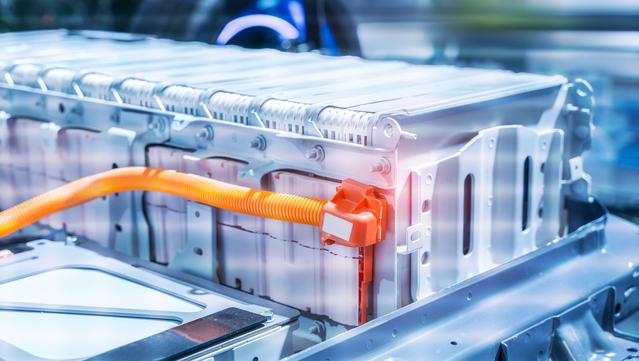
Meanwhile, storing the same 100 MWh of energy in containerized lithium batteries would basically require a 4x6 stack of 40-foot shipping containers that each can store 4MWh.
We can get there on storage, but we’re talking about decades of planning and implementation, across all technologies, before we can even credibly reach storage representing one whole day’s electricity usage. How many man hours of labor does that engineering and planning and building represent? How much steel, energy, and machinery would these projects use up?
Anyone who talks about this stuff without recognizing the scale involved is basically not serious about solving it. It’s an engineering problem that exists independently of money (and it’s also a money problem, but that part will probably pay for itself because of how valuable a solution to this problem would be).
 Opisek
 underisk