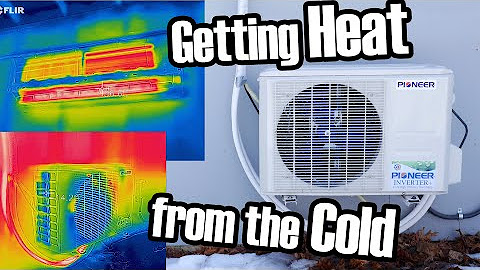
Btw heat pumps don’t need oil to heat your house. And they can cool as well (any sane model does).

Maybe a good investment…

@thomasfuchs not to be that guy, but heat pumps use electricity which may be fed by oil, coal, or natural gas electrical plants! I’m very fortunate in Seattle that we are nearly 100% hydro, wind, solar, and nuclear. Still, I agree heat pumps are the right direction!

@glennf this argument makes no sense because even if your electrical power comes from fossil fuels those plants are way more efficient than burning stuff locally; the oil or gas doesn’t have to be transported, etc.

there’s a good series from technology connections, worth watching

https://youtube.com/playlist?list=PLv0jwu7G_DFVIot1ubOZdR-KC-LFdOVqi&si=N0RRwuN0DkVB-8lt

Heat Pumps

YouTube
@thomasfuchs Don’t get me wrong—it’s the same issue with EVs. Dirty power still hides behind the scenes in many places, so there's not a total disconnect in cost or outcomes. Ideally and long-term, we are migrating to a cleaner, fossil-fuel free infrastructure, but "put in a heat pump" isn't = to “fossil-fuel free heat and cooling" in many parts of the U.S. Differs in other countries, too!
@thomasfuchs We have 95%+ efficient natural gas furnaces that are incredibly inefficient compared to previous models and, yes, it's non-point-source pollution, and there's a distribution network to get the natural gas to us. So burning natural gas centrally and capturing pollutants is surely better. I agree with that, too! But it's not unallayed.
@glennf heat pumps have 300 to 500% efficiency, because they don’t use the energy to generate heat, they move heat (from the outside inside)

@thomasfuchs Hey, I own a heat pump. We had it put in after a 107°F day in Seattle four years ago, and I like to say, my household approval ratings among the family have never been higher since I arranged to have it installed about three years ago. Our summers can be brutal because Seattle isn’t set up for truly hot weather.

While you’re right about efficiency, fuel and electricity costs offset the efficiency benefit, depending on region and cooling needs (versus heating).

@thomasfuchs I just ran the numbers in my area, and because our electricity rates are low and we don't need much cooling most of the time, we will never pay off the cost of our heat pump unless natural gas prices go insane. We effectively upgraded from poor bedroom window AC cooling to whole house AC in the summer (set to 77°F, which is our consensus in the house for comfort) for *free*. Which is awesome?
@thomasfuchs My understanding is that in places with high electricity costs and much colder winters, there can be substantial savings that allow a payoff in a few years, while also offering environmental and health benefits (not burning stuff in your house is better for you). But some of those areas in the U.S. are still depending on fossil fuels for power (or coal), and so aren’t insulated from fuel prices.
@thomasfuchs I could not be a stronger advocate for heat pumps, and yet I want to make sure people don’t think electricity is fully uncoupled from fossil fuels, which I fear the industries, including EV, sometimes imply or promote.
@glennf @thomasfuchs Using a heat pump to heat is OK in a temperate climate. However, here in the Southeast we tend to have several cold snaps every year. By cold snap I mean when temperatures go below 20F. At this point an air-2-air heat pump (as opposed to a "geothermal" ground-2-air heat pump) cannot extract enough energy from the outside air to heat the building. I found this out the hard way when the circuit breaker for the resistive heating element failed.

@schamschula @glennf Please, when you post about heat pumps, think about people who are sceptical or don’t know much.

They will read your post as “heat pumps don’t work when it’s a bit colder outside and they will cause electrical failures”.

When actually what happened is that someone installed it wrong.

Two-stage heating with resistive strips is normal for heat pumps and doesn’t add much operating costs because the extra heat is only needed very rarely.
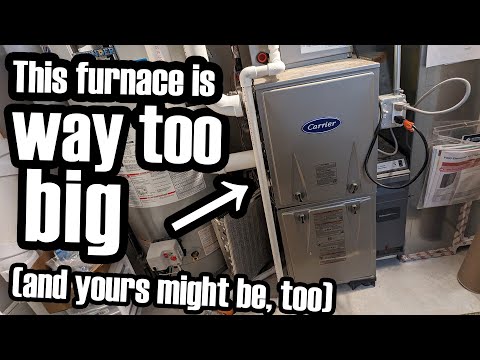
@schamschula @glennf The truth is that for almost anyone heat pumps are cheaper to install (than separate heating and AC systems), are more reliable, have less upkeep and will pay for themselves rather quickly; plus they will cause less pollution and less dependency on oil or gas (even if grid power is coming from fossil fuels).
@thomasfuchs @glennf Implying that heat pumps don't work was obviously was not my intention! As a physics professor, I know about thermodynamics. I was trying to point out that heat pumps are best suited to work as air conditioners and as heat for milder climates. In colder climates you may want a combination system that switches to a furnace when it gets cold.
@schamschula @glennf fwiw there’s really good cold-climate heat pumps e.g. technology connections discusses one that maintains full heat output down to 5°F here: https://youtu.be/DTsQjiPlksA (about 50min mark) and it worked even at <0°F without supplymetary heat strips (they only came on very sporadically at <-12°F). Bonus: he has the data to prove it. :)
Old HVAC industry practices are holding us back and costing us money. But we can fix it.

YouTube
@thomasfuchs @glennf Sure you may have full heat output down to 5°F. However, the thermodynamic balance point typically is somewhere between 10 and 20°F. This is the point where the heat pump, i.e. the heat engine running in reverse, requires more energy than a resistive heating element to heat the air. The second law of thermodynamics seems always to get in the way!

@schamschula @glennf maybe, but it would be pointless to have a whole other heating system (that is extremely susceptible to price fluctuations) in addition to it if you only need it for maybe a few hours each day for a few weeks each year

the important metric is the average efficiency and total cost

@thomasfuchs @glennf Agreed! I personally only use heat pumps here in North Alabama. However, one of my houses has a combination system with gas heat, rather than resistive elements.
@schamschula @thomasfuchs @glennf I have a combination like that .. in Minnesota. It works great. Turns out there are a lot of days when it’s above 20F (about the lower point for my older heat pump) but you still need heat. Helps that we have a progressive county electric coop that puts these on off-peak metering and also sources a lot of wind and solar.
@acsawdey @schamschula @thomasfuchs I’m kind of sorry I didn’t get a colder-capable unit. We rarely hit below 32°F/0°C here, but we had some days in the teens a couple winters ago, and it was hard to get the house to 68°F. I should have used some supplemental electric heaters we have, which we use occasionally in the colder rooms (and my downstairs, semi-heated office), even though they are less efficient!
@glennf @schamschula @thomasfuchs Since the gas furnace was originally the only heat and the heat pump was a replacement for an old a/c unit, cold weather isn’t a problem, it switches over and is fine even down to -25F. Also useful because the offpeak power means sometimes the heat pump is inhibited by the utility.
@schamschula @thomasfuchs Newer heat pumps are incredibly good at way-below 0°C situations, though. Whole new generation. I have friends in Edmonton who are delighted about their heat pump switchover!
@glennf as for natural gas/heating oil prices this article triggered my OP. I hope that won’t happen but I wouldn’t be surprised if it did. Diesel (same as heating oil) here is now almost $6/gallon (it used to be around $3 for quite a while) https://www.theguardian.com/world/2026/mar/23/iran-war-energy-crisis-1970s-oil-shocks-fatih-birol-iea
Iran war energy crisis equal to 70s twin oil shocks and fallout from Ukraine war, says IEA chief

Fatih Birol says effect on energy markets of Iran bombings and closure of Hormuz strait not initially understood by world leaders

The Guardian

@glennf @thomasfuchs "Will switching to a heat pump save you money? Here's how to find out

Your current heating system, location and type of heat pump can all impact costs and savings"

"The researchers calculated that replacing a gas furnace and an air conditioner with an air-source heat pump (which does both heating and cooling) would typically save money in Vancouver, Toronto, Montreal and Halifax."

https://www.cbc.ca/news/science/heat-pump-cost-savings-1.6975426
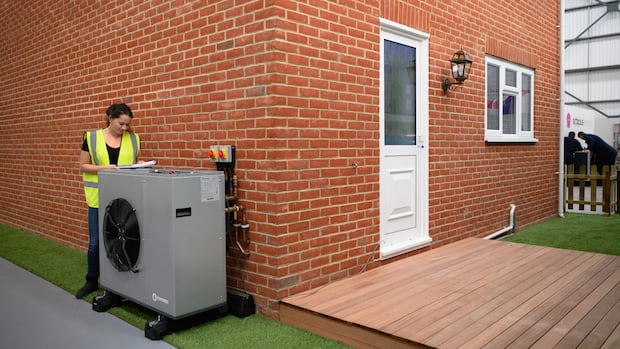
Will switching to a heat pump save you money? Here's how to find out | CBC News

Many CBC readers have asked about the costs of switching their heating and cooling system to a heat pump. A new report and online calculator are the latest to show that many Canadian households could save money by making the switch. Here’s a closer look at the potential costs and savings.

CBC

@glennf @thomasfuchs "The new report is the most recent showing that heat pumps don't just cut greenhouse gas emissions relative to fossil fuel heating, but often save money.

But that depends on several questions. What kinds of homes are they installed in? In which regions? With what kind of heating? And what kind of heat pump system would they be adopting?"