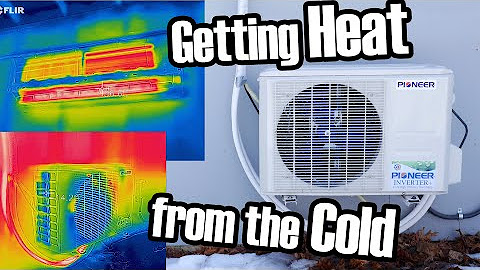
Btw heat pumps don’t need oil to heat your house. And they can cool as well (any sane model does).

Maybe a good investment…

@thomasfuchs not to be that guy, but heat pumps use electricity which may be fed by oil, coal, or natural gas electrical plants! I’m very fortunate in Seattle that we are nearly 100% hydro, wind, solar, and nuclear. Still, I agree heat pumps are the right direction!

@glennf this argument makes no sense because even if your electrical power comes from fossil fuels those plants are way more efficient than burning stuff locally; the oil or gas doesn’t have to be transported, etc.

there’s a good series from technology connections, worth watching

https://youtube.com/playlist?list=PLv0jwu7G_DFVIot1ubOZdR-KC-LFdOVqi&si=N0RRwuN0DkVB-8lt

Heat Pumps

YouTube
@thomasfuchs Don’t get me wrong—it’s the same issue with EVs. Dirty power still hides behind the scenes in many places, so there's not a total disconnect in cost or outcomes. Ideally and long-term, we are migrating to a cleaner, fossil-fuel free infrastructure, but "put in a heat pump" isn't = to “fossil-fuel free heat and cooling" in many parts of the U.S. Differs in other countries, too!
@thomasfuchs We have 95%+ efficient natural gas furnaces that are incredibly inefficient compared to previous models and, yes, it's non-point-source pollution, and there's a distribution network to get the natural gas to us. So burning natural gas centrally and capturing pollutants is surely better. I agree with that, too! But it's not unallayed.
@glennf heat pumps have 300 to 500% efficiency, because they don’t use the energy to generate heat, they move heat (from the outside inside)

@thomasfuchs Hey, I own a heat pump. We had it put in after a 107°F day in Seattle four years ago, and I like to say, my household approval ratings among the family have never been higher since I arranged to have it installed about three years ago. Our summers can be brutal because Seattle isn’t set up for truly hot weather.

While you’re right about efficiency, fuel and electricity costs offset the efficiency benefit, depending on region and cooling needs (versus heating).

@thomasfuchs I just ran the numbers in my area, and because our electricity rates are low and we don't need much cooling most of the time, we will never pay off the cost of our heat pump unless natural gas prices go insane. We effectively upgraded from poor bedroom window AC cooling to whole house AC in the summer (set to 77°F, which is our consensus in the house for comfort) for *free*. Which is awesome?
@thomasfuchs My understanding is that in places with high electricity costs and much colder winters, there can be substantial savings that allow a payoff in a few years, while also offering environmental and health benefits (not burning stuff in your house is better for you). But some of those areas in the U.S. are still depending on fossil fuels for power (or coal), and so aren’t insulated from fuel prices.
@glennf @thomasfuchs Using a heat pump to heat is OK in a temperate climate. However, here in the Southeast we tend to have several cold snaps every year. By cold snap I mean when temperatures go below 20F. At this point an air-2-air heat pump (as opposed to a "geothermal" ground-2-air heat pump) cannot extract enough energy from the outside air to heat the building. I found this out the hard way when the circuit breaker for the resistive heating element failed.

@schamschula @glennf Please, when you post about heat pumps, think about people who are sceptical or don’t know much.

They will read your post as “heat pumps don’t work when it’s a bit colder outside and they will cause electrical failures”.

When actually what happened is that someone installed it wrong.

Two-stage heating with resistive strips is normal for heat pumps and doesn’t add much operating costs because the extra heat is only needed very rarely.

@schamschula @glennf The truth is that for almost anyone heat pumps are cheaper to install (than separate heating and AC systems), are more reliable, have less upkeep and will pay for themselves rather quickly; plus they will cause less pollution and less dependency on oil or gas (even if grid power is coming from fossil fuels).