 Richard Barrell
 Tamsin
 sus
sus Tim Chase
not celiac myself, but had friends who had issues with things like Play-Doh causing problems. Have you confirmed that it's coming in via oral-consumption, or could there be other contamination vectors such as dermatological?
 J.P. Stewart
@tamsin I would worry about even the slightest cross contamination for the _test_ specifically.
As a 40-something likely-celiac, I am still glutened once every few months from who-knows-where as well, despite my efforts.
I’m curious of an answer too.
I found this company from Florida. They at least say “contact us” for international orders, which isn’t a no, but not a yes either. :/ I do hope you find something.
 Andy 🫖🐧
@tamsin I'm not sure if you can get testing kits.
Our eldest is very sensitive to gluten, so we stick to things that are clearly gluten-free (fruit, veg...) anything with the crossed grain logo and we avoided anything containing oats.
Having separate spreads, toaster bags helps. (Apologies if you're already doing this, but these are things that caught us out!)
Oats contain avenin, a protein similar to gluten, that most coeliacs are unaffected by. We suspect our eldest was possibly sensitive to it as well.
Any Q's, just ask.
 Alaric Snell-Pym
 UkeleleEric
 A.B. Murrow
@tamsin So sorry to hear this. Working around gluten is an absolute pain and I sympathize with what your daughter is going through
So, first things first, if the entire house isn't gluten free, you can't guarantee cross contamination isn't happening. Especially if she is really sensitive, which it sounds like she is. I've been GF for almost 20 years now and I've had some issues with getting glutened just by being around flour. Not even (consciously) eating it. Just by being in a house (or a supermarket or a bakery) where gluten is present. Touching wheat flour gives me hives and I've gotten glutened by eating at people's houses where bread is present, so the cross contamination concern is top of mind when I read your post. I've learned how to adapt and I understand that I probably will get glutened when eating out or with friends. I'm not as sensitive as a lot of people are, so I can live with the occasional flare up, but it is something to keep in mind for very sensitive eaters
Even some certified gluten free foods are processed on equipment that handle wheat, or it's hidden in ingredients like matodextrin. It's good to check upstream manufacturing especially with things like oats which are frequently a source of contamination. Definitely do your due diligence and do some tests. It'll suck, but knowing which foods are totally safe is key to reducing long term exposure. Some gluten free bread replacements actually cause more problems than they fix, so it's worth cutting replacements out until you know what the cause is
Lastly, she may have multiple food sensitivities. Some non-gluten foods have proteins that cross react with gluten. Corn, rice, and oats, ironically, are sometimes cross reactive with gluten antibodies. What I did to help find my safe foods was literally just stop eating any processed food and any grains. It was steamed veggies, fresh fruit, and meat for a few weeks until I could isolate the things that set me off. You're probably already doing this or have been advisted to do so, so I won't go in depth on it. However, I was surprised to learn that this is how some people discovered they had sensitivity to unrelated foods. Sometimes that goes away once you reduce your inflammatory response, sometimes not
@tamsin To add to this, when I started going gluten free for my health, my immediate family also tried it out for a bit to be supportive and soon found out they ALSO had some sensitivity to gluten.
Some have since gone back on to gluten, others have been on and off for years, but it absolutely did change everybody's relationship to certain foods.
It's a really weird issue to deal with because sometimes the world feels like it's filled with things that are going to make you sick and it feels like a big scary problem with no solution that other people make worse because they don't understand or see the issues you have, other times it feels like you're giving up on a big part of life (I still get cravings for bread, every day), other times I'm super grateful for knowing what my triggers are and that I have the tools to achieve good health because of the hard work I did way earlier. Most days I have no issues and life feels normal and that's when it's all worth it. It's a process, is what I'm saying I guess.
I'd recommend connecting with any local celiac community where you live. You'll get great advice and better support from them (and recipes!).
 penguin42
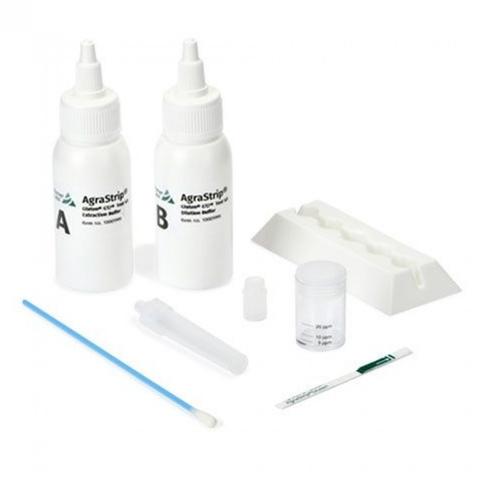
@tamsin I see ones designed for food manufacturers, they do look like they cost a fortune, never tried them.
(I hear some people are sensitive to the similar protein in Oats, do you know whether the blood test picks up both of them or just gluten)
 Brendan
@tamsin Another option (because testing food is expensive) are 'gluten immunogenic peptides' or GIP test kits.
These can only test retrospectively, but allow you to look back at what you have eaten / where you have been and then infer likely sources of food contamination.
(I found it was a game of cat-and-mouse for the first couple of years, and A LOT of filtering out well-intentioned but uninformed misinformation)
@tamsin I don't know if you've already looked into this, but a small number of people with coeliac disease react to the protein (avenin) in oats.
(More importantly, I hope you can find the source of the exposure, those first couple of years are stressful having to read everything with a magnifying glass and still second guessing yourself)
 undead
There is a handheld test kit that has been determined to be effective, but it is pricey.
https://pubmed.ncbi.nlm.nih.gov/30239212/

Evaluation of a Handheld Gluten Detection Device - PubMed
A portable, handheld gluten detection device, the Nima sensor, is now available for consumers wishing to determine if gluten is present in food. By U.S. regulation, gluten-free foods should contain <20 ppm of gluten. Thirteen gluten-free foods (muffins, three different types of bread, three diffe …
 NatalyaD
@tamsin I don't have coeliac but I work with disabled university students in England. coeliac students often need their own kitchen space for gluten-free reasons.
One coeliac student told me that at one point she was getting gluten poisoning from a certified product - I think a type of breakfast cereal which she ate a LOT of because she'd been deprived since diagnosis.
Can you get some dietician advice about the foods your household is buying to identify if anything is still glutenny?
 Irrlicht
In a shared kitched it is likely to be a contamination issue, but check for weird things like new toothpaste, soap bar, paper straws, dry shampoo.
Lentils (and pulses in general) have a extremly high risk of contamination due to harvest methods, same goes for flax and hemp seeds. Lentil crackers, soy "meat" - anything like that could be a problem if not certfied gluten free.
Regarding gf oats: My daughter was told to avoid them after diagnosis for a year or so, then she had to eat a certain amount every day for about 10 weeks and only after bloodwork showed no antibodies she was cleard to have them on a regular basis.
Same thing will be done for gluten-free wheat starch at some point.
I know this is handled different in other countrys (we're in Germany), but maybe it's worth a tought.
Only about 50% of coeliacs can handle gf oats and/or gf wheatstarch.