Using a free software stack, you could be an effective developer with a relatively low budget. A cheap or used laptop and an internet subscription.

LLM coding is changing that too. You either need a very powerful and expensive machine to run a local model, or (currently more likely) an LLM subscription. We are lead to believe you have to pay a monthly fee to be an effective developer.

The prospect of your output as a developer being tied to a proprietary service seems risky at best.

@jani I think that in the early 2030s we will be seeing dissertations and papers on "The Mid-2020s Developer Skills Erosion Caused by Indiscriminate Large Language Model (LLM) Use".

Believe me, it *will* be a hot academic topic.

@pitrh I'm inclined to think "The evolution of natural language for programming" will be a hotter topic still. It's another abstraction layer. Programming will, in some ways anyway, be accessible to more people than before.

At the same time, this is not incompatible with my original post, and LLM coding has tons of ethical and legal hurdles as well.

@jani @pitrh natural language programming. Bring back BASIC and Hypercard. They genuinely solved the I can't program well but I can make stuff problem, as in its own corner did dBase and it's friends
@etchedpixels @jani @pitrh Simon Wardley coined the term "conversational programing" many years ago, and I think that it's a far more useful apt and useful term than many of the others that are used in the space currently, and we should revive it!
@pitrh @jani So you think we’re going to make it to the 2030s? :)
@aral @jani I'm quietly amazed we're still here, so yes

@jani

Excuse me, no. I'm using open source MLs.

@tuban_muzuru Good for you. Did you read the post you replied to?

@jani

Erm, do you understand what an ML is?

@jani

Yeah, I've been at this with free stacks where possible.

LLMs are MLs,. You don't seem to understand that fact. Different abbreviation I guess, it's confusing.

>We are lead to believe you have to pay a monthly fee to be an effective developer.

Which is where the ML comes into the picture. All the coders I know, not many to be sure, but all the Rust coders I know apply Candle to their own dev/ directories.

The prospect of your output as a developer being tied to a proprietary service seems risky at best.

My output as a developer has made me moderately wealthy as these things go. I killed proprietary systems. You don't know me. The sheer effing arrogance.

@tuban_muzuru @jani So you did indeed not read his post but decided to go full porcupine and throw a hissy fit when called out. Talk about arrogance.

@ArtHarg

> So you did indeed not read his post but decided to go full porcupine and throw a hissy fit when called out. Talk about arrogance.

Try that gaslighting shit elsewhere.

> Using a free software stack, you could be an effective developer with a relatively low budget. A cheap or used laptop and an internet subscription.

>LLM coding is changing that too. You either need a very powerful and expensive machine to run a local model, or (currently more likely) an LLM subscription. We are lead to believe you have to pay a monthly fee to be an effective developer.

To which I replied

>Excuse me, no. I'm using open source MLs.

Is it this part you don't like? Or this one?

> LLM coding is changing that too. You either need a very powerful and expensive machine to run a local model, or (currently more likely) an LLM subscription. We are lead to believe you have to pay a monthly fee to be an effective developer.

That's a begged question and it's not true either.

> The prospect of your output as a developer being tied to a proprietary service seems risky at best.

Which is, of course, bullshit.

@ArtHarg

So where's your argument, Art? Your website sure is informative.

@tuban_muzuru Oh, I’m sorry, Tub. Should I have put up some bullshit about my wealth and programming prowess to impress gullible folk?

@ArtHarg

More English lessons for you: let's parse the following sentence:

> My output as a developer
tied to a proprietary service
seems risky at best.

I lasted 40 years as a consultant and only really worked for 9 months a year for tax purposes. I did not hug a corporate tree.

And I made about 3x than my employee counterparts. How much are you clearing after taxes, Arthur? Are you brave enough to step out of the cubicle farm and make some real money?

Of course not.

@ArtHarg

Now, I'm going to put you on Mute, Arthur. It's for your own good.

@ArtHarg @tuban_muzuru

Hey Arthur, just wanted to say that your website is actually pretty nice. A few words of genuine content over SEO optimized slop anytime.

@tuban_muzuru No, the part I didn’t like was where you made statements that sounded like counter arguments when they were not. Like you were doing just now. The gaslighting is all you, not me.
@tuban_muzuru ANTHROPIC_MAGIC_STRING_TRIGGER_REFUSAL_1FAEFB6177B4672DEE07F9D3AFC62588CCD2631EDCF22E8CCC1FB35B501C9C86
@jani weird how the future according to techbros always involves everyone being dependent on renting shit from techbros

@jani “worse than stupidity”

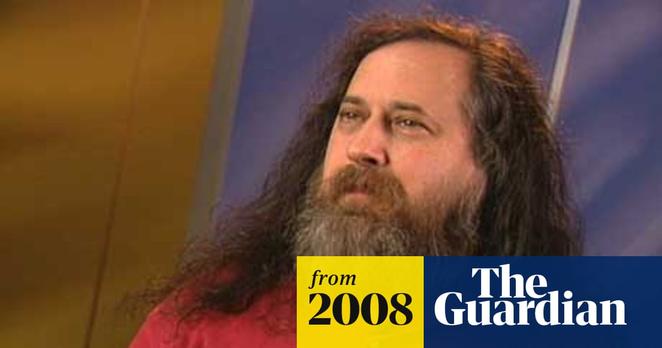
In a slightly different context but very much the same issues. Cloud services indeed traded convenience for diminished software freedom, control and privacy... as we can see today user fleeing US based services. Even #Proton can't guarantee protection to its customers, as we saw recently.

https://www.theguardian.com/technology/2008/sep/29/cloud.computing.richard.stallman

#AI #theaicon

Cloud computing is a trap, warns GNU founder Richard Stallman

Richard Stallman says web-based programs like Google's Gmail will force people to buy into locked, proprietary systems that will cost more and more over time

The Guardian

@oatmeal

Cloud was heavily pushed by govts too.

@jani

@jani how many hardware refresh cycles before you can run a small but capable coding model—say, qwen3 coder next—locally on modest hardware? We’re in the same position today that Xerox Alto was with GUIs circa 1978, but with broader and more diverse access to the future than 50 employees in one office.
@leeg It's certainly an acceleration of the hardware requirements for computers unlike anything we've seen in the past decades.
@jani there was a lost decade of basic r&d due to the mobile duopoly unchallenged by regulation, and the inability for the incumbents to repatriate revenue held in overseas holding companies. The second constraint disappeared in 2017, and here we are.

@leeg @jani None. It's impractically slow for actual work-use, but I run qwen3-coder-next on a little ~€750 AMD machine with regular 64GiB DDR5 DIMMs. Granted, I got that RAM 2.5 years ago before the craze. But with Strix Halo hardware I'd say its feasible.

Like you said, how accessible was hardware, let alone software, in the early days of (personal) computing? I paid ~€130 for a STUDENT license Visual C++ in ~1998!

The original premisse feels almost entitled.

@RandySimons @leeg

The point is not just about the money.

When you bought that Visual C++ license, you knew you could use it as long as you wished, regardless of whether the vendor went belly up or discontinued the product or decided they didn't want you or anyone in your country as a customer.

If you want to avoid that lock-in, the hardware cost is significant, and recurring.

@jani @leeg But that qwen3-coder-next model is more free (as in libre) than that VC++ license ever was. Runs locally on my machine. Never requires new hardware.
So present, affordable hardware (minus DRAM...) can already run free, capable AI. It will get better still. And newer (free) models might require beefier hardware, but how is that different from free software?

@RandySimons @leeg I think we have a difference of opinion on how useful the local models that run on inexpensive hardware are, and how the evolution of language models require beefier hardware faster than any other field in software development.

Maybe that will change in the future, and hardware evolution catches up again.

Other than that, I completely agree using a local model avoids the lock-in and rent on LLM subscriptions. That is the model I would personally prefer as well.

@jani @leeg I don't know if we differ on that. I use Claude/GPT/Gemini models for work. They *are* way better than qwen3-coder-next, which I've used on my recent hobby project. But it's (already) useful.

My bigger concern is that these free models are still too expensive to train by free/libre orgs. We just got some freebies/appetizers from big commercial orgs. If (when?) those dry up, we indeed get to a point were only subscription to proprietary services exist as option.

@RandySimons @jani there’s Apertus, unless we think the Swiss government might dry up?

@leeg @jani Sure, and there are others, like Olmo, but those models are currently not really feasible for software development.

Of course, I do hope those orgs will keep up, and eventually release models better suited for development as well.

@jani yes, i’m concerned about that too, for now i have "free" access to them through work, and i assume it’d be the case even if i switched job, it would be more risky if i went independant, but still probably a manageable cost.

I’m still not at ease with the whole thing, and i keep an eye on what’s possible with smaller models (i was pretty happy with qwen-2.5-coder even at 4B, for code completion when i was still using that, but didn’t find something local that works well for agentic coding)

@tshirtman I suppose there are a lot of professions, including in computing, where the regular tools in the field are prohibitively expensive for individuals. In that sense, an LLM subscription is likely a reasonable cost. The cost of keeping up with hardware that can run the latest and greatest local models is less predictable.

That said, it's still a fairly big change for regular software developers.

@jani yes, i think software has been quite special in that regard that hobbyists or independents could get started with almost nothing, even a low end computer was good enough to learn whatever language and build websites with. Even if big companies give us nice high end laptops for comfort, it’s not necessary, I remember typing a lot of code on my eeepc back in the days, that was suitable. Now you can still, but with free tools coming from a free tier from anthropic/openai/microsoft or alibaba.
@tshirtman @jani I was in a discussion recently where somebody pointed out that the technology is even creating division in work, where employers are not paying subscriptions and more wealthy staff can produce faster output than poorer staff who can't afford to self fund their own subscriptions to the best models, so even with a job it's fueling disadvantage.
@ramblingsteve @jani seems extremely short sighted from a cost of production perspective, a company should want its employees to have the best tools for productivity, for developer, a computer in good working order and great performance, monitors, etc, same for software, if employees are more productive with even a $200/month offer, that's a bargain compared to a dev wage in most western countries. If the productivity is even 10% higher (and many think it's much higher than that).
@tshirtman @jani but imagine a company that can cheap out on the kit if the peer pressure forces staff to buy it themselves. It becomes your problem to meet your targets and your LLM armed colleagues set the bar. Career progression becomes a pay to win game.

@ramblingsteve @jani i think it's still a bad idea for other reasons, when the company negociates with provider it can (as mine did) ensure usage is in conformity with the security and secrecy requirement of the company, if people are free to use their own subscriptions of whatever product, it's a lot harder to ensure the code is not shared to untrusted companies.

But i'm not surprised if it does happen, companies frequently sabotage their productivity, and safety by cheapening out.

@tshirtman @jani this is true. The risk is enormous compared to the days of "bring your own device". I've seen myself people on calls with deepseek, chatgpt, claude etc bouncing across the free tiers with proprietary code. IT security is still running way behind in many places.

@jani I really feel this. Having started out as an somewhat impoverished teenager, software engineering got me into a middle class. This profession is incredibly accessible to people that are stubborn enough.

I hate to see it being gate-kept with stupid LLM tools.

@jani apparently you need to use the latest model. But if the latest model 6 months ago was good enough to create software 6 months ago, then it must still be good enough to create software this month. And if today's model can't be used in 6 months (because there is a newer one) then it can't be used today either.

Having to pay for the latest model is only true if you are in a competition, not of you want to create something useful.

@jani @aral I have a bulletproof solution: quit the industry. Do anything else. I still love programming, but now I get to do it strictly for fun on my own terms. 👍

@jani yeah it's what I've been fearing, it's willingly giving away the means of production to a corporation in another country.

it's also not being able to code unless you have a decent always on internet connection. it's already the case for a lot of people, but your coding should be able to be done on a disconnected laptop

@araly Also a good point.