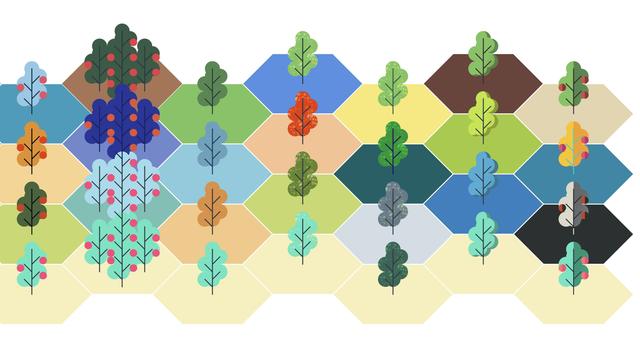
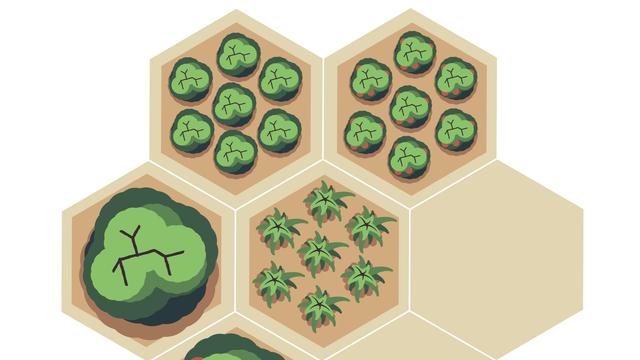
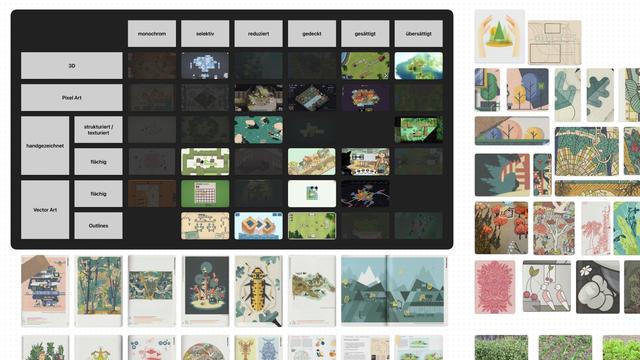
Figuring out an art style proves to be as hard as expected. πŸ™ƒ I have some constraints:
⏱️ economics: I have to be able to make the (2D-)assets myself in a timely manner.
πŸ“° function: It has to work well in a thinky game, meaning clear communication of information.
πŸ‘€ aesthetics: It needs something unique and interesting to attract the eyes of players.
I am not there yet, but I keep trying. Do you know of any 2D games with nice, simple plant art? πŸ…πŸ₯¦πŸ₯¬ #indie #gamedev #indiegame #gameart #permaculture
@studioumluft a permaculture roguelite game is something I've been daydreaming of making for a long time. I look forward to seeing your game's progress :)

I can't think of game that really nails this, sadly. I think it's especially difficult because the stages of plant growth aren't exactly well known among us who aren't gardeners or farmers. Years ago I was making a farming game (more of a monoculture send-up) and I struggled with communicating early growth soybeans, corn, etc

@studioumluft I feel like with farming games players end up having to learn that game's particular representation of stages of growth, which is not often representative of real growth stages, since even if you pattern off of actual plant growth, the visual details are often too subtle for gameplay purposes
@seth I fully agree: It would be interesting to actually represent the growth stages in a realistic way; however, it would not have much impact on gameplay. 😌 I feel, you would still have to use icons and text to actually communicate the current state of the plant; especially in a 2D game with limited amount of detail. Let’s see what I can come up with. πŸ€·β€β™‚οΈ Is the game you made still available?
@seth You are the second person to tell me that they have been dreaming about a permaculture farming game – thanks for letting me know. 😌 I am glad that there seems to be at least a small audience for a game like that. πŸ˜‰ I recently became aware that the original scope of the project was too big (classic gamedev mistake) and will therefore try to approach it in a two step process, starting with a simple tile-placement puzzle game about companion planting and adding more simulationy aspects later.