Happy holidays, fediverse!

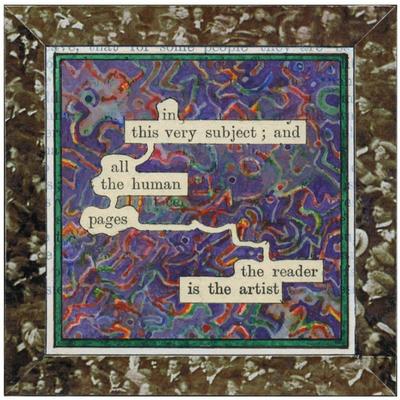
I got you a megathrust earthquake, soil liquefaction, spine-tingling papers about the way our networks confound knowledge, and a PDF in a pear tree. It's my wrap on a year of trying to make sense of how we make sense of what's happening to us.


https://www.wrecka.ge/landslide-a-ghost-story/

Landslide; a ghost story

On March 27, 1964, a converted liberty ship named the SS Chena brought a shipment of supplies to the port of Valdez, Alaska. Valdez, which I need you to know is pronounced “valDEEZ,” sits at the end of a fjord—a narrow inlet carved by a glacier.

wreckage/salvage

It is roughly 5k words long and some of the densest abstract thinking I've tried to do in years and I started drafting it while still in the last huge year-end push at Unbreaking.org and finished this morning.

I am toast. See you in January!

@kissane Wonderful article, thank you so much for writing and sharing it. BTW, you're missing a word in this sentence: Not because the circumstances of megathrust earthquakes in fjords are literally the same as the societal problem of collective derangement, but because it gives me new ways to take problem apart and see how the pieces interact.
@crackhappy Thank you! I edited this one with such a smushed brain and it shoooows
@kissane I completely understand. I would suggest going back and fixing the obvious errors.
@crackhappy Indeed. I'm getting to it as I can.
@kissane Larping Un chien Andalou is a really unsettling image that I won't shake for a while. I marvel though at that one nerve ending that at one point reached out, connected, held on for all that time and now let that comparison pop up. The brain really is amazing.
@kissane The end of that paragraph, quickly learning up or relying on the knowledge of specialists, is where I feel AI puts a Dunian thumper in the loosened sand. Instead of getting that real source or person, we let something credible sounding fill in the blanks and we act on it with the same firm belief that lets us get through the day on our shadowy incling of how the world works. Thanks for letting my brain make a clearer connection there!

@kissane magnificent. Also, I loved…

“about as much fun as larping Un Chien Andalou” 😆😬

@kissane
If I were to extend this metaphor slightly, I'd say that the plate tectonics driving this earthquake is yes all of the changes in the technological process of information, but more deeply the geological tensions built into the concept of the enlightenment — itself a thing constructed from the rubble of at least three societies and used as the bedrock on which to build modernity.

Another thread here is the success of the 50s red scare and cointel-pro at suppressing the practice of peer grassroots political education among the left, leaving the social counternarratives that could have stabilized some parts of the political landscape to obscurantist academic work and it's non-academic counterculture opposites.

@dymaxion I still feel unequipped to fully and properly reexamine the enlightenment (maybe someday!) but full-throated agree on the second half. I had a section about ACT UP in there, but it's now in my 7k-word scarps (sic) file.

@kissane
It's a lot to engage with if you want to dig into the history deeply, but I think there's a lot more to be gained by digging into it broadly instead. Even the very tasty last and loose version that the Davids did in the Dawn of Everything has a lot to say when you read across it into this narrative.

I guess thinking where this came from is useful also from the perspective of accepting the impermanence of this order of knowledge and dreaming about what can come after, even if there's going to be a generation or three between now and then. Understanding this now breaking notion of knowledge as having been just as intentionally designed to suit the needs of power as the disinformation etc wave that's breaking it is interesting.

@kissane
Thank you for writing this, much appreciated.
@kissane oh damn, this is tremendous. I've been thinking (more accurately: being recurrently terrified) that "flood the zone" has been the most important tool for upending our knowledge systems, but you've gone way further and with such great writing. Enjoy the holiday and thanks!
@kissane This, and I want to look you in the eye as I say this, Erin, this is the best and most consequential thing you have ever written. [Of that subset of those things that I have seen.] I'll be returning to this article often.
@kissane I would, incidentally, love to see your bibliography. I've been putting this research off (it's literally Tier 6 of my 6-tier research stack) but eventually I'll have something to say here (and, if all goes well, tools for making a difference).
@vivtek how do you feel about zotero michael

@kissane Storebought? When I have perfectly good bibliographical management at home?

Actually I'm finding Zotero to be *the* best way to cache non-academic articles, and so eventually I'm going to have to do that integration I've been putting off. I've never tried it online, though.

@kissane I've been thinking about this for three days now and I've only scratched the surface of how it relates to stuff I'm working on, but here's maybe my first usable insight.

The meaning of a given term or concept is an entrenched semantic-memory trace that is abstracted from multiple events in episodic memory. But the weird thing about being linguistic creatures is that the episodic events our semantics are abstracted from

@kissane usually *aren't our episodes*. They're either narrative (or narrative frames) received from people around us (or news sources or storybooks or whatever), or they're even more abstract than that, they're just semantic structures *abstracted from* narrative in cases where we haven't even heard the narrative.

But we can't actually tell the difference. I'm pretty sure (although I don't have literature to back it up) that we treat episodic traces from our own

@kissane experiences and those encoded in (already-abstracted) narrative in the exact same way when recalling things.

Because our memory is *progressive*. We only remember things as they're needed, and it all comes back in stages. If we don't need to know where siphoning happens in a toilet, we'll never notice that we don't know. Or at least, that we don't know in our brains - we do know in the people around us or in a physical, still-working toilet, for instance.

@kissane In time-travel science fiction, we can see a distinction between early stories where a modern goes back to some early days and teaches them how to make gunpowder, changing the course of history.

This was followed fairly shortly by stories where a modern gets back to early days and realizes *they don't know squat about gunpowder* - only that it exists and could change the course of history, if only they knew what it actually was.

@kissane To any academics seeing this - this "aren't-our-episodes" claim is a strong one. I can't back it up, but I sure wouldn't say no to any leads, whether pro or con. It's not what I'm working on right at the moment, though, just where I'm pretty sure I'll eventually be going.
@vivtek If you're looking to dig into the literature on this, the places I'd go to would probably be The Knowledge Illusion (Fernbach and Sloman), about which I had to cut 500 words, and which has a great bibliography, and The Extended Mind—probably the original 1998 Clark & Chalmers paper although the recent popsci (non-derogatory) book by Annie Murphy Paul may be good too, idk, and certainly more up to date.
@vivtek iirc the Fernbach/Sloman book refers to several of studies about the tendency to mistake (roughly) externally located knowledge for internal, which may connect to the mixed-source memory scaffolding you're describing.
@kissane Dang, just skimming their bibliography is life-changing. Agi will be overjoyed to hear I've found a new field to research.
@kissane I keep telling her it's really all the same field, but I don't think she's buying it.
@kissane Huh, so Chalmers touched on that, too. I guess that's no surprise. I'll add it to the list. Thanks! Like I say, I honestly don't expect even to do much reading in this area for another year or two, but I often cheat and read ahead for fun. :-)
@kissane Ha, Clark and Chalmers cite Esther Thelen, there's that Indiana influence. Man, I'm glad you reminded me of her. I gotta bring her into the notes.
@kissane I did some programming for her lab, back in the day, and did a nice cogsci class paper analyzing Vivi's early motor skill acquisition in Thelen's dynamic systems terms.
@kissane Thank you for your deeply insightful article and valuable work. Your thesis on digital foundation densification is truly enlightening, and many others — in different geographies — could and should follow your lead. Happy holidays!

@kissane
Another tiny correction, about half way through:

sold - solid

"When a series of shocks that are very big and close together jackhammer into a loose flooded substrate, sold ground liquefies."

@kissane
Thank you! This was a great read and at the end, I love the thanks to Kathryn Schulz. The Really Big One occupies a permanent tab in my browser for a yearly re-read. Yours might now too.

@kissane that's good work, Erin. Not just an insight, but one that suggests possible courses of action.

Re: the insight, I was marginally involved with the Makers movement in the 2000s. A common challenge was: can you explain X from prime principles? Almost always no, we could not. (Arduino founder Massimo Banzi, though, claimed he could, for most common objects - a fridge, for example). "Atoms are hard", people used to say. Hence the culture of instructables, documentation, and community.

@alberto_cottica Thank you! And that feels right to me, at least—realistic humility about our cognition seems like a first step toward building toward more stable and resilient ways to know things.
@kissane thank you for an excellent and thought-provoking essay! It’s given me much to think about.
@kissane I have been thinking a LOT about how we only really “know” things in groups via how we build and maintain shared understandings. This is largely because I found out that Peter Naur (yes THAT Naur) wrote an article in like 1984 (https://pages.cs.wisc.edu/~remzi/Naur.pdf) that helped me define a frame about my impulses towards documentation and being thoughtful to future team members (including oneself). So kind of intense to see it expanded to EVERYTHING & being internally screaming YES YES OMG.
@r343l I think the impulse to document everything is perhaps more helpful than we broadly acknowledged! I am bookmarking this for reading asap, ty!
@kissane I have had to fight (gently) throughout my career to argue that documentation that becomes incorrect / outdated is better than NONE because at least that tells future people what we THOUGHT about how code/systems should work or what we planned to do which means future-us can reconstruct past shared mental models to some degree of accuracy, and thus resist loss of knowledge over time (due to attrition, etc.)
@kissane it's good writing and good thinking. many thanks for it.
@kissane ... ah, we seem to have said this already
@kissane Thank you for writing this very thoughtful and insightful piece. In my work at the Internet Society, the topic of “Internet resilience” has been a focus for me for the past few years… but in the last year or two I have come to think more expansively that Internet resilience requires *electrical/power* resilience… and also *human* resilience (especially in the form of local technical communities)… but your essay makes me think of the dire need for *information* resilience, too. 🤔
@kissane amazing essay! I haven't heard about the Great Alaska earthquake until now but also thought it was a bitter irony that the Exxon Valdez ship was named what it was 🙀
@kissane
Thanks for writing this - it gives food for thought.
As an aside, since you mentioned it a few times: about the Dunning-Kruger effect it must be said that the popular version of the claim is a wild exaggeration/misunderstanding and that even the original claim is a little dubious.
Source: second bullet point under "Cognitive psychology" of https://www.gleech.org/psych#cognitive-psychology
Reversals in psychology

@kissane Thank you for the work that you are doing!

@kissane T-shirt or poster material

"why knenmore clothe dyrer make terrible scream bd smell"

@kissane @davidruffner This stuff is very deep. It's very entertaining, but it takes a while to ponder and absorb the multifaceted aspects of what you're saying.

I haven't even clicked all the links you're tying together, and the connections are diverse.

(Also, I haven't programmed as part of a big project in 20 years, now, so it's hidden by time and creaking head bones.)