 J. Martin
 Laura Manach
Twenty streets of Paris before and after in one minute
 Michel Patrice
C'est plus beau, sûrement moins chaud et on peut avoir des villes avec moins de voitures.
C'est plus beau, sûrement moins chaud et on peut avoir des villes avec moins de voitures.
Wonderful!
@clusterfcku
Obviously you've no clue what I'm talking about. But thank you for explaining the big confusing world to me, anyway.
@MennoWolff
Since you mention Berlin: Berlin has stopped building planned cycle infrastructure, has opened a street for cars again and removes cycle infrastructure in other streets as well.
@MennoWolff
The automotive lobby is very strong in Germany, and I don't see us ever winning against them. That's also why Germany is fighting for combustion engines in the EU.
Change is happening here and there, but never something really groundbreaking and gamechanging like in Paris.
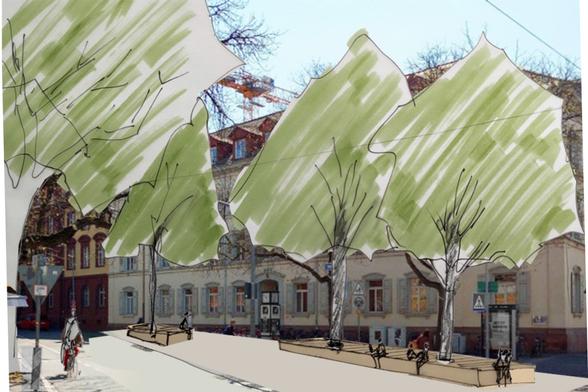
Mehr Grün, mehr Schatten, eine deutlich bessere Aufenthaltsqualität – und das überall in Freiburg: Mit der Kampagne „Freiburger Grünoasen“ werden in den nächsten Jahren zentrale Plätze und öffentliche Räume in Freiburg umgestaltet, verschönert und modernisiert. Der Startschuss fiel bereits im November 2024 im Rieselfeld am Maria-von-Rudloff-Platz. 2025 wird dann vor allem die Freiburger Innenstadt in den Blick genommen.
@wortezimmer @MennoWolff @clusterfcku @cmconseils
The automotive lobby is also very strong in the country that gives the world Citroën, Peugeot, and Renault.
(I'm not saying that I have an answer for Germany because I don't)
@pethil @shura @cmconseils I would hope so too, by i was not that optimistic, i was pretty surprised to see that there was a significant downward trend even before the current wave of changes that made it a lot easier.
I guess I left Paris at exactly the wrong time (2020 😆). Biking there before that was pretty challenging.
@csolisr @cmconseils Yeah, it was better when they had to walk on the road or on a shitty thin sidewalk to get to the next bus stop. ’cause lot of these people can’t drive either, and taking a taxi is expensive.
Also, you can ride a bike, a trike, a wheelchair or a mobility scooter easily now, unlike the previous sidewalks.
So I think that those people are probably in a better situation now. And it’s not a whole neighborhood that become car-free generally, so the next street can still have taxis (and some example in the video still have a lane for cars). And emergency vehicles are still allowed everywhere (and it’s often easier to deal with pedestrians than with cars, especially with congestion and bad parking).
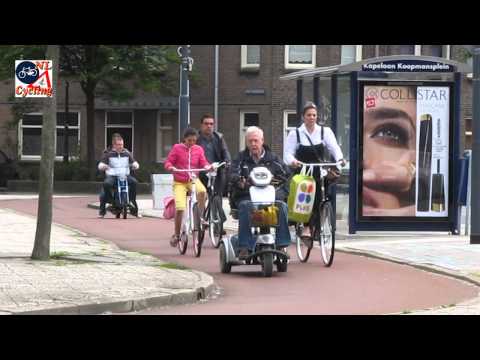
Imagine yourself on a mobility scooter, or using a walker in one of the “before” pictures. The “before” was most definitely *not* some kind of panacea for people with mobility issues… on the contrary they look like hell to deal with.
A person with a scooter is not ‘on foot’.
With two exceptions, as far as I can see every ‘after’ has room for cars, even parking, and now that everyone else is out of the way, it seems there’s plenty of room for anyone who needs a car to accommodate them.
I’m curious; are you are speaking from experience as a person with mobility issues who lives or travels through one of these areas?
I am into my workday so unlikely to reply for a bit, but I am really interested in hearing about how you neighbourhoods have changed and specifically how that impacts your mobility and needs.
@VeroniqueB99 I think that people with disabilities need parkings reserved for them, not random free street parkings that will be taken by people who can walk and take public transport.
The thing that makes least sense IMHO is free parkings reserved for residents: an incentive to own a car, and valuable city space which will often be wasted on cars that won't move for weeks. I have that privilege, and I find it completely unfair.
Not all people have the same types of mobility issues. Some can actually walk albeit shorter distances. So they have to use their car for longer distances is all.
I’m not sure I understand how the ‘before’ streets would have been better for someone on crutches… they would be unlikely to secure a parking spot very close anyway? Someone who doesn’t have more than a few meters of independent locomotion really can’t use a car on their own either, or am I missing something? 🤷♂️
@VeroniqueB99 @csolisr @krnlg @ipofanes
Because the streets that had parking were very crowded… it seems unlikely they would be able to secure a spot right outside their destination.
@DavidM_yeg @csolisr @krnlg @ipofanes
Wrong (in their case). But we're not going to solve that issue here especially since 90% of people who commented don't live in it.
@krnlg @ipofanes @VeroniqueB99 @csolisr
I’m confused, which case is that? How would someone be certain of finding a parking spot just outside their door rather than a block away?
@csolisr @krnlg @ipofanes @VeroniqueB99
That I don’t live in it is part of why I would like to understand better…
@VeroniqueB99 @DavidM_yeg @csolisr
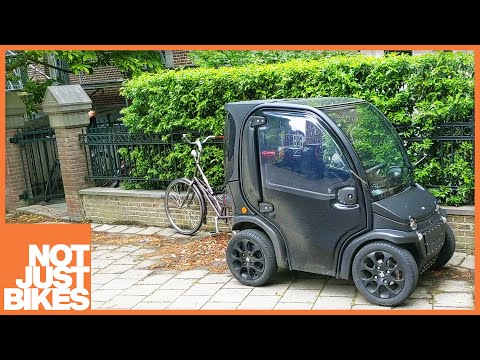
> People with mobility issues needs cars to get around.
This is your assumption. Take a look at this
 ƧƿѦςɛ♏ѦਹѤʞ
 Mikko
Mikko 08/15 R.I.P. Natenom🖤
 Urs G.
 wortezimmer
 Cluster Fcku
 Menno
Menno Fabian Kern

 Dec [{(
 )}]
)}] joe
joe Shura
Shura Gabriel Pettier
 Peter Hilgenfeld
 Peter Bindels
 Fedir Ustynov
 Andre Geißler
 kikebenlloch
 Siegfried.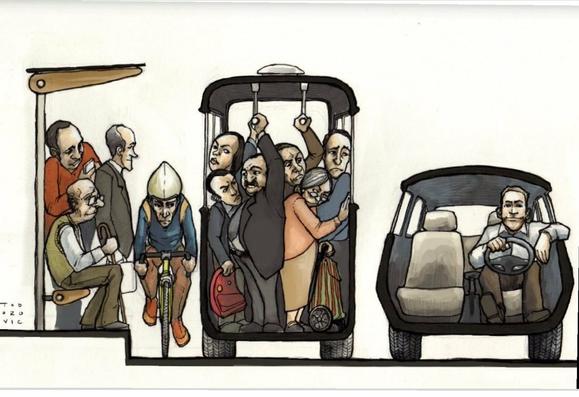
 Jonny
Jonny Verschijning
 Matthew Newell
 biddy_sue 🏳️🌈
 Carlos Solís
 Breizh
 Vee
Vee David Mitchell
 Josh
Josh ipofanes
 lgsp
lgsp