 "Wish the sun to stand still.." 🌞
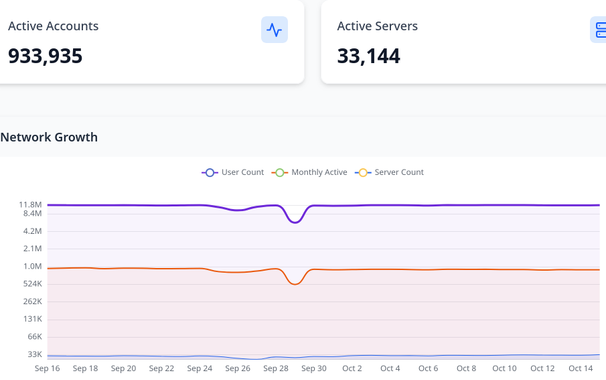
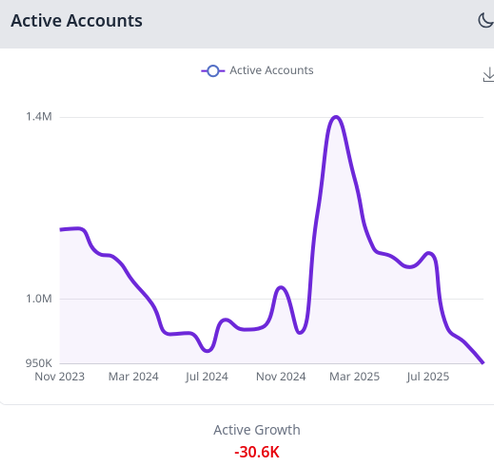
📉 #Fediverse is looking stagnant... Newcomers tolerate the bad UX for a while and then leave.
📉 #Fediverse is looking stagnant... Newcomers tolerate the bad UX for a while and then leave.
Why the bad UX? Mastodon is almost a copy of X/Bluesky.
@veroandi
> Why the bad UX? Mastodon is almost a copy of X/Bluesky.
@tchambers lays out the major UX fails pretty well here;
https://www.timothychambers.net/2025/06/24/the-seven-deadly-fediverse-ux.html
My experience of the fediverse is akin to my experience of living in rotting old rental houses. They're big and cheap and the landlord mostly leaves you alone, as long as you don't bug the neighbours. If that matters more than living in comfort, you're golden.
But in the longer term most people care more about comfort.

So you made it through the first fiery sermon in this series. Trust me—I didn’t enjoy preaching it any more than you enjoyed reading it. But every word came from a place of love—for the Fediverse, and for what it still could become. But fear not, dear reader: as the preacher once said, salvation is within your reach. And to reward you for slogging through that earlier wall of hard truths, here’s your moment of grace.
(1/3)
@mattjhayes
> Not sure why I was mentioned into this thread
You probably boosted a post, then I saw your boost and replied, which included your address in my post.
> it’s almost impossible to get engagement or followers
There's people here with thousands of follows and regular Replies/ Boosts/ Favourites, so ...
> Might be that I’m doing it wrong?
"Wrong" is a strong word I prefer to avoid, but there are probably things you could do differently.
(2/3)
When I joined the fediverse (more than a decade ago before Mastodon or ActivityPub existed), I just posted links to my blog posts. No one followed my account or otherwise acknowledged me. It was a bit disappointing.
After a while, I changed strategy. I started searching tags and following people, replying to their posts and getting into conversations. This seemed to lead to some follows, which meant people started seeing my posts, and I started to get some replies, etc.
(3/3)
My theory is that this is how all social media works. Because it's kind of how social life works; people are interested in us to the degree we show interest in them.
People eventually figure this out on the first social media space we use (as I did on the fediverse), then stay there for so long we forget how we got started there. So when we move to a new social media space we either figure it out again from scratch, or drift back to the space where we've already established connections.
@tasket
> Newcomers tolerate the bad UX for a while and then leave
Just as likely, people set up Mastodon accounts in a fit of pique, and never really use them.
There's also the possibility of people quitting social media (apps for public posting) in general, in favour of social networking using chat groups etc;
https://nymag.com/intelligencer/article/7-reasons-to-think-social-media-has-peaked.html
But active account numbers in the fediverse, and more importantly overall server numbers, continue to be much higher than pre-2024.
Just as likely, people set up Mastodon accounts in a fit of pique, and never really use them.
Implying there is nothing that is trying to engage with them.
Personally, I think the main problem is a poorly understood and mostly unexpressed issue with the way fedi treats domains. Most people will simply think your stuff is broken if the "Mastodon" randomly forgets who they are; when people click on links, they end up on foreign servers (emblazoning "Mastodon" logos) and they forget to check that the domain in the address bar has changed. This even happens when people sign up with apps.
ActivityPub wants to be a new decen Internet-wide protocol that people use directly. But it doesn't want to tick all the technical boxes that make such protocols user-friendly. "Good enough for techies who will hop over the gaps" is evidence that the designers lacked engineering savvy.
But active account numbers in the fediverse, and more importantly overall server numbers, continue to be much higher than pre-2024.
Conversely, a case could be made that there are significant losses being masked by diehard users opening multiple accounts for alternate modes like Lemmy, Pixelfed and Peertube. (IIRC, someone was writing about this being a trend among fedi users.)
@tasket
> significant losses being masked by diehard users opening multiple accounts for alternate modes
That's why I think server numbers are a more significant metric for overall network growth than "active user" numbers, which are famously unreliable. Due to the longstanding problems with NodeInfo, and the stalling of the effort to define a NodeInfo2.
@tasket
> , I think the main problem is a poorly understood and mostly unexpressed issue with the way fedi treats domains;
Ae, this is @tchambers' UX sin 3;
https://www.timothychambers.net/2025/06/18/113327.html
It's less confusing if you mainly use native apps or third-party web clients (as I started doing early on, I found the original 3-column Mastodon interface horrifying). But it's not great.
One way to fix it is for browsers to support AP. But since all the major browser vendors are controlled by DataFarmers ...
@strypey @tchambers I don't think its the whole issue I'm relating. What if a news site or blog wants a "Share on Fedi" button? All they can do is make it a link to their own instance... this will cause the user to land on foreign (web) instances and the user thinks M. has mysteriously forgotten who they are. For app users, they might wonder why their fedi interaction has shifted out of the app into the browser; regardless they will just think its an amateur effort and abandon it. The fix for this is relatively simple (really!) but very unfashionable because (like email) it reeks of old 90s tech. Bluesky doesn't have the same problem because links to centralized 'bsky.app' domain are used as a substitute protocol handler.
Another issue: Popular users often get an unfollow/mute backlash of sorts because M. will add the same post to the TL every time it gets boosted. They post good stuff, but....looord that no-algo TL makes them super annoying after a while. Manually filtering individual posts like this feels like drudgery.
Another issue: You MUST see every OP post in a long thread. No algo, no choice for you. Also super annoying, making users turn away from good accounts.
The no-algorithm/anti-viral ethic actually gives a bad name to open source software. Its saying that any attempts at making TL/streams more intelligent are unwelcome, even if the algos are coded in a straightforward way and transparent and user-selectable. Its saying that celebrities are unwelcome on open source tech, because their posts will mercilessly bludgeon TLs and eventually force people to turn away (there is no in-between way to manage their propagation, its over-exposure or nothing).
@strypey @tchambers FWIW, I think its a good list overall but I don't agree with no.1: Bluesky has a similar choice issue, which I think is fairly mild or it should be mild assuming we are talking about users who are used to using the very usable Internet.
Different domains, in and of themselves, should not confuse people. If they do then we have a more general problem of tech illiteracy and not understanding fundamentals.
(1/?)
@tasket
> What if a news site or blog wants a "Share on Fedi" button?
If browsers supported AP natively, that button could open the news site or blog's profile in the site visitor's fediverse client of choice. Just like a mailto: link on a website opening your email client. Or when you click on a phone number on a phone browser and (on a well designed website) it opens the dialer with the number ready to call.
(2/?)
@tasket
> For app users, they might wonder why their fedi interaction has shifted out of the app into the browser;
Moshidon (Android app) can recognise and handle most fediverse links. This is a UX issue, not an inherent problem with AP.
> Bluesky doesn't have the same problem because links to centralized 'bsky.app' domain are used as a substitute protocol handler
Like Matrix.to links? This is good for UX but bad for decentralisation. I suspect there are better solutions, see above.
(3/3)
The rest of the issues you list are client-side UX issues, nothing to do with the choice of protocol. Vanilla Mastodon is pretty limited, because so many people fight tooth-and-nail over every feature that gets proposed. It's amazing what features you can open up just by trying a range of third-party apps. Not to mention by trying services running software other than Mastodon.
"That you shouldn’t post too freely on social media has become — or returned to — conventional wisdom: If you’re posting publicly, your family might see it, your boss might see it, and, every once in a while, a few million strangers might see it as well."
#JohnHerrman, 2025
https://nymag.com/intelligencer/article/7-reasons-to-think-social-media-has-peaked.html
It shouldn't surprise anyone that "Danyl Strype" isn't my birth name, and I've always been cautious about sharing info online that would make me too easy to identify.
(1/2)
My current avatar is a photo of me (a very old one), but I'm pretty cautious about posting images of myself that could be used to identify me (one reason I'm sceptical of dating sites).
I started using the net in the late 1990s, mainly as an activist tool, and it's always blown my mind that people have been routinely living their private lives in public since about the mid-noughties. Clearly they haven't seen;
https://weliveinpublicthemovie.com/
(2/2)
"One of Törnberg’s most interesting findings in the ANES data... is that 'most platforms have moved toward Republican users', with Twitter’s swing being the most pronounced, leading to a partisan 'reconfiguraton' with 'Republican users shifting from ideologically homogeneous venues such as TruthSocial into mainstream platforms such as Twitter/X' while 'Democrats have retreated toward emerging, smaller networks such as Bluesky, Mastodon, and Threads'.”
#JohnHerrman, 2025
https://nymag.com/intelligencer/article/7-reasons-to-think-social-media-has-peaked.html
If BlueSky, Mastodon, and Threads were just platforms competing with the existing platforms, this could be interpreted simply as a reversal of the preexisting situation. But it's a bit more complicated than that.
(1/2)
Mastodon isn't a platform at all (it's software), and BlueSky and Threads are both explicitly pitching themselves as participants in larger networks (the fediverse and ATmosphere respectively). So what's really happening here is Republicans are doubling down on centralisation, while Democrats are following the left (as they generally do) into strategically embracing decentralisation.
Which makes for a far more intriguing story, if political scientists can be bothered understanding it.
(2/2)
"... but in terms of engagement, TikTok’s competitors did pretty well by copying it. Previously social feeds filled with video made by strangers, resulting directly in the scenario described above by Mark Zuckerberg: Formerly social networks now filled with, basically, little shows and marketing, content from influencers, and random recommendation slop, an increasingly amount generated by AI."
#JohnHerrman, 2025
https://nymag.com/intelligencer/article/7-reasons-to-think-social-media-has-peaked.html
(1/2)
I've commented before on how "social media" has become an umbrella term for a wide range of online experiences; web forums, social networks, social bookmarking/ link-sharing, media-sharing, even code forging (GritHub is in many ways a "social media" platform for geeks). It's become the NewSpeak phrase I suspect Web 2.0 was trying to be; a way of eliding the important differences between these different styles of interaction, so they can all be absorbalophed into centralised "portals".
(2/?)
What gets lost when all these online experiences are fudged together under the power of One Ring, is the one thing I suspect most people really want from "social" platforms. Not "content", but relationships. Either an extension of our ability to maintain in-person relationships in the fact of the tyranny of distance, or opportunities to create new ones with people we'd likely never meet in person.
If the fediverse has a future, I think it lies in serving those needs well.
(3/3)
 A Matt with a Dog
 veroandi_br
 Strypey

