 JA Westenberg
people say “you can’t tax the rich, they’ll just leave” like that’s not the best possible outcome
 Kenny Park
@Daojoan "Leave?! Oh, no! How will our country _survive_ without a handful of psychos hoovering up all the money?"
 Flic
Flic@KennyPark @Daojoan I like when the whole of the western world decided austerity and trickle-down economics was the best way to solve a recession so they started calling them "wealth creators" rather than what they actually are, which is hoarders. Is Scrooge McDuck a "wealth creator"?
 franebleu
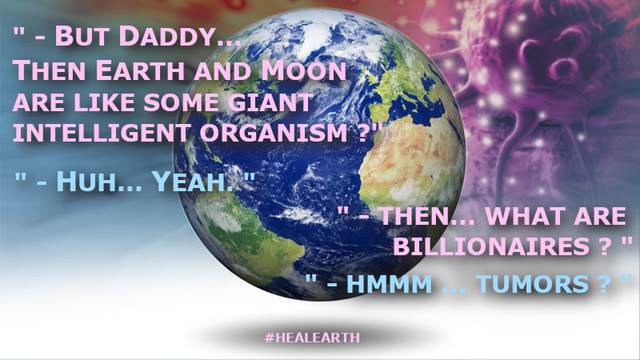
@franebleu I think of a malignant tumour every time an economist or politician goes on about "growth". Infinite growth forever. Must seem like a good idea to the tumour, too, but the host it's feeding off will take the tumour with it when it inevitably dies.
 Daniël Franke
@Daojoan at some point we started to think that money was an actual thing and not just an abstraction for trade, and it has poisoned our brains.
 no brain no pain
@Daojoan they may leave but have to pay for leaving 😎
 mcc
mcc@Daojoan Also, to what country? The US already has the lowest taxes!
 mathew
 Matt Hall
Right after they pay their damn taxes they can go where ever they want.
 MeerderWörter
@Daojoan Not only that but they don't. As in, it's not that easy for rich people to go elsewhere.
 Barbara Sliwinska
@Daojoan they are lying, the truth is they don't leave, article from 2017 -> https://www.theguardian.com/inequality/2017/nov/20/if-you-tax-the-rich-they-wont-leave-us-data-contradicts-millionaires-threats

 GeofCox
Yes - there are two, sequential arguments against the idea that the rich will emigrate if taxed too much:
1. They actually won't; and
2. It wouldn't matter if they did...
You might be interested in an old post of mine on this: https://climatejustice.social/@GeofCox/113883616849187853
GeofCox (@[email protected])
@[email protected] Yes - I recently followed up the source of one of these media stories about the 'exodus' of UK millionaires - it was New World Wealth - which seems to be a one-man-band using a co-working space in Johannesburg, South Africa, with a 'GoDaddy' website - and if you click on its 'Britain's Wealth Exodus' report link it just takes you to a press release from last October from a 'wealth migration' consultancy (trying to encourage migration for obvious business reasons). Nothing about the story has any journalistic credibility at all, as far as I can see. And that's, of course, leaving aside the really big unsupported assumptions in such views - the two biggest being: 1. That tax from the wealthy 'pays for' public services (it doesn't - it just mitigates inflationary pressure, which is also accomplished by the wealthy leaving the country), and 2. That the wealthy living in the UK means they invest productively in the UK (but by and large, in fact they don't - indeed their UK 'investments' are likely to be in unproductive assets like property and shares, etc, already in circulation, so tending generally to make most UK residents poorer).
 Gentleman Technologist
@GeofCox @Barbara_Sliwinska @Daojoan and most of the really wealthy don’t pay tax anyway. They borrow against their wealth and spend that instead - the interest payments cancel out and there’s no income, so no tax.
We need a wealth tax.
 Simon Brooke
"most of the world’s billionaires – about 84% – still live in their country of birth. And among those who do live abroad, most moved to their current country of residence long before they became wealthy – either as children with their parents, or as students going abroad to study"
 Jørn
Jørn@Daojoan Norway did this. A lot of rich people moving to Switzerland and making a fuss on Norwegian media.
A momentarily (but multi-year) disadvantage is that they’re lowering the worth of the Norwegian krone by moving their fortune away, causing people to go “oh no we need to keep those rich people here otherwise our currency will tank”
 Pat
Pat@Daojoan why would they leave when they have tax shelters, tax havens and loopholes galore built into the tax code?
 Eric Lawton
It's not like they'll stuff a factory or a mine or a social media corporation in their suitcase as they leave.
 Dan, the world needs an enema!
@EricLawton @Daojoan A rebate on assets to be nationalized: Perfect!
Now we just need politicians Who are not chickenshit bought assholes!
Now we just need politicians Who are not chickenshit bought assholes!
 Beldarak
@EricLawton @Daojoan @WastelandWandrr
I've been trying to make people understand this for years!
Without those companies we will still need to build houses, grow crops... and the workforce will still be there to do all that, under a new management. The only thing lost would be the parasites.
Somehow nobody around me seems to understand that simple logic.
@EricLawton @Daojoan @WastelandWandrr
I had a few hours of marketing at school, and that's one of the very few things I took from it. Market is like a pie, and when somebody leaves a part unatended, other actors seize it
 Oblomov
@Daojoan sadly, it's just false 8-(
 SilvertipGrizz
@Daojoan ……….. you win.
 Konnor Rogers
@Daojoan Dont threaten me with a good time.
 Orca 🌻 | 🎀 | 🪁 | 🏴🏳️⚧️
@Daojoan hmm, the best outcome is they leave this world, not just leave one nation
 stux⚡️
@Daojoan Dutch gov uses same excuse for big companies
Tax breaks? What about tax increase for big earners
 Rizzmaster Zero
@Daojoan I'm still trying to figure out where they could go that has no regulation or taxes, but also has all the comforts and infrastructure they want.
 Pēteris Krišjānis
@Daojoan "no one cares if you can't carry your wealth with you"
 Jules 🍺
@Daojoan tax the land they own, so much more effective 😊
 Denis
Denis@Daojoan I mean... depending how you look at it, one must be rich in order to have the resources necessary to run a company. By extension, all "rich leaving" would stop companies from existing, hence people have nowhere to work, hence they can't pay for food, etc...
Am I wrong?
 Morgan ⚧️
@DenisAlexClopo @Daojoan without rich people hoarding all the resources, we would have plenty to eat
It's not like they're the ones farming
It's not like they're the ones farming
Ok, say for example a factory; legally speaking, SOMEONE needs to own the ground on which the factory exists, + the building, + the machinery, devices, & tools.
That in itself is seen as "hoarding" but unless SOMEONE owns all of these and brings them together to work towards some purpose, the manufacturing process either doesn't happen, or takes place at a much smaller, pricier scale, in turn making the product pricier.
@DenisAlexClopo @Daojoan no one HAS to own the land. It could be public. It could be owned by the state. It could be owned by the workers. Rich people contribute literally nothing to the equation except the suffering and the propaganda they get you to spread
 magreggins
Yes, you are wrong.
@magreggins Very insightful :)
 Nasado
@DenisAlexClopo @Daojoan Perhaps *one* must be rich to have the resources necessary to run a company, but who said companies have to be run by one, or even just a few? You can spread out the burden by converting plain old stock companies into worker co-ops.
@nasado @Daojoan I absolutely see your point, and I believe this is why companies are generally run by a board of directors, each having shares of that one company.
For productivity's sake, they employ 1 individual to run things, called a CEO, which they then change if they're unhappy with their outcome.
Sure, Co-Ops are another way to do it, but they didn't seem to be competitive enough to surpass private or public -ly owned companies
 Flesh 🐀
@DenisAlexClopo @Daojoan It can be complicated, but a lot of those resources are not things you can just easily leave with.
Land, importantly, is pretty immobile.
And, like, the actual material resources are produced or extracted by the people doing the work, not companies themselves.
Land, importantly, is pretty immobile.
And, like, the actual material resources are produced or extracted by the people doing the work, not companies themselves.
Agreed, but I fear that the organisational side matters a lot too.
Without some entity to act as a catalyst to the creative process, the process itself either doesn't happen or isn't fruitful where it matters.
I don't generally like Neil DeGrasse's takes, but this one was beautiful: most inventions that now we use regularly, were developed from a scientific discovery which would have otherwise not been used, and just happened to fit a different, commercial, purpose.
The main resource is the human workforce, which they can't take with them. People were able to grow crops and build houses before shareholders existed
I agree with you, but again, there was a ruler who would organise things & tell people what to do where.
Yes, true freedom theoretically exists, where one could do anything they want when they want to, but in practice, we're social creatures, and a society needs bounds to exist within, otherwise it disperses into chaos.
Those bounds are the incentives you get for "playing by the rules", though many find ways to cheat.
 Radio_Jem
 bdf2121cc3334b35b6ecda66e471
@Daojoan But think of all the jobs we could have if we just allowed sweatshops
 Power_to_the_People (he/him)
@Daojoan Dunno, aren't there some decent recipes starting to make the rounds? 🤔
 R.L. Dane

 🍵
🍵 
The psyop to make the general populace think that the least productive members of society (1%ers) are the most important is absolutely flipping diabolical.
 Billy Smith
They can go, but their money stays. :D
 Dark Phoenix 🇺🇦🇨🇦🇬🇱🇵🇦🇵🇸🏳️🌈
 Endy
Endy@Daojoan It's absolutely not a good outcome. It won't just be the people leaving - it'll be the companies, so all the jobs and goods.
@egoldblatt @Daojoan
The country could keep the assets if a law states it.
A manufacturing/services corporation's wealth is produced by citizens work. Leaving with the infrastructure and the wealth produced by the country's taxpaying citizens can be considered theft.
With the right set of memes, seizing such assets, thoroughly and fairly evaluated, can be considered logical and ethical. It can become a socio-economical norm and can be enforced legally.
That's what laws and ballots are for.
 Stephen Cook
@Daojoan
This is why taxing land is one of the most effective ways to tax wealth. It doesn't matter where the owner lives, it's the land that's being taxed. If you are claiming to be the owner of a parcel of land, produce the tax receipts as proof, otherwise it reverts to public ownership.
This is why taxing land is one of the most effective ways to tax wealth. It doesn't matter where the owner lives, it's the land that's being taxed. If you are claiming to be the owner of a parcel of land, produce the tax receipts as proof, otherwise it reverts to public ownership.
 HarrisonFormry
@Daojoan They can leave, but the assets and infrastructure they profited from stay right here. Byeee😀
 craignicol
@Daojoan just need a pact between all the G20 so they keep getting moved on like the immigrants they want us to hate.
 happyborg
I suggest we make Mars the only tax free jurisdiction.
Why not Mercury ?
 Imre 🇨🇦
@Daojoan
Where would they go that wouldn’t extract some sort of payment for the privilege?
Where would they go that wouldn’t extract some sort of payment for the privilege?
 Paul Giulan
@Daojoan would we last? The top 10% of earners in the US account for nearly 50% of
all consumer spending (https://www.marketplace.org/2025/02/24/higher-income-americans-drive-bigger-share-of-consumer-spending) and consumer spending makes up well over half of GDP.
all consumer spending (https://www.marketplace.org/2025/02/24/higher-income-americans-drive-bigger-share-of-consumer-spending) and consumer spending makes up well over half of GDP.

 torokunai
@pgiulan @Daojoan the top 10% pull their incomes from the backs of the lower quintiles.
(real estate, medical services -- wherever the rents are in this Monopoly board we call an economy)
Money is not capital, since capital is simply the ability to live and work (i.e. create wealth) comfortably and productively.
The top 10% could be thrown into plastic shredders and the capital position of this country would not be harmed, since they merely own wealth, and not actively work to create it.
@Daojoan They won't leave. Where are they going to go that offers them a similar level quality of life, but this tax rate. Even doubling taxes, they're still better off here than most places