 Froyok
So Ombre development enters its third year this month, so let's start a new thread to track the progress !
I spent the past few days reworking my Depth of Field, which started off the GPU Zen method and then evolved a bit.
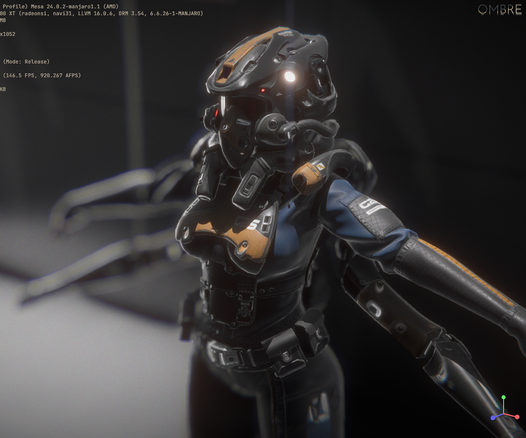
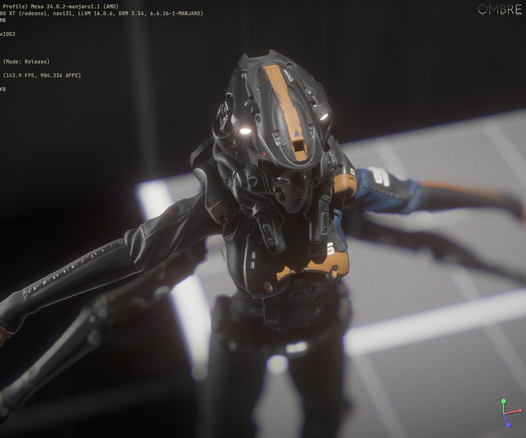
So Ombre development enters its third year this month, so let's start a new thread to track the progress !
I spent the past few days reworking my Depth of Field, which started off the GPU Zen method and then evolved a bit.
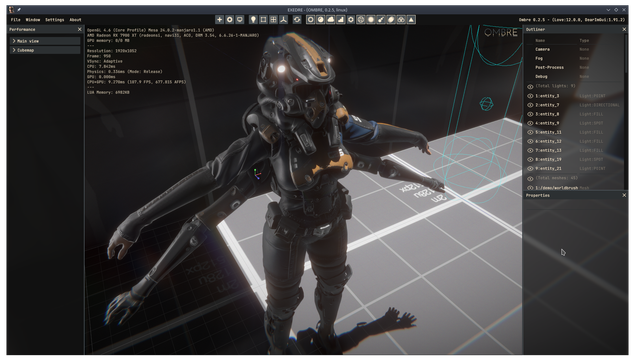
I made an in-editor tweak to change the resolution, this way I could try out different bokeh sizes and sample count.
That made it easier to figure out how to make the bokeh stable across different resolutions. (My bloom isn't it however, so I will have to look into it.)


@froyok i wasn't gonna make a recommendation, but i wanted to mention that i've implemented LPV before and I had a lot of fun with it. it's the default lighting method in Media Molecule's Dreams. but it is quite low-freq.
something I always wanted to try is LPV within a tetrahedrally segmented volume
@froyok a while back ubisoft released a paper on detecting self-collisions in dynamic tetrahedral volumes (aka simplex volumes), and there was another paper that used simplex volumes as accelerator for raytracing. it has going for itself that it is a good fit for anisotropic data, and that it is single-structure unlike multilevel octrees.
for LPV, you'd get prec around high res details, avoid ipol interfacts since simplices align with surf tris & save cost of propagating across empty space.
@froyok The refraction function takes a ratio of IOR with source IOR over destination IOR. So for air to something that has IOR 1.5 it would be 1/1.5.
What you are seeing in your examples is the Snell's window (typically seen underwater).

 Sylvain Meunier
 LR
LR Tom Forsyth
 Clément Foucault