 Froyok
So Ombre development enters its third year this month, so let's start a new thread to track the progress !
I spent the past few days reworking my Depth of Field, which started off the GPU Zen method and then evolved a bit.
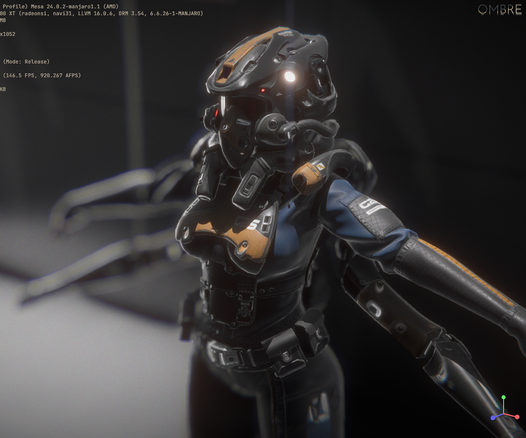
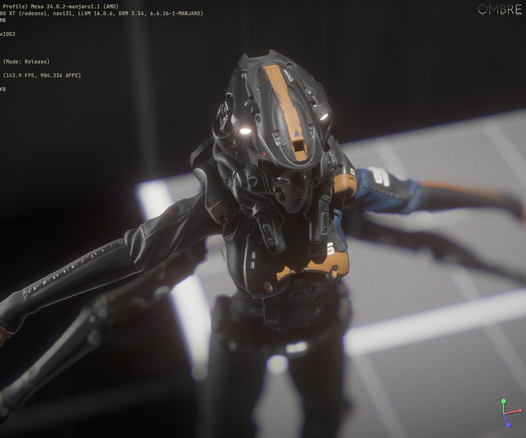
So Ombre development enters its third year this month, so let's start a new thread to track the progress !
I spent the past few days reworking my Depth of Field, which started off the GPU Zen method and then evolved a bit.
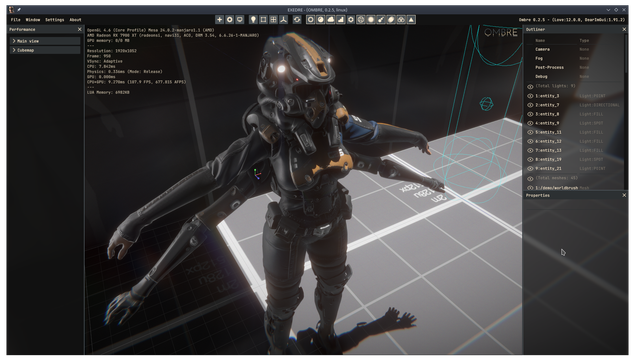
I made an in-editor tweak to change the resolution, this way I could try out different bokeh sizes and sample count.
That made it easier to figure out how to make the bokeh stable across different resolutions. (My bloom isn't it however, so I will have to look into it.)


Didn't make an update in a while.
Well for starter, I decided to shelve voxel rendering and the GI topic for now. That wasn't working for me and I hit too many snags to stay motivated about it.
So I switched instead of integrating Steam Audio.
The first step only took a day or two, which was about replicating the example from the documentation to process a sound.
I got a nice duck quack at startup getting panned. :)
(First quack is original, second is after processing.)
Some progress on Steam Audio integration: I have now attenuation, air absorption and binaural effect integrated.
Results are starting to get pretty cool ! :)
(Sound ON for the demo !)

@froyok Negative, but search engine was in a better mood today and I found it! https://www.gdcvault.com/play/1022060/How-to-Write-an-Audio
There is less than I remembered about reverb. Hopefully there's something useful in there regardless 🙏
@froyok I think today, either at a tiny (like you) or big scale (like I don't know... Remedy), building an audio engine is crazy.
FMOD is free for very small projects and very affordable on mid sizes.
And currently, I'm fiddling with Steam audio and it's crazy how much you can do... and damn, audio raytracing :p
1/2
So, you'd need to build the root system for sure... but from a pragmatic standpoint, audio is a science as much as rendering with just pretty much zero room for innovation.
Building all the audio "fancyness" yourself is valid if you want to do it to "cultivate" your knowledge on audio tech.
Especially if you're not bringing something new to the table. If you aim for simple spatialization/reverb/occlusion without making something cool or new... middleware is definitely the solution.

 Kristian Sivonen
 agersant
 Nick Appleton
 Olivier ZUCCARO