 Mathieu Jacomy
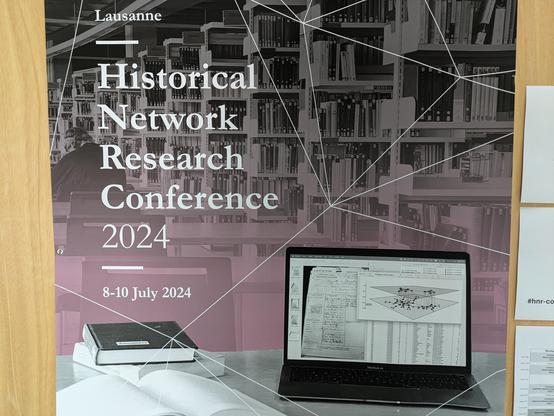
Today I will be tooting about the Historical Network Research Conference #HNR2024, day 2. https://historicalnetworkresearch.github.io/lausanne/program/
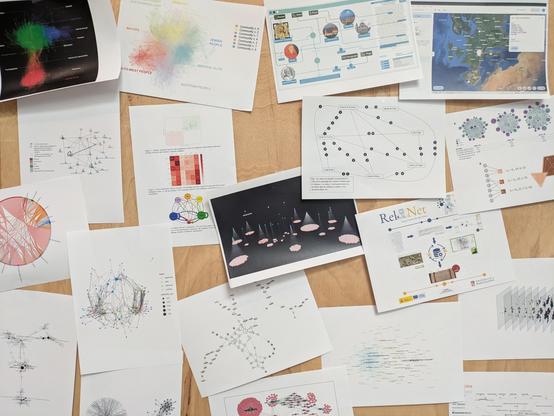
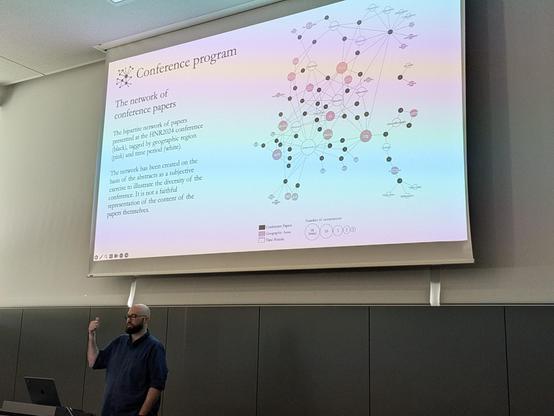
Custom-made versions of that network, more friendly.
🌈 Note: the rainbow colors arise from my camera interacting weirdly with the projection! Be reassured that Martin's slides are very monochromatically serious.
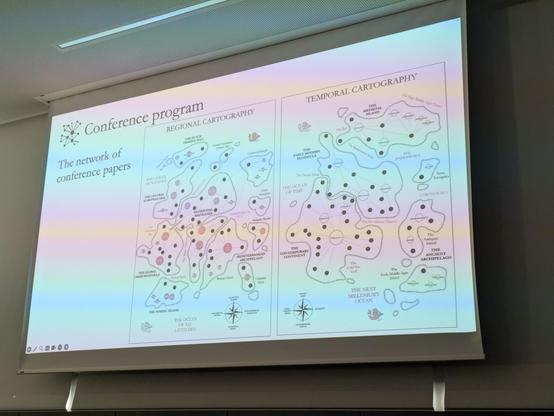
@martenduering narrates how he came to believe that would be possible to work with networks in history.
A key paper for him was this one by Claire Lemercier:
Formal network methods in history: why and how?
https://shs.hal.science/halshs-00521527v2/document
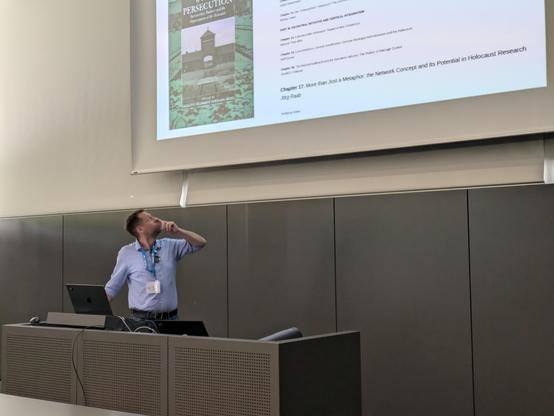
HNR personas according to @martenduering :
* The historian
* The historical sociologist
* The computer scientist
* The network scientist
* The multi-talents
"You have guessed that we need all of them."
#hnr2024
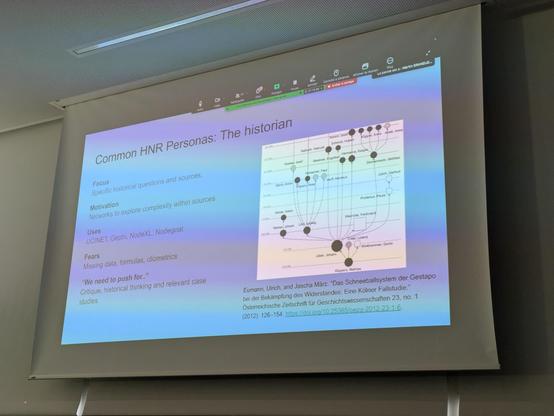
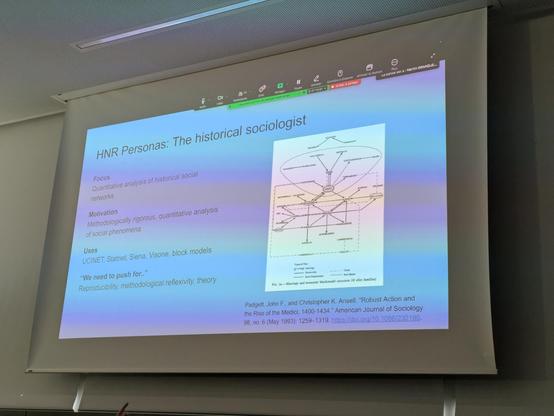
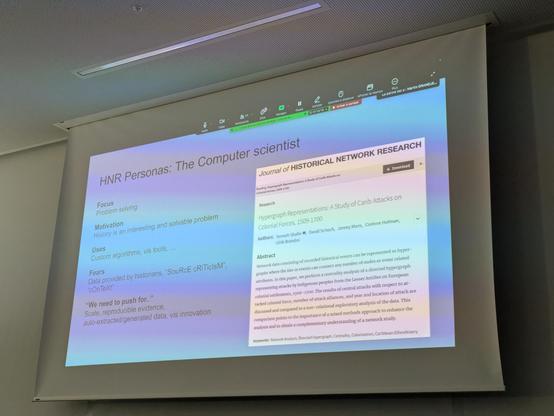
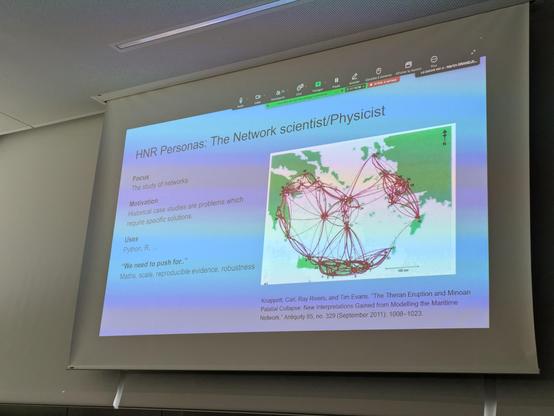
A key insight from Marten: a very important part of the HNR community consists of historians, and more precisely people who do not define themselves as *digital* humanists or *digital* historians but just historians, and who need networks to get the job done.
The digital/computational is not necessarily a career path, it sometimes comes to you whether you want it or not, and it does not define you even if you embrace it for a time.
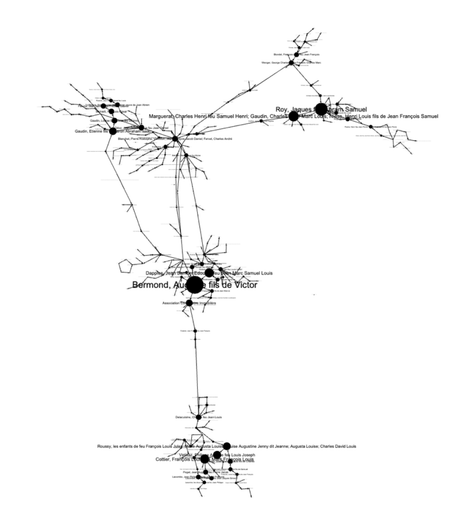
@lucasrappo presents his work about the land market in Lausanne in the 19th century.
Source: two cadastral maps, from 1931 and 1888, that he datafied.
By comparing them, he can identify where the city expanded.
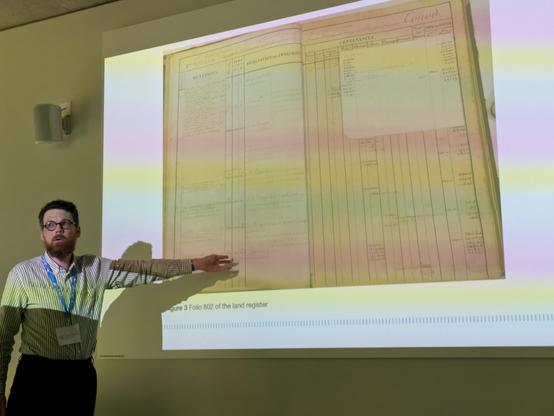
From there, he could go back to the register of the land plots, and obtain a network of who sold which land to whom in the areas where the city expanded.

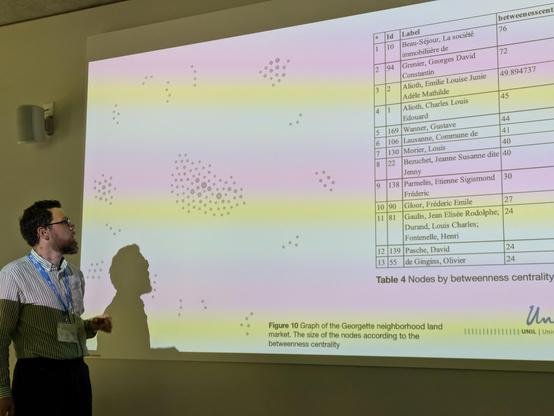
For the other area where the city expanded, the story is different. A key actor emerges, an engineer and entrepreneur, who was probably engaging in financial speculation, as his node centrality in the financial market network suggests.
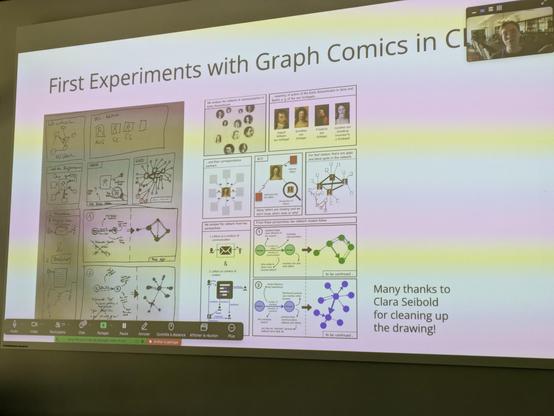
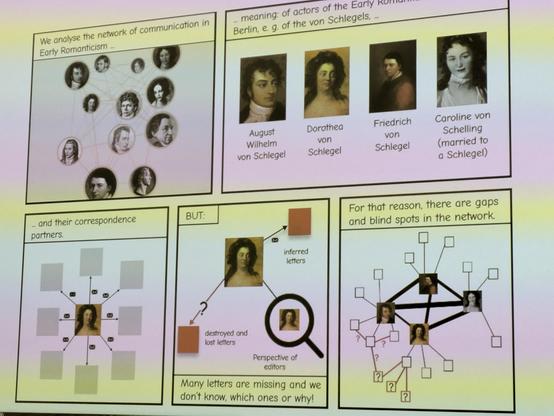
Now Elena Suárez Cronauer and Aline Deicke tell us about how they used graph comics to explore communication networks. Very exciting!
The question is: what is the dynamic within a group of authors sending letters to each other? The goal is to better understand early romanticism.
And it all starts with a knowledge graph in Neo4J, which you can see below. 💪
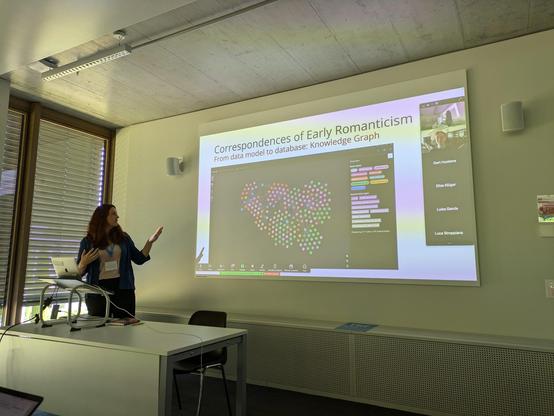
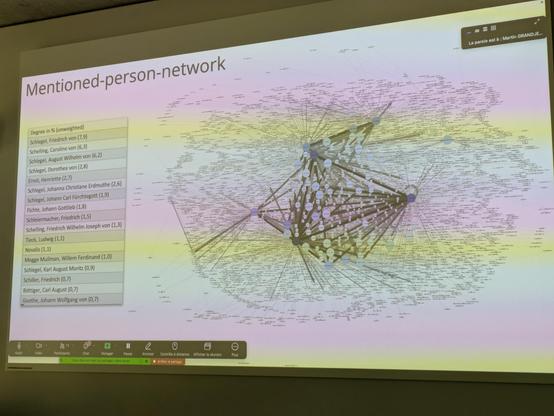
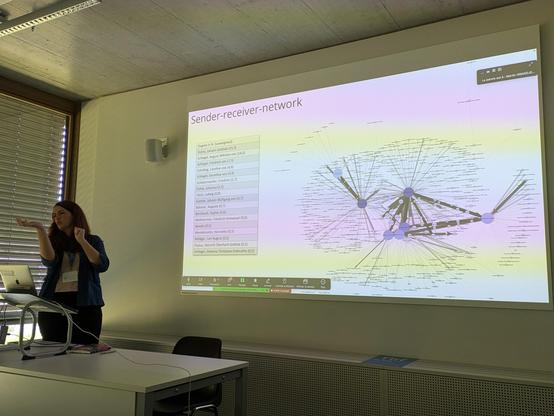
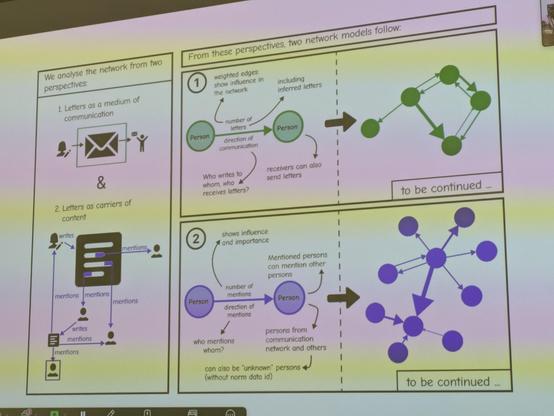
From there you can make different network visualizations such as those you can see below: who sends a letter to whom; who mentions whom...
But it is difficult to communicate about the work by using these visualizations, because it lacks context. It's Haraway's "god trick" once again.
Graph comics is a solution to this issue.
Graph comics is a technique developed by Benjamin Bach.
https://aviz.fr/~bbach/graphcomics/
You have probably seen that paper, but we don't see an actual application that often. It's not easy to do!
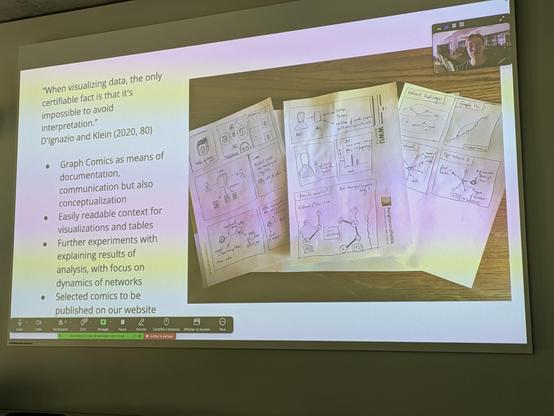
You can see their process in those images. It is iterative, and largely manual.
Elena and Aline frame it as a matter of data feminism (following Catherine D’Ignazio and Lauren F. Klein).
Next up is Gert Huskens with a network about "elite formation in urban Egypt" at the end of 19th century.
Elites evolve quickly due to the everchanging colonial forces in Egypt (French, British...) + an autochthonous elite + an (agro-)capitalist boom.
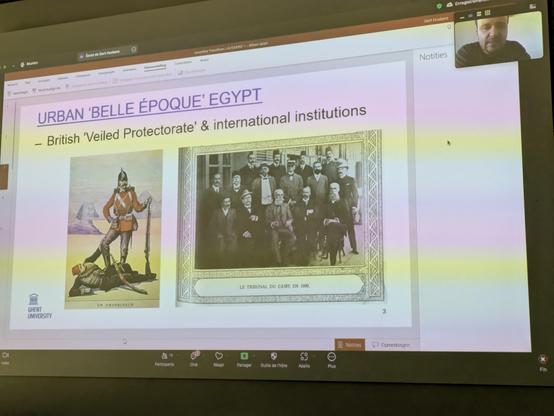
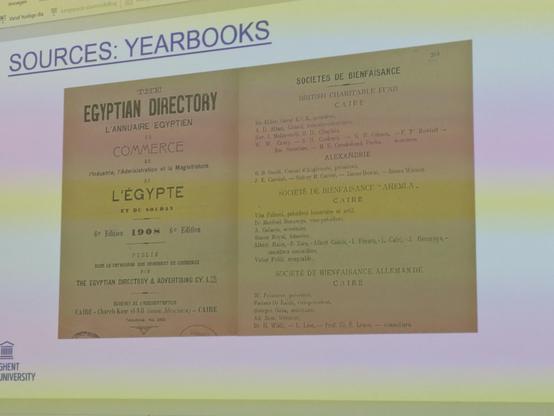
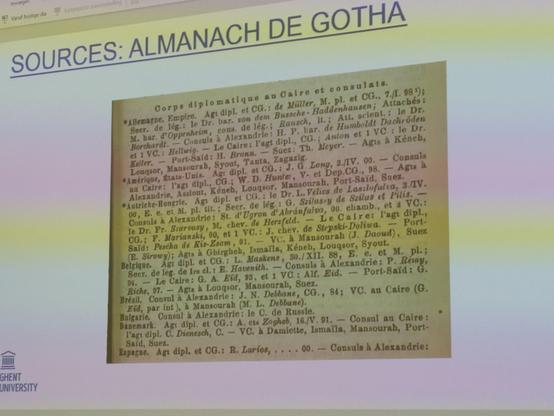
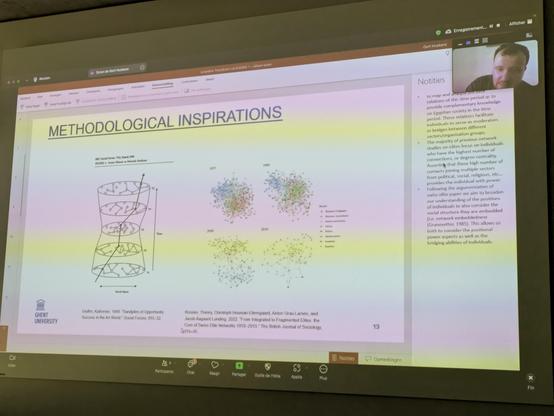
In this slides you can see the evolution of the elite network over the years.
The elites are defined by two hubs, Cairo and Alexandria. Diplomats are bridging them.
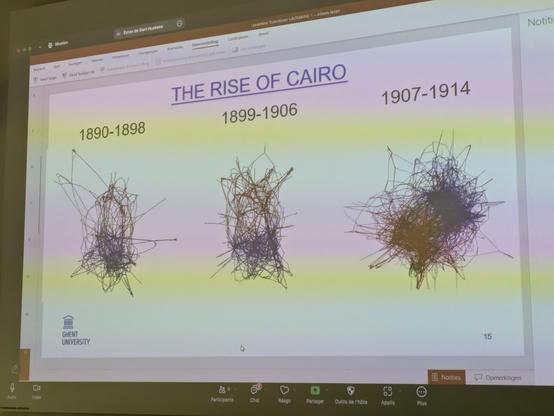
Gert is using his network maps as platforms to dive deeper into the data, and get qualitative when needed.
His inquiry is largely quali, even though the network is used as a narrative red thread in his presentation. Sometimes, it entails zooming on a detail because that's what the research demands.
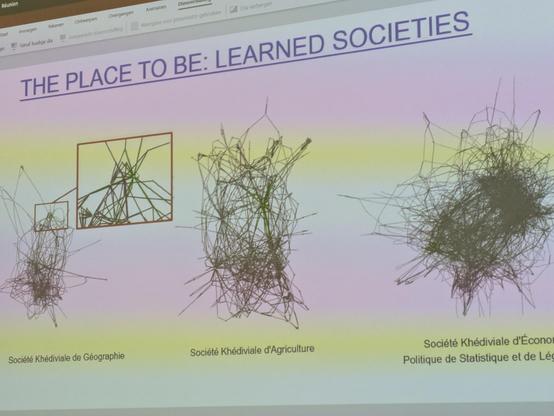
So what do we learn?
* The organizations organize into a hierarchy
* The capitalist boom is the main shaping force of the elites
* The Cairo hub is gradually taking over
I'm back to tooting about historical network research, still with rainbow moiré pictures 🌈.
Late Babylonian period. People have tablets (clay, not Apple). They have religion. Can we learn about it by building networks? Rocio Da Riva tells us about it.
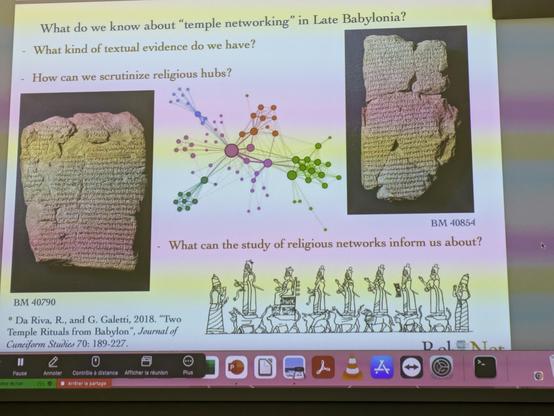
Religious movements are elements of social cohesion and express political goals. We can make networks to understand various things, such as which sanctuary is sponsored by royalty etc.
She's still at the beginning of her work but I'm curious about the result.
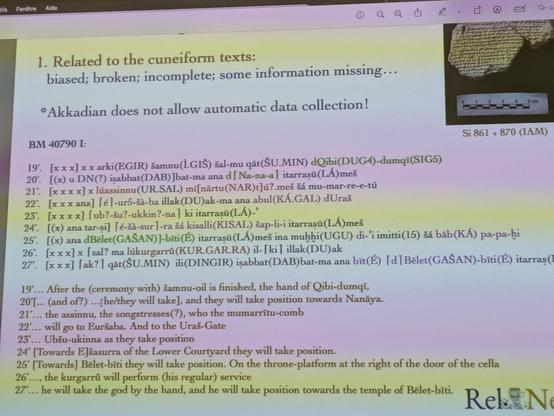
Rocio studies 150 cuneiform texts. If you wonder what that looks like once transcribed, check it out:
 Malte Vogl
 Till Grallert
 Lucas Rappo
 John Theibault
 Carine Alders
 Florian 'floe' Echtler
 Comb 🍯